THE WORLD'S BEST NEW MUSIC & REVIEWS DAILY
Independently curated music discovery - algorithm-free
An independent monthly digest of contemporary music discoveries, highlighting exceptional new albums across jazz, ambient, experimental, folk and soundtrack genres from around the world.



2026 February Best New Albums
clicking cover art opens Spotify

The Mountain
GORILLAZ
Released 27 February 2026
Kong
*****
About as good as it gets! Damon Albarn and friends (dead and alive) embrace death and the afterlife with a joyous, uplifting, multicultural triumph in five languages: Arabic, English, Hindi, Spanish, and Yoruba.
On the face of it, The Mountain is simply the ninth album of engaging pop music by an animated "virtual group". That its subject and inspiration should be death and the afterlife seems incongruous and complicating, perhaps foolhardy. But after decades of musical and humanitarian involvement in Western Africa, Asia (and pretty much everywhere else), it is perhaps no surprise that Damon Albarn and company assembled a multicultural caravan of collaborators to bring it to life. That the dominant cultural axis of the featured artists runs roughly along a parallel from UK through Casablanca and Damascus to the subcontinent (Mumbai, Turkmenistan and Rajahstan) seems ominous, given the geopolitical sensitivities involved in some of those places, however the band's motivation appears apolitical in this case. Albarn and Gorillaz co-founder Jamie Hewlett had both experienced the loss of close family members prior to travelling to India to work on the album, in 2024.
The album's name was inspired by the duo's first visit to Amber Fort in Jaipur, as well as a mountain they visited in western China during the production of the opera Monkey: Journey to the West. Both artists have described The Mountain as a cohesive and conceptual work exploring ideas of death and the afterlife through the band's fictional characters. Hewlett said people listening to the album are "supposed to listen to it from beginning to end", saying that they were "trying to bring back that idea of taking time to invest in something, instead of this culture of scrolling".
Musical collaborators influencing the sound include Indian singer Asha Bhole and Syrian wedding singer Omar Souleyman. Other contributors (performing in five languages - Arabic, English, Hindi, Spanish, and Yoruba) include Idles, Kara Jackson, Yasiin Bey, Johnny Marr, Black Thought, Anoushka Shankar. Additionally, the album includes the voices of a number of deceased figures: Bobby Womack, Dave “Trugoy the Dove” Jolicoeur, actor Dennis Hopper, the Fall’s Mark E. Smith, Detroit rapper Proof, and drummer Tony Allen.
The choice of a "concept album" involving Indian music, brings to mind the forays of mid-century British artists like The Beatles, The Rolling Stones, Donovan and others, under the influence of Ravi Shankar and various Yogis, and raises similar issues of cultural appropriation too complex to unravel here, but in urgent need of exploring in an era of instantaneous global media and AI.
As an album designed and distributed for mass consumption, by a group of humans semi-disguised behind the masks of cartoon characters, The Mountain is a truly ironic, post-modern work. It's inclusiveness is the inverse of the insular, nationalistic fascism that is threatening Western Democracies. As a suite of songs, it invites extended attention - counter to reductionist trends fed by small-screen media (although of course Gorillaz YouTube channel features these too.)
But the music is what we all came for and despite it's inspiration, this is an overwhelmingly joyous and enjoyable set. As the boys intended, it does invite end-to-end listening - and repeat, repeat, repeat. It is certainly my favourite album so far this year, and is likely to remain among my best for the whole year, methinks.
Links:
YouTube
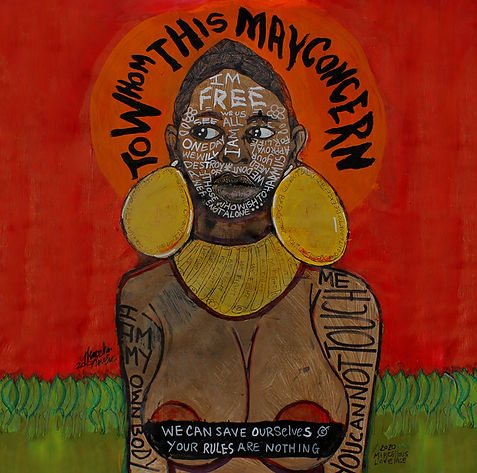
To Whom It May Concern
JILL SCOTT
Released 13 February 2026
Blues Babe Records / Human Re Sources / The Orchard
*****
After a long recording silence, a fearless return: grounded, collaborative and fully re-engaged with the contemporary soul conversation.
Since her 2000 debut Who Is Jill Scott? Words and Sounds Vol. 1, Scott has personified the gold standard of neo-soul: literate, warm, rhythmically supple and emotionally direct. Following up with Beautifully Human, Words and Music Vol. 2 (2004), The Real Thing, Words and Sounds Vol. 3 (2007) and Woman (2015), she fused spoken-word poise with jazz harmony and hip-hop cadence, shaping a body of work that felt both intimate and culturally attuned.
A decade away from full-length recording hasn’t dimmed that authority. If anything, To Whom This May Concern confirms her stature: a mature artist stepping back into the studio not to reclaim past glory, but to extend her conversation with the present.
And this is no tentative or nostalgic re-entry: To Whom This May Concern is the work of an artist who simply picked the tools back up and carried on mid-sentence.
Scott’s phrasing - her superpower - remains elastic, conversational, steeped in church and jazz. The production takes full advantage of contemporary R&B and hip-hop textures, with crisp low-end, sharp rhythmic framing and a guest list chosen for chemistry rather than cachet.
Where earlier albums luxuriated in extended grooves, this set is tighter, more pointed. Scott locks in with younger collaborators and modern producers who understand space and pulse, allowing her voice to sit confidently inside today’s sonic architecture. The result is neither retro nor trend-chasing. She sounds aware, amused, occasionally admonishing, but always in step.
Links:
YouTube
clicking cover art opens Spotify

Garip
ALTIN GÜN
Released 20 February 2026
Glitternacht / Independent
****-
A lush, cinematic tribute to folk legend Neşet Ertaş that masterfully weaves Anatolian tradition into a tapestry of global psych-groove.
Amsterdam-based Altın Gün are the preeminent exponents of the 21st-century Anatolian rock revival. Since their 2018 debut, On, the Grammy-nominated quintet has evolved from capturing the fuzzy 1970s psych-funk of Barış Manço to exploring 80s synth-pop textures. Led by bassist Jasper Verhulst and featuring the authentic vocal and bağlama work of Erdinç Eçevit, the band serves as a bridge between the Turkish diaspora and the global underground. By reimagining traditional folk standards with modern sensibilities, they have moved beyond retro-chic to become a vital, evolving force in contemporary world music, consistently prioritizing groove and cultural sincerity.
On their sixth album, Garip ("Strange"), Altın Gün delivers their most ambitious and "unboundable" work to date. Moving away from "in-your-face" psych-rock, the band offers a deeply personal tribute to the legendary folk bard Neşet Ertaş. The record succeeds through its compositional excellence, specifically the integration of the Stockholm Studio Orchestra.
These "luxuriant" string arrangements evoke the golden era of Egyptian pop and Italian film scores, particularly on the standout "Gönül Dağı," where Eçevit’s yearning vocals explore the "sacred and sorrowful" nature of love.
The musicianship is remarkably fluid, ranging from the throbbing, early-80s indie-bass of "Neredesin Sen" to the smoldering slide guitar work of Thijs Elzinga on "Gel Kaçma Gel." The innovation lies in the restraint; the band favors "just vibing" over technical showmanship. By treating Ertaş's "Turkish blues" with such sophisticated arrangement and production, Altın Gün confirms their status as a mature unit with nothing left to prove, just a profound, heartfelt story to tell.

Impressions of Samos
GREG FOAT & SOKRATIS VOTSKOS WITH THE GIORGOS PAPPAS TRIO
Released 20 February 2026
Blue Crystal Records
****-
A richly woven, cross-cultural jazz odyssey where Mediterranean modal heritage, Ottoman-era echoes and jazz-fusion spirit converge.
London-based pianist and composer Greg Foat has long been fascinated by the points where jazz intersects with folk musics beyond the mainstream Western canon. His writing blends jazz harmony with modal sensibilities from around the Mediterranean and Middle East, valuing melodic contour and rhythmic nuance. His album Symphonie Pacifique (2022) was a lush, cinematic collaboration with Warren Hampshire, drawing on library music, soft-focus fusion and orchestral jazz textures to evoke a kind of imaginary coastal Europe. By contrast, Blue Lotus (2023) leans into spiritual jazz territory, with modal writing, expansive improvisation and a more overt engagement with Eastern tonal colours and meditative structure.
Greek reed player Sokratis Votskos brings personal and ancestral sensibility to this terrain, steeped in the rich modal streams of Greek folk and Byzantine chant, which themselves reflect centuries of interchange across Ottoman, Arabic and Balkan musical spheres. Anchoring the project, The Giorgos Pappas Trio, rooted in Athens’ vibrant jazz scene, provides rhythmic agility and textural depth, allowing this cultural dialogue to unfold organically rather than superficially.
Impressions of Samos takes its title from the lush, mountainous Greek island in the eastern Aegean Sea, located just 1 mile off the Turkish coast. The music is shaped by melodic scales (dromoi) and rhythms that echo centuries of cultural exchange - including Greek pentatonic and diatonic folk, subtle reminders of Ottoman makam,and cadences that recall Arabic and Anatolian scales. The writing treats these elements as living vocabulary, avoiding pastiche and any sense of a "museum-piece". Tracks unfold in a language shaped by melodic modes (dromoi) and rhythms that echo centuries of cultural exchange i.e. Greek pentatonic and diatonic folk strains, subtle reminders of Ottoman makam inflection, and shaded cadences that recall Arabic and Anatolian modal practice. None of this feels like a museum exhibit; instead, the trio and Foat’s writing treat these elements as living vocabulary.
Opening with “Flasaki,” a tune anchored in melodic contour and rhythmic fluidity, the album immediately signals its hybrid identity: a jazz sensibility open to Mediterranean rhythmic colour and textural nuance. Later pieces like “In the Cave of Pythagoras” and “The Golden Jackals of Samos” entwine ancient modal flavours with contemporary ensemble interplay, creating soundscapes that feel both rooted and exploratory.
But it is Foat’s compositional vision that holds the record together, with melodies that persuasively adapt field recordings and folk influences into a jazz ensemble context
Links:
YouTube

The Modern Ark
JAKE MASON TRIO
Released 13 February 2026
Soul Messin' Records
****-
An irresistible serve of snazzy jazz-funk from this distinctive Aussie trio - supplemented by a couple of stellar featured guests.
As his Bandcamp profie succinctly notes, Jake Mason is a multi-instrumentalist and prolific songwriter best known for his work with Cookin' on 3 Burners and has established his own label and production house.
Mason’s playing is both lyrical and rhythmically incisive, at home on Hammond B3 and Fender Rhodes and he brings that sensibility into the trio format with clarity, taking cues from the golden era of organ trios (esp. Jimmy Smith, "Brother"Jack McDuff, and Jimmy McGriff).
With The Modern Ark, Mason extends his language, leaning into tight ensemble interaction and compositional forms that feel equally at home in club rooms and concert halls. The album unfolds as a suite of grooves that insist you feel them as much as hear them. From the opening bars, the trio locks into a rhythmic conversation where organ swells, articulate piano lines and an agile rhythm section function as equals rather than backing parts.
There’s a strong funk undercurrent here - not blunt, but refined. Tracks like the title piece (if tracklisting follows precedent) ride a locked-in pocket that breathes: drums and bass lock into a bump that lets Mason’s keyboards weave between rhythmic punctuation and melodic deployment without ever feeling overproduced. Elsewhere, lines bend toward modal jazz, with solo spaces placed meticulously.
What sets this album apart in Mason’s catalogue is it the album's flow and the trio's unity of purpose. The trio pushes and pulls, as dynamics rise and fall with deliberation.
The trio's mellifluous work is elevated by a couple of vocal star turns by no less than Kurt Elling and Kate Ceberano - on the title track for the former and a smouldering, Billie Holliday-like stand-out track "Stop Searching For Love" for the latter. A lair of ripe cherries on top of an already sweet cake!
That the set rarely steps outside its groove-driven lane is no disappointment: this is an album confident in its musical statement, tight in its method, refined in its harmonic balance, showcasing a band locked in conversation.
Links:
YouTube
clicking cover art opens Spotify

Momoko
MOMOKO GILL
Released 13 February 2026
Strut Records
****-
A debut of quiet authority, balancing classic jazz vocal poise with contemporary curiosity - subtle, self-assured and emotionally resonant.
British-Japanese vocalist and composer Momoko Gill has steadily built a reputation as one of the UK’s most quietly compelling jazz voices. A graduate of London’s fertile jazz scene, she moves comfortably between standards-informed phrasing and modern harmonic language, drawing from the lineage of Holiday and Vaughan while remaining grounded in the exploratory sensibilities of today’s improvising community.
Momoko has long been one of the UK electronic and jazz scene’s best-kept secrets. A self-taught drummer, producer, songwriter, and vocalist, she has brought her unique touch to collaborations with Alabaster DePlume, Matthew Herbert, Coby Sey, Tirzah, and Nadeem Din-Gabisi (her musical foil in An Alien Called Harmony). Extensive touring behind the drum kit, at the keys and in front of the mic have honed her compositional and production instincts.
Gill’s strength lies not in vocal fireworks but in tonal control, dynamic nuance and an instinct for pacing. With her self-titled release Momoko, she consolidates that voice, presenting a collection that feels both rooted in tradition and alert to contemporary experimentation.
The album is a study in subtle contrasts, handled with uncommon maturity. Gill’s voice sits lightly in the mix - warm, centred, never overworked, yet the arrangements around her are anything but complacent. Harmonies shift underfoot; rhythms breathe rather than drive; instrumental textures slip between intimacy and abstraction.
The remarkable thing is how accessible the record remains. Even when chords grow angular or the ensemble drifts toward freer interplay, (as in "Test A Small Area" and "Anyway, I'm Drowning"), the melodic core holds. Similarly, as "When Palestine Is Free" attests, she's unafraid to sing out when it matters.
Elsewhere, as in "River", "Rewind/Remind" and "No Others", Gill draws on the the intimate, conversational phrasing of the classic jazz vocal tradition, but resists pastiche. There’s no retro affectation here. Instead, familiar tonal colours are refracted through contemporary structures, producing something both comforting and intriguing.
The band's interaction is key: subtle dynamic contrasts including brushed percussion against suspended piano voicings and bass figures that anchor then evaporate, create tension without theatrics. If there’s experimentation here, it’s deployed with emotional intelligence.
The result is music that feels simultaneously savvy and heartfelt — an album that invites repeat listening not through spectacle, but through depth.
Links:
Bandcamp
YouTube

Astor Piazzolla, Vol. 3
EL CIELO 2020
Released 13 February 2026
Laplace Records
****-
A thoughtfully curated third chapter of a series that brings clarity, restraint and quiet conviction to key moments from the canon of Piazolla's nuevo tango .
Astor Piazzolla (1921–1992) revolutionised Argentine tango in the mid-20th century, reshaping it into nuevo tango - music that absorbed elements of jazz and classical composition while retaining the emotional charge of Buenos Aires’ streets. His catalogue ranges from fiery ensemble works to aching concert hall pieces, many now central to the global chamber repertoire.
El Cielo 2020 is a quartet consisting of Taishi Sakurai (violin), Atsushi Hashimoto (cello), Motoi Kanamori (double bass), Kozue Takagi (piano). Dedicated to "updating Piazzolla with a contemporary sensibility" who have undertaken a multi-volume project revisiting this body of work, earning high acclaim from Classical, jazz, and post-rock listeners alike.
In previous releases - Volume 1, Piazolla: Chamber Music (Arr. for Strings & Piano) (2020) and Volume 2, Astor Piazolla II (2022) - they established a template of disciplined ensemble precision, clear structural emphasis and minimal theatrical excess.
The third volume in the series marks the ensemble's 10th anniversary.
As a testament to their world-class maturity and artistic resolve, they have chosen to re-record Piazzolla’s most iconic masterpieces, such as "Libertango" and "Adiós Nonino." The true value of El Cielo 2020 lies in the dense "intensity" and "raw energy" of their performances—qualities that set them apart from the countless other Piazzolla interpretations in existence.
The centerpiece of the Album is undoubtedly "Tristeza De Un Doble A." A fan favorite at their live shows, this epic work spans over 18 minutes, which is exceptional for a Piazzolla composition. Following the performance style Piazzolla himself used with his quintet, the piece opens with a 6.5-minute unaccompanied violin solo. Out of this "solitary" silence emerges the main theme, unfolding into a unique drama where tension and relief collide.
Links:
Hi Res Audio
YouTube

il basso
DONNY BENÉT
Released 13 February 2026
Donnyland Records
****-
Australia’s suavest tongue-in-cheek synth-funk ambassador returns, doubling down on groove, chest hair and his immaculate bottom-end authority.
Donny Benét has built a career on walking the tightrope between parody and precision. Styled like a long-lost Italo-disco session bassist and performing with deadpan romantic bravado, he’s cultivated an alter ego that could easily tip into novelty - but doesn't doesn’t, because beneath the silk shirts and raised eyebrow lies some serious musicianship.
A multi-instrumentalist and producer, Benét crafts meticulously arranged synth-funk that nods to late-’70s disco, yacht rock and Euro-pop without sounding lazy or derivative. The humour lands true because the grooves are real, the stage persona disarms - and above all, the basslines are convincing.
And true to form, Il Basso does exactly what the album's title promises: the bass is not just present, it is main event. Thick, rubbery, melodic and unapologetically forward in the mix, Benét’s low-end writing anchors every track with elastic authority. Around it, analogue synth textures shimmer, Linn-style drum programming snaps crisply, and choruses bloom with shameless romantic optimism.
In an era where pop often confuses irony with detachment, Il Basso is refreshingly sincere in its unseriousness. It invites you to dance, smirk and admire the craftsmanship simultaneously. The joke is generous, not cynical — and the groove is no laughing matter.
Links:
Bandcamp
YouTube
clicking cover art opens Spotify

Bardo
CASSIE WATSON FRANCILLON
Released 11 February 2026
Cassandra Marie Watson Francillon
****-
A finely crafted contemporary jazz collection in which the harp is engaged as both rhythm engine and harmonic driver, in a meditation on the subject of transition.
Cassie Watson Francillon is part of a new generation repositioning the harp closer to the centre of contemporary jazz and improvisation. Trained in both classical and jazz idioms, she treats the instrument not as decorative colour but as a versatile, dynamic element at the centre of proceedings - capable of percussive attack, modal grounding and harmonic ambiguity. Her writing favours textural interplay, more focused on the ensemble than solo heroics. With Bardo, Francillon builds a project that is conceptually unified yet musically pragmatic — rooted in improvising language rather than spiritual abstraction.
In Tibetan Buddhist philosophy, “Bardo”denotes an intermediate state, a threshold between endings and beginnings. For many, the title will recall Laurie Anderson’s 2019 project Songs from the Bardo, a collection steeped in overt spirituality.
Francillon’s use of the term is more topical than devotional. The sense of “in-between” is embedded in the music itself: suspended harmonies, cyclical motifs that refuse tidy resolution, and ensemble passages that hover between pulse and drift.
The harp leads throughout, as Francillon exploits the instrument’s attack, dampening and resonance to generate propulsion and tension. Repeetitive phrases and rhythms (ostinati) anchor sections before dissolving into open improvisation; chord voicings are often modal and spacious, allowing horns and rhythm section to move fluidly around them. The writing favours gradation over climax — transitions matter more than arrival.
Importantly, the harp itself is having a moment.
Francillon’s work sits alongside innovators such as Brandee Younger and Joanna Newsom, as well as textural explorers like Mary Lattimore and Nala Sinephro, artists reclaiming the harp from orchestral cliché and placing it at the centre of forward-looking composition.
Links:
Bandcamp
YouTube

Tilaye's Saxophone With The Dahlak Band
TILAYE GEBRE, DAHLAK BAND
Released 6 February 2026
Muzikawi / Tilaye Gebre
****-
A long-lost Ethiopian groove gem finally unearthed, where smoky sax, organ soul, reggae inflections and live improvisation map Addis Ababa’s subterranean dance corridors.
Tilaye Gebre was one of the central figures in Ethiopia’s mid-20th-century music scene, a saxophonist and arranger whose work threaded through multiple seminal ensembles including The Equators, the Dahlak Band and later the legendary Walias Band. Raised through the Haile Selassie First Theatre music school in Addis Ababa and a pivotal participant in that city’s vibrant nightclub circuit, he helped articulate a sound that mixed soul, funk, R&B, and indigenous rhythmic and melodic sensibilities. Tilaye’s arrangements assumed the bandleader’s mantle even amid constrained recording conditions, often documented on a single mic capturing live takes at the Ghion Hotel. Though his work was long unavailable outside Ethiopia, it has since surfaced as essential listening for those invested in the full sweep of African jazz history.
Tilaye’s Saxophone With The Dahlak Band isn’t an “album” in the slick studio sense; it’s a snapshot; a cassette-era live document that feels more moment than product. Recorded with one microphone in the legendary Ghion Hotel’s after-hours sessions, this music bears the raw energy of musicians playing for bodies moving on the dance floor, not for producers hunched over consoles.
From the direct and soulful opener “Ālibek’agnimi,” where smoky tenor and organ lines recall Booker T-inflected soul, through tracks with reggae-tinted guitar and swaggering mid-tempo grooves, the record makes its most compelling statement through atmosphere and feel rather than flashy soloing. There’s room to stretch — pieces veer toward ten minutes — yet the band never lets momentum sag, and Tilaye’s sax remains the clear focal voice, rich with tone and narrative intent.
The near-monolithic live capture gives the set a “you are there” quality: dusty air, late-night dance floors and a rhythm section cooking at its own pace. In the context of the 1970s Ethiopian jazz milieu, a period of vibrant creativity shadowed by political upheaval, this release is both historical and vibrantly present. It fleshes out a story too often shaped only by a few canonical names, reminding us that the era’s musical life was deep, danceable and richly hybrid.
In spirit, Ciccin sits somewhere between Khruangbin’s horizon-wide minimalism and BadBadNotGood’s groove-conscious jazz refinement, though Horatio Luna favours warmth and patience over either band’s sharper stylistic signatures.
There are also echoes of GoGo Penguin’s cyclical momentum, albeit filtered through a brighter, guitar-led lens rather than piano-driven propulsion.
Links:
Bandcamp

Ciccin
HORATIO LUNA
Released 11 February 2026
Wooo! Music
****-
From the heart of Naarm, the warm-textured grooves of “Jazzy House" - a seamless blend of live jazz improvisation with the driving grooves of house, bruk, funk and beyond.
Melbourne-Naarm producer, multi-instrumentalist and bandleader Horatio Luna first reached international ears via Gilles Peterson’s insightful 2019 compilation Sunny Side Up on Brownswood Recordings, a landmark release spotlighting the city’s thriving, emergent jazz-soul underground. A founding member of the influential 30/70 collective, Luna has since developed a catalogue spanning beat tapes and vinyl releases, including the acclaimed Cultural Warriors EP (2019) which was praised by Pitchfork for its “sprawling, human energy of live jazz applied to the rhythmic structures of house.” He describes his sound as “Jazzy House”, a seamless blend of live jazz improvisation with the driving grooves of house, bruk, funk and beyond.
Ciccin crystallises this manifesto. This is neither jazz with a four-on-the-floor polish or house music decorated with polite solos, it’s a true blend of styles, where the beat and the improvisation grow naturally side by side. The rhythms take their cue from bruk and deep house - bouncy, syncopated and built for the dance floor, but everything is played live, giving the music a warm, human feel rather than a programmed one.
The title track Ciccin sets the tone with a buoyant, rolling groove, keys circling tightly while bass and drums keep the pulse elastic and alive. “Ali Bar Bar / Young Rabbits (Tribute To The Jazz Crusaders)” stretches out over nine minutes, opening the harmonic palette and leaning hardest into Luna’s jazz lineage: extended solos ride atop a steady, club-derived pulse, the nod to The Jazz Crusaders signalling both reverence and reinvention. After a subdued intro., “Bell Crash” emerges sharp and rhythm-driven, built on crisp syncopation and punchy chord stabs that feel closest to bruk territory, while “New Don” cools slightly, letting melody and texture breathe over a deeper groove. Shorter pieces like “On Tick” and the reflective “Nuff Said (Reprise)” show Luna’s instinct for pace-manipulation - tightening and releasing energy while holding the fit.
Compared with contemporaries like Khruangbin or BadBadNotGood, Luna’s emphasis is less on stylistic cool and more on rhythmic consistency, closer in spirit to a late-night DJ set powered by musicians who refuse to surrender spontaneity.
While the album sustains a fairly even temperature rather than spanning a dramatic range; the arc is immersive and engaging. Ciccin confirms Luna as one of Naarm’s most assured proponents of groove - grounded in jazz, fluent in a club setting and increasingly distinctive in his synthesis.
Links:
Bandcamp
YouTube
clicking cover art opens Spotify

Like Gravity
ÓLAFUR ARNALDS & OTHERS
Released 13 February 2026
Discover Music
*****
A reflective curatorial project, the soundtrack to an accompanying film, rather than a conventional album, that reframes Arnalds’ career through the lens of collaboration and artistic community.
Ólafur Arnalds has never operated as a solitary composer, despite the introspective reputation of his piano-led work. Across projects from re:member to Some Kind of Peace, and through ventures like Kiasmos and the OPIA community, he has consistently built networks rather than worked in isolation. His practice blends composition, production and facilitation, often creating spaces where other artists’ voices reshape his own musical language. In that sense, collaboration isn’t an accessory to Arnalds’ work; it is structural, allowing process and shared authorship to prevail over an individual narrative.
like gravity is a compilation album of collaborative pieces from Arnalds career, assembled to accompany a similarly titled 23-minute documentary that was shot in Berlin and Reykjavík, that centres on conversation rather than performance.
The album is therefore less a new chapter than a reflective consolidation that examines a long-term creative exchange: how trust is built, how ideas circulate, and how shared environments influence output. The tone is measured, almost deliberately understated, resisting the mythologising of collaboration in favour of something more pragmatic.
The 15 tracks, which are drawn from across Arnalds’ catalogue, highlight how often his most rhythmically assertive and vocally driven material emerges in dialogue with others. It also subtly challenges the persistent framing of Arnalds as a solitary neo-classical figure.
Links:

Indigo
NABOU
Released 30 January 2025
Edition Records
****-
The trombonist-composer may be a rare entity but Indigo shows that in a quartet setting, the 'bone's majestic tone can take the lyrical lead.
Trombonist-composers have never dominated the jazz conversation. A lineage exists (from Melba Liston to Roswell Rudd), but they're hardly household names!. Belgian artist Nabou Claerhout belongs to that selective company.
Emerging from the European jazz circuit, she positions the trombone not merely as a sectional voice but as a primary compositional instrument. Her writing reflects an understanding of the instrument’s dual nature: capable of velvet legato warmth yet equally adept at grainy articulation and harmonic density.
In a field where trumpet and saxophone dominate as bandleader instruments, Indigo refreshingly shifts the trombone to the centre of gravity, both melodicly and conceptually.
Indigo's secret sauce is it's restraint. In the quartet setting, away from the busy noise and intermittent roles of the Big Band and orchestra, Nabou finds space to define the tonal centre, sometimes anchoring melodies in the trombone’s lower register, and at others allowing it to hover above tightly voiced ensemble passages.
The writing avoids the obvious blues tropes often associated with the instrument; instead, she leans into modal interplay and subtle rhythmic elasticity - a case of nuance over bravura. Instead, considered phrasing and tonal control replace gratuitous high-register fireworks.
Read more...

Familia
RAMIRO ZAYAS, BASEL JAZZ ORCHESTRA
Released 1 February 2026
Club del Disco
****-
Argentine lyricism meets Swiss orchestral precision in a big-band statement that threads Argentine rhythmic undercurrents through contemporary large-ensemble craft.
Berlin-based Argentine pianist and composer Ramiro Zayas has quietly built one of the more thoughtful catalogues in contemporary European jazz. From Río Interior (2019) through Parte del Viaje (2024) and the chamber-leaning Collector (2025), his writing has balanced restlessness and introspection, Argentine melodic DNA and modern jazz abstraction. Supported by institutions such as Musicboard Berlin and active across Europe and South America, Zayas moves comfortably between small ensemble and larger forces. Familia, his fourth project as leader, places him at the helm of the 18-piece Basel Jazz Orchestra, expanding his textural palette while retaining his individualistic compositional voice.
What Zayas loves about orchestras, he says, is the feeling of being surrounded by sound. Familia radiates exactly that: allowing density without clutter, and ensemble play without compromise. Written for the Basel Jazz Orchestra, whom Zayas regards as “extended family”, and relationships forged through years of trust, the album threads Argentine rhythmic undercurrents through contemporary large-ensemble craft.
Immaculately played and richly scored, Familia showcases big-band craft and Latin pulse — even if its journey feels more episodic than narrative.
There’s no questioning the calibre of playing on Familia, however. The title track bursts open with tight horn voicings and buoyant rhythmic lift, the orchestra moving as a single organism. “La Cosecha” rides a subtle Latin-inflected groove, its rhythmic engine steady and confident, while “Mares” reveals a more reflective side, muted brass, spacious reeds and gently unfolding solos that hint at emotional depth beneath the surface sheen.
Individually, many tracks impress. The arrangements are cleanly structured, dynamically controlled and never overcrowded. The rhythm section remains elastic, allowing brass and woodwinds to bloom without strain.
Yet as an album, Familia feels more like a collection of well-crafted pieces than a cohesive arc. Themes don’t clearly evolve; moods shift, but without an overarching narrative momentum. The single vocal track "Autopsicographica" is a surprising and welcome delight, but one occasionally longs for greater contrast, a riskier detour, a sharper dynamic rupture, something to disrupt the polished flow.
Still, what’s here is expertly delivered contemporary big-band writing: disciplined, lyrical and grounded in ensemble unity, even if it stops short of transformative.
Links:
Bandcamp
YouTube
clicking cover art opens Spotify

Hybrid
KYLIE AULDIST
Released 13 February 2026
Kylie Auldist
****-
A muscular, groove-led return from one of Naarm-Melbourne’s defining soul voices, Hybrid fuses deep funk lineage with sharp contemporary production instincts.
Kylie Auldist occupies a distinctive lane within Naarm-Melbourne’s vocal elite. Where contemporaries such as Nai Palm (Hiatus Kaiyote) stretches neo-soul into jazz abstraction, Lisa Gerrard channels cinematic mysticism, Allysha Joy leans into broken-beat futurism, and Emma Donovan grounds soul in community storytelling, Auldist remains the city’s most unapologetically groove-centric stylist. Her lineage traces back further still, to Sydney’s formidable 1970s queens: Jeannie Lewis, Wendy Saddington, Renée Geyer and Marcia Hines - artists who fused soul power with interpretive intelligence. Auldist inherits that baton, but with Melbourne’s tight funk discipline underfoot.
Hybrid makes its argument early, with a retro groove that recalls classic Stevie, but has a personal warmth that lifts it beyond revivalism. In contrast to Nai Palm’s elastic phrasing or Allysha Joy’s harmonically adventurous songwriting, Auldist operates inside the pocket: her voice complements keys and guitars as it leads, but locks into bass and drums rather than floating over them. That distinction matters.
Just as Lisa Gerrard builds atmosphere through timbral transcendence and Emma Donovan foregrounds narrative and cultural resonance, Auldist’s focus is kinetic - physical, immediate and intimate.
Arrangements are compact, horn lines clipped and purposeful, rhythm sections lean and assertive - there’s little indulgence; even the ballads retain rhythmic spine. Writing credits are shared by Auldist and band members (prominently, guitarist Gillian Gregory and keyboardist Warren Hunter) so that Hybrid always feels fresh, even if it doesn't break new musical ground.
Subtle production layering, contemporary low-end weight and clean vocal stacking prevent the record from drifting into retro pastiche. Instead, it reinforces Melbourne’s reputation as a city capable of sustaining multiple vocal traditions simultaneously. In that ecosystem, Auldist remains the high-priestess of disciplined funk propulsion.
And as Auldist's promotional materials proclaim: "As the third chapter in a body of work that includes Family Tree (2016) and This Is What Happiness Looks Like (2020), Hybrid is a reminder that soul isn’t just a genre, but a conversation - and Kylie Auldist remains one of its most captivating voices: still experimenting, still evolving, and still having fun."
Links:

con slancio
HEINZ HOLLIGER & MARIE-LISE SCHÜPBACH
Released 6 February 2026
ECM
****-
A disciplined, unsentimental exploration of double-reed sonorities that sits squarely within ECM’s modernist chamber lineage—precise, probing and quietly authoritative.
Heinz Holliger hardly needs introduction in ECM circles. Since the 1970s, he has been both a defining interpreter and composer for the label’s New Series, recording landmark readings of Berio, Carter, Kurtág and his own uncompromising works. A virtuoso who redefined the technical and expressive limits of the oboe, Holliger has long balanced the roles of performer and composer with unusual authority.
His partner here, Marie-Lise Schüpbach, is a distinguished English horn player best known for her tenure with the Bavarian Radio Symphony Orchestra. Their pairing is a meeting of two artists deeply versed in contemporary chamber language.
on slancio belongs to a recognisable ECM tradition: austere modern chamber music captured with forensic clarity, where timbre and space carry structural weight.
The oboe and English horn- close relatives sharing fingering systems but diverging in tonal profile- form a compelling axis.
Holliger’s oboe retains its characteristic incisiveness, capable of cutting articulation and extreme dynamic control, while Schüpbach’s English horn supplies darker grain and sustained resonance.
The contrast is structural rather than decorative and the programme reinforces Holliger’s long association with composers of concentrated expression - Wyttenbach, Wildberger, Kurtág, Kelterborn, Suter and Hosokawa - who sit comfortably within a narrative established by some of Holliger’s own late works.
These pieces avoid virtuoso display in favour of intervallic tension, breath-phrased architecture and carefully weighted silences. This is not “serene” music so much as music under disciplined pressure.
ECM’s renowned recording aesthetic, close-miked and unvarnished, amplifies the physicality and attack of the reed-air-instrument interface.
For listeners familiar with the label’s classic modernist catalogue, con slancio is a reaffirmation of its integrity: engaging chamber music, executed by two players who understand precisely how much is enough.
Links:
YouTube

Owelu Dreamhouse
OWELU DREAMHOUSE
Released 6 February 2026
Hopestreet Recordings
****-
A debut that blends cinematic soul, Afrobeat and psychedelia into a vibrant exploration of identity, diaspora and communal with irresistible rhythmic warmth and candid storytelling .
Owelu Dreamhouse is the collaborative project of vocalist Nkechi Anele and multi-instrumentalist Nic Ryan-Glenie, longtime musical partners from the influential Melbourne soul band Saskwatch. Named in homage to Anele’s Nigerian grandmother’s village of Owaelu, the duo rekindled their creative partnership after a five-year hiatus, aiming to explore cultural heritage and identity through sound. Drawing from cinematic soul, Afrobeat, psychedelia, ’90s R&B and Latin influences, their music reflects both deep musical roots and playful experimentation.
Supported by a community of Melbourne’s most adventurous players, Owelu Dreamhouse announces itself as a rich, multicultural debut that wears its influences proudly while forging fresh territory.
Across twelve tracks, Anele’s warm vocals thread through arrangements that pulse with Afrobeat grooves, soul-psych textures and cinematic sweep.
Growing up as a woman of colour in a predominantly white Australia, Nkechi had fear and hesitation around expressing her Africaness, and Nigerianess. First single “Tourist” touches on the tender dissonance felt as a third-culture kid. Set to lush horns and anchored by steady bass and an organ melody that balances nostalgia with forward motion, the song captures the paradox of diaspora - yearning for home, yet feeling a stranger within it. The music flow is paused momentarily for the raw emotion of spoken word insertions of "Daughter's Always Listening I and II" but "Struggle for Kasawa" offers a triumphant antidote. Elsewhere, “Stutter”, inspired by Manu Dibango’s Soul Makossa, layers a relentless groove with playful vocal riffs and an infectious collective energy and the more contemplative “Niger River” channels emotional depth, using rhythmic metaphor to speak of letting go and moving on.
Links:
Bandcamp
clicking cover art opens Spotify

Laughter In Summer
BEVERLY GLENN-COPELAND
Released 6 February 2026
Transgressive Records
****-
A tender ledger of love, memory and togetherness that reimagines a lifetime of song through unguarded voice and communal warmth.
Beverley Glenn-Copeland has emerged as one of the most singular figures in contemporary music, exploring folk, jazz, ambient and spiritual lyricism across a career spanning more than five decades. Born in the early 1940s and trained in classical music, he first recorded in the 1960s but, without commercial appeal, spent many years in relative obscurity, providing back-up vocals, writing for Sesame Street and for twenty-five years, entertaining children as a regular actor on Canadian children's television show Mr. Dressup. Rediscovery came with the cult classic Keyboard Fantasies (1986), whose 2015 reissue introduced his haunting synth-based compositions to a new generation.
Glenn-Copeland’s music is deeply humanistic, embracing vulnerability and community. Now in his eighties and facing dementia, he continues to create alongside his partner Elizabeth Glenn-Copeland.
A testament to their enduring artistry and connection, Laughter In Summer unfolds like a love letter set to music—intimate, contemplative and defiantly alive.
Recorded largely in single takes with a choir at Montreal’s Hotel2Tango, the album revisits earlier material while adding new emotional resonance. Opening with “Let Us Dance (Movement One),” it immediately asserts a communal spirit, voices intertwining around Glenn-Copeland’s tender piano and gentle vocal delivery. The title track, born from an instrumental meant for listeners to write their own lyrics, becomes a quietly powerful duet between the Glenn-Copelands, that celebrates joy and acknowledges loss.
Other highlights, like the reimagined “Children’s Anthem” and a haunting take on “Shenandoah,” balance simplicity with profound affect.
While themes of memory and mortality permeate the record (given Glenn-Copeland’s dementia diagnosis) the music is never morose; rather, it radiates gratitude, compassion and presence.
Organic and heartfelt, Laughter In Summer reframes familiar songs as living statements of love, community and creative resilience.
Links:
Beverly Glen-Copeland Home PageBandcamp

Before Words
POLYGLOT
STEVE BARRY, KO OMURA, KOSUKE OCHIOI
Released 6 February 2026
Earshift Music, Studio Songs
****-
Improvised jazz that draws upon extensive pan-Asian influences, and presents a poetic instrumental dialogue that is timeless, curious and expansive.
Polyglot is an Australian–Japanese trio comprising by Steve Barry (piano & composition), Ko Omura (tabla, drums) and Kosuke Ochiai (bass, morin-khuur). Rooted in contemporary jazz yet expansive in reach, the ensemble’s ethos is literal to its name: musical fluency beyond any single language. Each member brings deep cultural research to the collective sound - Barry through his jazz and compositional work, including extended collaborations in Vietnam and beyond; Omura through years of study in Indian rhythmic traditions; and Ochiai through his sustained engagement with Mongolia’s ancient musical idioms.
Together they synthesize these influences into improvised, cross-cultural forms that move fluidly between ancient sound worlds and modern jazz expression.
Before Words is a musical journey that doesn't require a passport, across sonic landscapes where jazz, folk art and spiritual traditions meet. Recorded in Tokyo over two sessions spanning 2023 and 2024, the album reflects the trio’s rare rapport and shared commitment to musical dialogue. The opening track “Deep Sea Chimney” evokes bubbling hydrothermal vents as piano, drums and morin khuur (horse-head fiddle) intertwine with rhythmic elasticity. The onomatopoeic “Mr Horse Visits Ikoma” pairs the morin khuur’s ghostly overtones against a syncopated tabla underpinning, while “Jyoti” steers back toward contemporary jazz familiarity before new terrain unfolds.
As the record progresses, compositions transport listeners from Mongolia’s steppe resonances to icy soundscapes in “Now is Never the Unknown” and affectionate nods to jazz forebears in “Quasimodo.” “Raijin Jinja” closes with thunderous energy, invoking the Shinto god of storms.
Throughout, the trio’s interplay feels like a collective consciousness, unafraid to let silence and space shape the music as much as notes.
Links:
.jpeg)
Dalam Sunyi (Live)
NADIN AMIZAH
Released 1 February 2026
Sorai
****-
A gentle, unguarded live portrait of a songwriter at her most resonant: intimate, poetic and deeply felt in every breath.
Nadin Amizah (born Nadin Amizah Harahap, 28 May 2000, Bandung) is one of Indonesia’s most distinctive voices in indie folk and acoustic songwriting, celebrated for her soft, expressive vocals and poetic lyricism. She first gained national attention via social media and a collaboration with innovative Indonesian DJ & producer Dipha Barus in 2017, before establishing a solo trajectory with her debut Selamat Ulang Tahun (2020) and subsequent albums, including Kalah Bertaruh (2021) and Untuk Dunia, Cinta, dan Kotornya (2023). Her songs often explore love, loss and self-reflection with tenderness and honesty, a quality that has resonated widely with listeners and earned her multiple awards and a growing international profile.
Dalam Sunyi (Live) captures Nadin not just as a writer but as a performer in communion with her audience, distilling her lyrical craft in real time while preserving the subtle emotional intensity that defines her studio work.
The album is a window into how Nadin’s music breathes and expands when stripped to its essentials. Across these performances, the qualities that define her studio recordings, intimacy, lyrical clarity and emotional openness, become even more resonant when delivered unvarnished, in the moment of a live performance.
The setlist leans into songs that have already become signatures in her catalogue, but hearing them live reshapes them, as spaces stretch, phrases hesitate, and each silence becomes part of the narrative.
Singing with a vulnerability that reaches deeper than vocal polish alone can achieve, Nadin’s voice floats above minimal accompaniment, (often just guitar or a sparse ensemble), reminding listeners why her music feels like a conversation rather than a display. The crowd’s quiet attentiveness, politely present without intrusion, becomes another layer of texture, underlining how her songs have become communal experiences for fans across Indonesia.
Read more...
clicking cover art opens Spotify

Tomorrow's Yesterday
KARIN KROG
ROB LUFT, JOHN SURMAN,
ERLEND SLETTEVOLL, ROB WARING
Released 2 February 2026
Meantime Records
*****
A quietly radiant collaboration shaped by time, respect and empathy, produces an unhurried late-career gem.
Karin Krog occupies a singular position in European jazz history. In 1964, she released By Myself, Norway’s first jazz solo LP, helping to establish her reputation as a vocalist unafraid of risk, abstraction, and reinvention. Over six decades, Krog has navigated standards, free jazz, electronics, and avant-leaning collaborations with unwavering artistic curiosity, working with figures such as John Surman, Dexter Gordon, and Archie Shepp. Now, 62 years after her recorded debut, Tomorrow’s Yesterday arrives as a distilled statement of intent: a collaborative, contemplative album that values listening as much as expression. With the possibility that this may be her final physical release, it stands as both continuation and quiet summation.
Tomorrow’s Yesterday unfolds with the patience and clarity of artists who trust silence as much as sound. Across nine pieces, Karin Krog leads two exquisitely balanced ensembles, each shaped by deep musical empathy rather than display. Side A pairs her with sublime English guitarist Rob Luft and long-time collaborator, )another Englishman), John Surman, whose saxophone and bass clarinet lines drift and coil with restrained authority. The interplay here feels conversational: Krog’s voice, captivating in it's unevenness, moves with brave but calm assurance through spaces carved by Luft’s translucent guitar and Surman’s unmistakable tonal gravity. On Side B, pianist Erlend Slettevoll and vibraphonist Rob Waring introduce a cooler, chamber-like atmosphere, where harmonic shimmer and rhythmic suggestion gently support Krog’s phrasing. Almost all songs on the album are selections from the American Songbook from 1935-1945, with the exception of 7 the title track, "Tomorrow's Yesterday", and "Jubilee" which are new songs by Surman and Krog & Surman, respectively, that slip seamlessly into the mix. The album resists drama or nostalgia, favouring poise, texture, and shared intent, but there is none of the experimental daring of Krog / Surman's 2025 release "Electric Element."
This album serves another purpose and audience entirely and is perhaps best appreciated alongside other classic late-in-career masterpieces such as Marianne Faithfill's "Broken English" (1979), Johnny Cash's "American III: Solitary Man" (2000) and Leonard Cohen's "You Want It Darker"(2016)
Read more...

Sentimental Value
HANIA RANI
Released 30 January 2026
Gondwana Records
****-
A quiet but immersive modern-classical score that frames a story oscillates around three characters and the motionless presence of the house, with crystalline piano lines and field-recorded atmospheres.
Hania Rani has emerged over the last decade as one of contemporary music’s most intriguing hybrid voices, part pianist, part composer, part sonic explorer. Trained in the classical tradition in Warsaw and Berlin, she turned away from orthodox performance to champion composition that blurs genre boundaries. Her albums Esja (2019) and the more vocal-inflected Ghosts (2023) showcase her ability to balance minimalism with emotion; Non Fiction (2025), a piano concerto recorded with a full ensemble, further expanded her range and reputation. Rani’s work is increasingly sought after in film contexts thanks to its capacity to articulate unseen emotional states, allowing her to work forxhamsterlive outdoor
concert hall and cinema alike.
That Sentimental Value was conceived as a score for Joachim Trier’s critically acclaimed drama of the same name, rather than as an album or concert piece, shapes both its strengths and limitations. Additionally, the music was written before a single frame was edited, based instead on script and deep conceptual dialogue between Rani and the director.
The story told in the film oscillates around three characters and the motionless presence of the house, yet the relationships between all these personalities are not fixed, but in progress.
Recorded between Abbey Road, London and the Polish Radio studios, the album's ten pieces resist dramatic swells and underscore the film's quiet psychological terrain: shifting relationships, the opacity of memory and the weight of place. Piano figures recur with delicate precision, complemented by eerie string and woodwind textures that drift hauntingly and unsentimentally. Field recordings and subtle ambient colourations, capturing the sounds of objects and furniture found in the film's apartment building, contribute to the music's representation of physical space.
Although compact (at 38 minutes in duration) and narrow in musical range, the emotional depth and cinematic sweep will reward attentive listening, even as a stand-alone piece.
Links:
Bandcamp

Lost In The Wonder
CORY WONG
Roundwound Media
Released 03 February 2026
****-
Channeling Hall & Oates, a dozen groove-led pop offerings bring modern soul textures to jazz discipline, roughening the edges, with simply sumptuous results.
Cory Wong has carved out a distinctive place in modern music as a Grammy-nominated guitarist, producer and songwriter whose precision, groove and irrepressible positivity bridge the worlds of funk, jazz, pop and soul. Born in New York and raised in Minneapolis, Wong first earned wide recognition with cult favourites Vulfpeck and The Fearless Flyers, before building an expansive solo catalogue celebrated for its intricate rhythm playing and deft arrangements. Along the way he’s collaborated with a dizzying range of artists—from Jon Batiste to Taylor Hanson and hosts the creative variety series The Wongnotes. With Lost In The Wonder, Wong steps fully into the spotlight, balancing pop ambition with jazz-infused musicianship, revealing an artist confident in his craft and collaborative vision.
From the first notes of Lost In The Wonder, Cory Wong signals this is more than another guitar-hero record; it’s a kaleidoscopic, collaborative pop-funk odyssey. There’s a distinct Hall & Oates shimmer too - blue-eyed soul filtered through modern studio precision - as grooves strut, choruses glide and nothing ever overstays its welcome.
Opening track "Stay With Me" (feat. Stephen Day") has the adrenaline pumping immediately and lead single “Tongue Tied” (feat. Stephen Day) hooks listeners with its effervescent melody and quirky lyrical charm, setting the tone for an album that’s playful yet sharp. Better Than This (feat. Cody Fry) glides on 80s-pop synth warmth and an anthemic chorus, showcasing Wong’s flair for marrying retro textures with contemporary craft.
The title track Lost In The Wonder (feat. Benny Sings) floats on dreamy grooves and understated sophistication, while One Way Road (feat. Yam Haus) leans into sleek, nostalgic pop that's made for late-night drives. Other collaborative standouts, like the soulful Lisa Never Wanted To Be Famous (feat. Theo Katzman), balance nuance with hooky shapes, illustrating just how widescreen Wong’s vision has become.
While rarely daring, Lost In The Wonder is a joyous, meticulously crafted statement of pop-funk mastery,
Links:
Cory Wong Home Page
Bandcamp
YouTube
clicking cover art opens Spotify

Gospel Music
JOEL ROSS
Released 30 January 2026
Blue Note Records
****-
A vividly spiritual jazz suite that frames tradition and faith through taut ensemble interplay and deeply personal compositional insight.
Vibraphonist Joel Ross has become one of the most compelling voices of his generation on Blue Note, building a reputation for music that marries technical sophistication with emotional clarity. Based in New York and Chicago, Ross leads his band Good Vibes with understated authority, expanding harmonic possibility without sacrificing narrative feel. His previous albums, including nublues (2024), reflected a deepening engagement with blues, melody, and accessibility.
With Gospel Music, Ross turns his attention to the wellspring of his musical upbringing, the Black church and the spiritual traditions that inform jazz and gospel alike, crafting a work rooted in reflection, community, and creative generosity.
Gospel Music, Ross’s fifth Blue Note album, is a suite-like exploration of faith, hope, and human connection. Conceived as a “sonic interpretation of the biblical story,” it unfolds with meditative depth and structural ambition, using an expanded sextet to bring its themes into focus. The addition of alto saxophonist Josh Johnson and tenor saxophonist Maria Grand enriches the ensemble palette, allowing Ross to balance melodic leadership with textural nuance. Tracks such as “Wisdom Is Eternal (For Barry Harris)” open with intricate, hymn-like motifs that carry forward into pieces that examine creation, fall, and redemption with compositional rigor. Elsewhere, the music opens space for dynamic interplay, the horns weaving around Ross’s exuberant vibraphone lines, rhythm section anchors that shape pulse and pause.
Critics note that the record weaves complexity into accessibility, marrying intricate jazz thinking with a clear spiritual message. It’s a profound, generous statement that respectfully navigates tradition while outlining a personal journey of belief and artistic purpose.
Read more...
Joel Ross Home Page
Blue Note Records

One Mississippi
ERIC BIBB
Released 30 January 2026
Repute Records
****-
A deeply personal blues record that brings history, gentle wisdom and stripped-back craft flow together as naturally as the river system it invokes.
Eric Bibb was born in New York in 1951 into a household where music and social conscience were inseparable. His father, Leon Bibb, was a key figure in the 1960s New York folk scene; his uncle was John Lewis of the Modern Jazz Quartet; and family friends included Pete Seeger, with Paul Robeson as Bibb’s godfather. Given his first steel-string guitar at eight, Bibb absorbed music as both craft and calling. A childhood encounter with Bob Dylan (who advised him to “keep it simple”) left a lasting imprint. Later travels to Paris and Stockholm deepened his connection to blues traditions, linking him to a long African-American musical lineage.
One Mississippi finds Eric Bibb reflecting on a life shaped by music, movement, and moral clarity. Described by Bluesworld as his most autobiographical release, the album arrives after more than forty records, three Grammy nominations, and numerous Blues Foundation awards, yet it sounds anything but retrospective or self-congratulatory. Instead, Bibb opts for understatement, building songs around his warm, conversational voice and characteristically economical acoustic guitar work.
The performances are unhurried and uncluttered, allowing stories of heritage, faith, and social responsibility to emerge naturally. Folk, blues, and gospel threads intertwine with ease, carrying the weight of lived experience rather than studied revivalism.
Echoing Dylan’s long-ago advice, Bibb resists ornamentation in favour of clarity and purpose. One Mississippi doesn’t attempt to reinvent the blues; it reaffirms its enduring power as testimony - personal, historical, and quietly resolute.
Read more...

Nineteen Seventy Seven
GRUPO UM
Released 30 January 2026
Far Out Recordings
****-
Fifty years on, this once-lost Brazilian avant-jazz gem reasserts Grupo Um’s exploratory spirit, fusing Afro-Brazilian rhythms, modular synthesis and jazz improvisation into a daring instrumental tapestry.
Grupo Um emerged in mid-1970s São Paulo from the avant-garde circle around Hermeto Pascoal, where brothers Lelo Nazario (keys) and Zé Eduardo Nazario (drums) and bassist Zeca Assumpção forged a distinct instrumental voice. Their music blended jazz, Afro-Brazilian rhythms, modular synthesis and improvisation with fearless creativity, often in direct contrast to the conservative cultural climate under Brazil’s military dictatorship. Though their early recordings, including Starting Point (1975) and now Nineteen Seventy Seven, were suppressed at the time, they’ve resurfaced as vital documents of a vanguard movement. Across decades, Grupo Um’s boundary-stretching work influenced Brazilian jazz and fusion with uncompromising vision.
Nineteen Seventy Seven is an album that protests both time and silence: having remained unheard for nearly half a century, it now resonates with urgency and currency. The album grew from a quintet that expanded the core trio with saxophonist Roberto Sion and percussionist Carlinhos Gonçalves, realising compositions that blur structure and spontaneity.
Opener “Absurdo Mudo” walls itself in dissonance before erupting into an uptempo samba-inflected groove, showcasing the group’s fluid navigation between tension and release.
“Cortejo dos Reis Negros (Version 2)” upends jazz norms by foregrounding extended improvisations before the theme arrives, a structural boldness that feels refreshing even today and “Mobile/Stabile” weaves modular synthesizer textures with rhythmic momentum, reflecting Lelo Nazario’s early electroacoustic explorations.
Recorded straight to tape under severe studio constraints, the music’s raw energy is palpable, its interplay unpredictable yet coherent. In both sound and spirit, Nineteen Seventy Seven affirms Grupo Um’s aesthetic mission: to dissolve genre boundaries and foreground collective invention. Though its context is historical, the music remains strikingly relevant—proof that innovation doesn’t age, it deepens.
Read more...
Spotify
clicking cover art opens Spotify

Wu Wei & The Art Of Living
ASEO FRIESACHER
Released 23 January 2026
Challenge Records
****-
An emerging talent in modern jazz draws on Taoist heritage, with ensemble interplay that reflects thoughtful, personal growth and clear-minded artistic exploration.
Pianist and composer Aseo Friesacher is a quietly compelling jazz artist to watch. Of Born in Vienna and now based in Rotterdam, this award-winning, Japanese/Austrian talent cut his teeth touring the world with Vienna's famous Boy's Choir and forming his own jazz outfit studying jazz at conservatories and graduating to international jazz circles. Friesacher blends modern jazz fluency with a cosmopolitan openness to world music influences and collaborative dialogue. His Aseo Trio has made consistent waves with a sound that prizes rhythmic integrity and melodic poise, and on Wu Wei & The Art Of Living he expands this palette into a broader philosophical frame.
For this album, Friesacher takes the Taoist notion of wu wei (effortless action, or flow rather than force) and translates it into jazz that feels careful without being precious.
"Each piece represents a chapter in a larger story -one that reflects not only my journey as a musician but also my evolving understanding of life, purpose, and meaning", he writes in the musical notes for the album.
The opening/title track sets the tone, with music that breathes, listens and responds. Throughout, Friesacher favours spaciousness and dialogue, as tenor saxophone, trumpet, bass and drums coalesce in tight ensemble exchanges. “One” and “Home” follow, the former anchoring the album with a well considered arc that "speaks to the longing for unity in a divided world", which is extended by the latter, representing "the need for belonging, safety, and grounding". “Seven Virtues, Seven Sins” which "explores the dualities of human nature", juxtaposes counterpoint and steady rhythm to dramatic effect and “Blues for Sadako” progresses from a bass-line abstraction into a tangible, ensemble-wide show of emotion that is dedicated "as a tribute to Sadako Sasaki, a young girl who became a symbol of peace after the atomic bombing of Hiroshima in 1945".
Across the breadth of the album, what’s most striking is how Friesacher balances heartfelt intellectual intent with sonic accessibility. The music invites and is best appreciated with repeated listenings.
Links:
YouTube