THE WORLD'S BEST NEW MUSIC


2026 March Best New Albums
clicking cover art opens Spotify
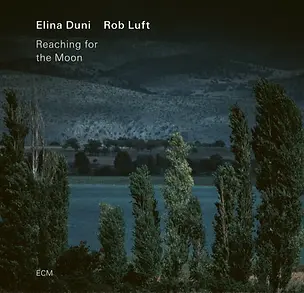
Reaching for the Moon
ELINA DUNI and ROB LUFT
Released 24 April 2026
ECM
*****
A delicately rendered dialogue, as voice and guitar trace a luminous path through jazz, folk and song with intimacy, restraint and quiet emotional depth.
The pairing of Swiss-Albanian vocalist Elina Duni and UK guitarist Rob Luft brings together two highly distinctive voices within contemporary European jazz. Duni has a long association with with ECM Records, commencing with "Matane Malit" (2012) and including two previous recordings with Luft and their co-led quartet "Lost Ships" (2020) and "A Time To Remember" (2023).
Luft, one of the UK’s most expressive guitarists, combines technical fluency with a strong melodic instinct, equally at home in jazz, contemporary composition and singer-songwriter settings.
Duni has built a reputation for her nuanced interpretations of folk traditions and her ability to move fluidly between languages and styles. Her work often draws on Balkan roots while maintaining a broader, cosmopolitan sensibility.
Reaching For The Moon continues their collaborative trajectory, and the choice of a duo format, allows them to prioritise space, attentiveness and subtle interaction rather than complexity or volume.
Duni’s singing is poised and unforced, capable of conveying emotional nuance without overt display. Luft’s guitar work responds in kind, whether providing harmonic grounding, or shaping the music through lightly-applied texture and subtle phrasing.
The repertoire reflects this balance - a programme that begins with Irving Berlin’s title song and ends with Ornette Coleman’s “Lonely Woman”. Along the way we hear Duni and Luft originals, traditional music from Kosovo, a lullaby penned by Persian singer Mahsa Vahdat, a ballad from Italian singer-songwriter Pino Daniele, French composer Gabriel Fauré’s art song “Les Berceaux”, themes for film written by Japan’s Shigeru Umebayashi and Poland’s Krzysztof Komeda, and more.
There is little in the way of dramatic contrast; instead, the album sustains a consistent atmosphere, where small shifts in tone and dynamics carry expressive weight.
Like most ECM releases, the recording captures the duo's clear artistic intent and presents a listening experience that feels intimate, almost private.
Read more...

These Are Soulful Days
JAMES BRANDON LEWIS
& LUTOSŁAWSKI QUARTET
Released 18 April 2026
TAO Forms
*****
A profound and elegantly constructed convergence of jazz improvisation and chamber form, channelling history, spirituality and collective memory into a singular, deeply resonant statement.
Few artists of his generation have risen with the clarity and momentum of James Brandon Lewis. Born in 1983, the tenor saxophonist and composer has become a defining voice in contemporary jazz, recognised for his blend of spiritual intensity, historical awareness and compositional ambition. Named DownBeat’s 2025 Artist of the Year, his recent work, from Jesup Wagon (2021) to For Mahalia, With Love (2023) has consistently topped critics’ polls, affirming his growing stature.
Although performed in 2021, These Are Soulful Days marks a significant expansion of Lewis's practice: his first extended composition for string quartet and saxophone, performed here with the Lutosławski Quartet.
Commissioned for the Jazztopad Festival in Wrocław, the work draws on a “quilted history” of African-American music - blues, spirituals and jazz - reframed within a chamber setting.
The piece unfolds with a sense of purpose that feels both grounded and expansive.
From its opening passages, the interaction between Lewis’s tenor and the quartet establishes the album’s central dynamic. The masterful integration of saxophone and strings forms a shifting harmonic and textural field, with elements sometimes leading, sometimes dissolving into the ensemble.
Lewis’s compositional voice is unmistakable. Themes rooted in blues and spiritual traditions emerge clearly, and are absorbed into a broader musical language that balances lyricism with structural clarity. .
Ultimately, These Are Soulful Days honours tradition while extending it, and presenting a vision that feels at once personal, historical and forward-looking.
Read more...

Fidelity
YAYA BEY
Released 17 April 2026
drink sum wtr
*****
A deeply personal yet outward-looking work where Yaya Bey reframes grief, identity and resilience — transforming private rupture into a broader meditation on community and survival.
Queens-born Yaya Bey has emerged as one of the most compelling voices in contemporary R&B and soul, blending diaristic songwriting with sharp social awareness. The daughter of Ayub Bey (1968-2022), known as Grand Daddy I.U., an American rapper who was a member of the hip-hop collective Juice Crew during the 1980s, she draws from a lineage rooted in hip-hop while shaping a sound that moves fluidly across R&B, jazz, reggae and alternative soul.
Her recent work, particularly do it afraid (2025) and Ten Fold (2024), brought increasing attention to her exploration of grief and identity. Yet with that recognition came a tension, a sense that her music risked being reduced to narratives of loss. Fidelity arrives as both continuation and correction - a companion piece that broadens her thematic scope while deepening her artistic intent.
The album is structured around what Bey describes as “Three Deaths” - the personal, the communal and the loss of innocence, but it resists becoming defined by these alone. Although the death of her father lies at it's core, Bey approaches the album as part of a broader pattern. Questioning why it is that Black artists are so often celebrated posthumously, especially in white-controlled media, she reframes her mourning as critique. This extends outward into the “death of home,” where gentrification, diaspora fragmentation and the pressures of modern identity erode collective belonging.
Musically, the album mirrors this complexity. The album's first single, “Blue” opens with a lightness that belies its origin in emotional collapse, drawing on early-2000s R&B textures to create a sense of self-dialogue, a conversation between past and present. “Forty Days” pairs disco-inflected brightness with meditations on transition and afterlife, while “Egyptian Musk,” featuring NESTA, introduces a warm, reggae-tinged palette that underscores the album’s sense of cultural continuity.
Read more...
clicking cover art opens Spotify

Glorious Mahalia
KRONOS QUARTET
Released 3 April 2026
Smithsonian Folkways Recordings
*****
A powerful and reverent exploration of legacy and spirituality that sees traditional string quartet and contemporary compositional techniques converge to honour the enduring voice of Mahalia Jackson, in interview and majestic performance.
For over five decades, the Kronos Quartet has redefined what a string quartet can be, commissioning hundreds of works and collaborating across genres, cultures and disciplines. Known for their commitment to contemporary composition and social themes, the ensemble consistently expands the classical canon.
On Glorious Mahalia, they work with two distinct compositional voices. Prolific US composer Stacy Garrop brings a narrative-driven, expressive style rooted in classical tradition, while California-based composer, musician, engineer, producer Zachary James Watkins draws from experimental, electronic and spatial practices. Together, their suites form complementary perspectives on the life, spirit and cultural impact of gospel legend Mahalia Jackson. And in between, listeners are treated to a newly arranged version of “God Shall Wipe All Tears Away,” with Jackson’s powerful vocals set to new music by multi-instrumentalist and composer Jacob Garchik.
Garrop’s Glorious Mahalia (Parts I–V) is grounded in storytelling. The music accompanies archival audio from two moments in Jackson’s history: a 1957 live performance of gospel and spirituals in her adopted hometown of Chicago, and a 1963 interview with her friend, the radio broadcaster Studs Terkel, which covers a wide range of topics including Jackson’s experiences of working in the South, the continuing hardships she faced as a Black woman, and the civil rights efforts of her friend Dr. Martin Luther King Jr. Her writing leans into the quartet’s lyrical capabilities, as rich harmonies, clear melodic lines and carefully shaped dynamics evoke both the emotional intensity and spiritual conviction associated with Jackson’s voice. There is a sense of reverence throughout, with passages that feel almost hymn-like, balancing restraint with moments of quiet grandeur.
In contrast, Watkins’ Peace Be Till (Parts I–V) approaches the material more abstractly. The music in this suite sits behind audio from an interview that was recorded for the album with Martin Luther King Jr’s speechwriter and lawyer Clarence B. Jones, concerning the civil rights efforts of the great activist. Texture and space take precedence over melody, with extended techniques, subtle electronic inflections and shifting tonal centres creating a more meditative, sometimes unsettled atmosphere. Where Garrop reflects the outward expression of faith, Watkins seems to explore its inner dimensions.
The Kronos Quartet navigates both approaches with characteristic precision and sensitivity. Their ability to move between warmth and austerity, structure and openness, is central to the album’s success. Glorious Mahalia ultimately succeeds through contrast - two compositional voices, distinct yet complementary, brought together by an ensemble uniquely equipped to realise both vision and nuance.
Read more...

Future Present Past
IRREVERSIBLE ENTANGLEMENTS
Released 27 March 2026
Impulse!
*****
A fiercely articulate and musically expansive convergence of free jazz energy and radical poetry - urgent, unflinching and deeply collective in spirit.
Irreversible Entanglements operates as a tightly unified sextet rooted in improvisation and political expression. At its centre is Camae Ayewa (Moor Mother), whose spoken-word delivery channels history, resistance and Afrofuturist thought into visceral performance. Guest vocalist MOTHERBOARD (New York artist Kyle Kidd) expands the album’s tonal and emotional palette, appearing across half of it's tracks with a more abstract, textural vocal presence.
New York based trumpeter Aquiles Navarro and saxophonist Keir Neuringer drive the ensemble’s melodic and improvisational language — their interplay balancing fire and lyricism. Beneath them, bassist Luke Stewart and drummer Tcheser Holmes form a powerful rhythmic core, anchoring the group’s most explosive passages with precision and elasticity.
Future Present Past wastes little time establishing its intensity, voices and instruments entering as if already in motion.
Ayewa’s presence is immediate and commanding. Her phrasing resists conventional metre, cutting across the ensemble’s surging momentum with lines that feel both declaimed and incanted.
When MOTHERBOARD enters, the dynamic shifts: vocals become less declarative, more atmospheric, hovering within the ensemble rather than leading it, adding a layered, almost spectral dimension.
Navarro and Neuringer operate in constant dialogue, their brass lines intertwining and diverging with restless energy. At times they push toward cacophony; at others, they pull back into fragile, near-unison motifs that briefly stabilise the music before it fractures again.
Stewart and Holmes play a crucial role, underpinning the otherwise divergent work of the sextet - bass provides propulsion and grounding, while drums move fluidly between driving pulse and textural fragmentation: never static, always responsive.
What distinguishes the album is its sense of collective purpose. Even at its most chaotic the work demands scrutiny - vocals feel urgent, while music feels directed: each surge, break and silence part of a larger, uncompromisingly expressive arc.
Read more...
Irreversible Entanglements Home Page
MOTHERBOARD (Kyle Kidd) Home Page

No Way But Through
CHARLOTTE COLACE
Released 13 March 2026
Charlotte Colace
*****
A brief but striking debut from an artist rich with promise, in which vintage soul meets raw, modern sensibilities across five introspective songs.
Berlin-based singer-songwriter Charlotte Colace arrives with a sound shaped by her French-Cuban heritage and a grounding in contemporary neo-soul. A graduate of BIMM Berlin, she has built her craft through a range of collaborative projects, and work as a backing vocalist for artists such as Omah Lay, Nick Hakim and Noah Slee.
With No Way But Through, created alongside producer Aron Hentschel, Colace steps forward as a fully realised artist, drawing on classic soul traditions while shaping a distinctly personal voice.
At just 16 minutes, No Way But Through is more introduction than statement, but what it reveals is remarkably assured. Across five songs and three brief, mood-setting interludes, Colace establishes a clear aesthetic: 1960s soul textures refracted through a contemporary lens. The influence of Amy Winehouse is evident in the phrasing and tonal warmth, while echoes of Donny Hathaway surface in the emotional directness. There are also subtler traces of Portishead in the mood-setting passages (such as "In My Bones"), where atmosphere and restraint take precedence over melody.
What distinguishes the album is its balance between polish and edge. Hentschel's production is deliberately uncluttered, allowing Colace’s voice to carry the weight. There is a slight grain to the recordings, a sense of immediacy that prevents the retro influences from feeling overly stylised.
Lyrically, the material leans into themes of perseverance and self-definition, suggested as much by tone as by narrative detail. The brevity of the release works in its favour: there is no overextension, only a concise statement of intent.
No Way But Through ultimately feels like a beginning, delivered with clarity, confidence and a strong sense of direction.
Read more...
clicking cover art opens Spotify

Anata
JOSHUA CHUQUIMIA CRAMPTON
Released 6 March 2026
Self Released
*****
A fierce and transformative work in which the guitar leads the ceremonial distortion of ancient Andean musical structures - thereby reimagined with a combination of noise, electricity and ecstatic force.
Joshua Chuquimia Crampton first emerged to attention through Los Thuthanaka, his collaboration with sibling Chuquimamani-Condori, whose 2025 self-titled release was hailed as one of the year’s most radical and important records. Rooted in Aymara identity (an Indigenous people numbering approximately 2.3 million in the Andean Altiplano region of Bolivia, Peru, Chile, and Argentina) and informed by ceremonial tradition, Crampton’s work refuses the separation between experimental music and cultural practice.
Anata, his fifth solo album, takes its title from the Aymara Anata ceremony, an offering to Pachamama (goddess representing fertility, nature, and the cosmos), shaped by the principle of ayni (reciprocity between humans and nature). Rather than “representing” ceremony, Crampton aims for what he calls “activated ceremonial music” - sound that is lived, physical and transformative rather than merely observed.
Anata sounds less like an album than an event. It announces itself immediately with “Chakana Head-Bang!”: a low-end bombo italaque pulse, then a guitar entrance so violent it feels geological, less riff than rupture. Crampton’s electric guitar does not behave like an instrument of melody so much as a medium of force, tearing through the mix with a rawness Pitchfork rightly called “some of the most elemental, in-the-red music ever recorded.”
The remarkable thing is that this intensity never feels chaotic. Beneath the distortion lies a deep structural relationship to Andean musical forms: huayno rhythms, salay motion, charango and ronroco textures, all reassembled through volume, repetition and ecstatic improvisation. “Ch’uwanchaña ~El Golpe Final~” captures this perfectly, where heavy-metal propulsion gives way to something ceremonial and communal rather than merely aggressive. Equally striking are a pair of ambient dissolutions - “Jallu” and the second half of “Convocación”, where the storm clears into something luminous and suspended. These moments do not contrast the heavier sections so much as complete them, like the silence after ritual. The deliberately “unmastered” sound - clipping, distortion and overload - is meant to feel like a ceremony caught on a phone camera, too alive to be properly contained by recording technology.
At just 25 minutes, Anata is brief, but it feels enormous. This is not simply experimental guitar music. It is anti-complacency music, anti-colonial music, music designed not just to be heard but to alter the body listening to it. Few albums this year feel as necessary.
Read more...
Joshua Chuquimia Crampton Bandcamp

Sounds Have Dreams
ASTEROID EKOSYSTEM
Released 13 February 2026
Asteroid Ekosystem
*****
A deeply immersive electro-acoustic work shaped by four of Australia’s most accomplished improvisers — where subtle interplay and sonic architecture take precedence over convention.
Asteroid Ekosystem brings together a formidable collective of Australian musicians whose combined histories span jazz, experimental rock and improvised music at the highest level. Pianist Alister Spence is widely regarded as one of the country’s most inventive composers and improvisers, with projects bridging jazz and avant-garde traditions. Guitarist Ed Kuepper, best known as co-founder (with Chris Bailey) of proto-punk band The Saints, leader of Laughing Clowns and a prolific solo career, brings a raw, textural sensibility. Double bassist Lloyd Swanton (The Necks) anchors the ensemble with deep, resonant minimalism, while drummer Toby Hall contributes a highly responsive, detail-oriented rhythmic language. Together, they form a group defined by collective intuition, untethered from the constraints if genre, creating new musical forms based around listening, space and the development of long-form musical figures .
Sounds Have Dreams unfolds with a quiet sense of intent, its movements gradual, its shifts almost imperceptible. Opening passages establish a low-frequency foundation: pulsing kicks, soft-edged piano figures and distant, reverberant guitar textures. Rather than pushing forward, the music expands and explores. Elements enter and recede, working in cycles, creating a sense of suspended momentum, as though each track exists in its own orbit. Mid-album highlights "Catch Breath", Off Axis" and"Open To" exploit this balance as they range between inactivity and progression. Swanton’s bass provides a gravitational centre; Hall’s percussion traces subtle, constantly shifting patterns around it; Spence’s piano moves between harmonic anchor and textural colour, and Kuepper’s guitar introduces grain, distortion and fleeting melodic fragments.
Asteroid Ekosystem is part of a generation of musicians whose careers as composers and recording artists has spanned punk adolescence to avant-jazz maturity. What stands out now, is the ensemble’s restraint, in contrast to their urgency as youths. Even at its most rhythmically engaged, the album resists climax. There is no dramatic peak, only continuous evolution, a steady recalibration of texture and space. In its closing stretch, the music leans further into abstraction, allowing ambience to take precedence over structure.
Sounds Have Dreams ultimately succeeds through cohesion: a carefully shaped listening experience grounded in sensitivity to the collective and decades of shared musical intelligence.
Read more...
Lloyd Swanton Wikipedia

Manifeste
TIGRAN HAMASYAN
Released 5 February 2024
naive / Yergatum
*****
A vast, visionary work that expands the boundaries of contemporary music by bringing ritual and rhythm together with Armenian tradition - forging a deeply spiritual and sonically daring union.
Over the past two decades, Tigran Hamasyan has established himself as one of the most singular voices in contemporary music, fusing jazz improvisation, progressive rock intensity and the deep well of Armenian folk tradition. Emerging as a prodigious talent (winning the Montreux Jazz Festival piano competition at 16 and the Thelonious Monk Competition shortly after), Hamasyan has continually expanded his artistic scope.
His recent work, including the ambitious transmedia project The Bird of a Thousand Voices created with Ruben Van Leer, reflects a growing interest in myth, ritual and interdisciplinary storytelling.
With Manifeste, he brings these strands into sharper focus, presenting a work that is both personal declaration and cultural meditation.
The work unfolds as a journey, not simply across styles, but through states of being, almost as a ritual sequence. The album moves from the explosive opening “Prelude for All Seekers” into a series of interconnected sound worlds, each defined by its own balance of density and space. Hamasyan’s pianistic virtuosity remains at the centre, but is increasingly placed within a broader sonic architecture - synthesizers, choral episodes and intricate rhythm section interplay all contribute to a richly layered whole.
Tracks such as “A Eye (The Digital Leviathan)” introduce a striking tension between the organic and the technological, its heavy, almost progressive-metal framework offset by melodic fragments drawn from Armenian tradition.
Elsewhere, “E flat Venice – Per Mané” shifts toward a more fluid, electronic palette, with vocals and rhythmic programming creating a sense of forward motion that feels both contemporary and dislocated.
The album’s emotional core lies in its choral and ambient passages. “National Repentance Anthem,” featuring the Yerevan State Chamber Choir, evolves from stark minimalism into something expansive and luminous, while “Years Passing (For Akram)” and the closing “The Fire Child (Vahagn Is Born)” emphasise atmosphere and reflection.
Throughout, Hamasyan navigates complexity without losing coherence. His integration of folk melody, advanced rhythm and modern production never feels ornamental; each element serves the larger arc.
Manifeste ultimately achieves what few albums attempt: it operates simultaneously as musical statement, spiritual inquiry and cultural synthesis: a work of rare ambition, realised with precision and conviction.
Read more ...
clicking cover art opens Spotify

existential thottie
DUENDITA
Released 29 April 2026
10k
*****
Fearless, funny and devastatingly intimate songwriting as a means of survival, in a record where sex, sadness, illness and self-preservation collapse into the same breath.
Queens-born, Berlin-based duendita (Candace Camacho) has quietly become one of the most distinctive, self-styled voices working in a space between neo-soul, jazz, experimental R&B and confessional songwriting. Classically trained and shaped by gospel, church music and New York’s DIY scene, her breakthrough debut direct line to My Creator (2018) introduced a rare kind of emotional nakedness - songs that felt less performed than confessed.
Her 2025 album a strong desire to survive deepened that intensity, reading like a document of endurance rather than a conventional record. As we noted in our review at the time, it felt like “a transmission from someone trying to stay alive through song.”
Her fourth album, existential thottie, is somehow even more intimate: smaller in scale, sharper in language, and startlingly direct in its emotional honesty. It is similarly direct in delivery, just a dozen short songs, all under three minutes and the entire set over in just eighteen!
If the album title reads like a joke, it belies the content.“thottie” represents appetite, desire, bodily pleasure, mess. “existential” invokes dread, mortality, collapse, the long dark night of the soul. duendita refuses to separate them. On this album, wanting sex and wanting peace are often the same emergency.
Nothing here is cleaned up for poetic dignity. It is funny, vulgar, wounded and totally serious, all at once. It's an album that inverts privacy, and whose honesty is brutal: on “toxic and evil”, the devastatingly direct chorus, "No, no, I’m not okay. Need to be with myself today.”
Musically, the record moves through warm bass, harp, jazz drums, layered harmonies and bedroom-built electronics. duendita describes it as songs made “head 2 toe” often alone with her Digitakt (a digital drum machine) before inviting collaborators. That intimacy remains audible throughout, yet despite the lyrical intensity (and limited song durations), it is often soulful and danceable.
The remarkable achievement is that existential thottie never becomes misery music. Although it's not a comfortable journey, the album's lyrical intensity is offset by its overall brevity, and the final track "real better soon" lands wryly and optimisticly:“so glad I didn’t die when my mind tried to flicker off the lights.”
This is an album about coping, rather than healing; it is about being able to continue - perhaps, a braver thing.
Read more...
.jpg)
SAGES (Echoes Edition)
OLAFUR ARNALDS, LOREEN
Released 24 April 2026
Mercury KX
****-
A fluid, two-part release of ambient songcraft, giving way to electronic reinterpretation - a set of remixes that expand the music’s emotional core in rhythm, space and motion.
The collaboration between Ólafur Arnalds and Loreen brings together two artists shaped by very different musical paths. Arnalds, a BAFTA-winning composer, has built his reputation by dissolving boundaries between classical minimalism, ambient music and electronics. His post-pandemic work has drawn on themes of solitude, nature and process.
Loreen, born Lorine Zineb Nora Talhaoui, rose from early Swedish TV appearances to global recognition through her breakthrough with “Euphoria” and victory at the Eurovision Song Contest 2012 (and again in 2023). Her artistry blends pop, electronic and deeply personal expression shaped by her Moroccan-Swedish heritage.
Comprising two discs, the album first establishes the core material of four pieces "In The Sound Of Breathing", "Unknowing", Opening" and "Echoes": spacious, contemplative compositions in which Arnalds’ piano figures and ambient textures create an open field for Loreen’s voice. Tracks like “In The Sound Of Breathing” and “Unknowing” emphasise restraint, her vocals often dissolving into the arrangement rather than sitting above it. The result is less song-driven than atmospheric, prioritising tone and presence over structure.
Disc 2 reframes the project. Comprising four four remixes (and surprisingly not "Echoes") its reinterpretations reveal the music’s latent rhythmic and emotional possibilities. George FitzGerald’s take on “In The Sound Of Breathing” introduces a steady pulse, grounding the piece in a subtle club-adjacent framework without losing its introspective quality.
The remix of "Unknowing" by Lara Somogyi & Cyrus Reynolds retains the track’s delicacy, but refracts it through layered textures and a more cinematic sense of space.
Most striking is Sofía Kourtesis’ reworking of “Opening,” which draws the composition toward a warmer, more expansive electronic language, suggesting connection and uplift where the original leans inward.
Finally, Jessie Marcella’s version circles back to intimacy, using rhythm sparingly to preserve the track’s emotional core.
Together, these remixes complete the album’s arc: from stillness to motion, from interior reflection to shared experience.
SAGES (Echoes Edition) ultimately succeeds not just as a collaboration, but as a study in transformation, where the same material, refracted through different hands, reveals new emotional truths.
Read more...
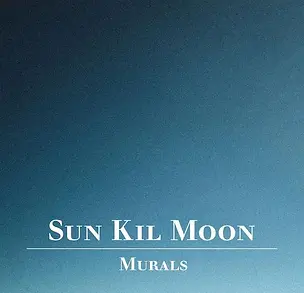
Murals
SUN KIL MOON
Released 21 April 2026
Caldo Verde Records
***--
A stark and immersive work in which spoken recollection and minimal accompaniment converge, transforming everyday observation into something quietly compelling, unexpectedly intimate - in small doses.
Sun Kil Moon is the long-running vehicle of Mark Kozelek, whose career has moved steadily away from conventional songwriting toward a form of diaristic, spoken delivery. Emerging initially from the more structured, melodic framework of Red House Painters, Kozelek has, over time, stripped his music back to its barest elements, favouring long-form narration over traditional verse-chorus form.
This approach places him within the lineage of confessional and observational songwriting (Leonard Cohen, Joni Mitchell, Lou Reed, James Taylor, Nick Cave ...), though his method is more literal, closer to oral history than lyric poetry.
With Murals, and album of four extended pieces, each unfolding as a continuous monologue, that trajectory reaches a new level of focus.
To describe them as “songs” feels slightly misplaced. Kozelek’s delivery sits somewhere between speaking and singing - a dry, uninflected recitation that prioritises detail over drama. The accompanying music follows suit: understated, repetitive, almost neutral. At times, it feels less like composition than setting, a functional backdrop that allows the words to occupy the foreground.
And yet, this apparent plainness is precisely what gives the album its force. Each piece operates like a mural, as the title suggests: a broad, accumulating surface of observation and memory. There is no conventional narrative arc, no clear resolution, and little sense of authorial shaping. Instead, meaning emerges through proximity, the sense of being placed close to the speaker, listening as events, reflections and digressions unfold in real time. As with the best confessional songwriting, the power lies not in stylistic flourish, but in access, the feeling of unmediated connection between artist and listener.
Murals will not appeal to all audiences. Its pacing is deliberate, its delivery unvaried, and its musical language intentionally restrained.
And content matters: the case for devoting an album to songs of such mundanity is not strong. The best we can say is that for those willing to engage on its own terms, it offers something increasingly rare: a sustained, intimate act of listening, where the ordinary becomes absorbing simply by being observed.
Read more...
clicking cover art opens Spotify

Decorate The Silence
KIRSTIN BERARDI, MARK SHOLTEZ
Released 16 April 2026
Mark Sholtez
****-
A study in restraint and intimacy - where slow tempos and finely shaped songs create a quietly absorbing and deeply human listening experience.
Across a two-decade career, Queensland-based songwriter Mark Sholtez has steadily refined his songwriting voice, moving from competent beginnings toward a more distinctive, deliberate minimalism. Early albums such as Real Streets (2006) and The Distance Between Two Truths (2010) situated him within a jazz-inflected singer-songwriter tradition, while The Edge of the World (2015) revealed a stronger lyrical identity, drawing inspiration from Paul Simon.
A decisive shift came with Twilight on the Trail (2018), where alongside vocalist Jen Mize, Sholtez reimagined a set of classic cowboy songs at an unusually slow tempo, focused on mood and space.
With Decorate the Silence, he extends this trajectory, writing a set of original songs with Kristin Berardi’s voice in mind - an approach that places tone, phrasing and emotional nuance at the centre of the work.
These are slow songs - often very slow - but not in a way that feels indulgent. Instead, the reduced tempo creates space for melody, lyric and vocal tone to register with unusual clarity.
Voice is central to this effect - phrasing is measured and precise, sustaining emotional tension without overstating it, and well suited to Sholtez’s understated writing.
The arrangements follow suit. Piano, light rhythm section and subtle harmonic movement provide a framework that never intrudes. There is little here that demands attention in a conventional sense - no dramatic peaks or overt gestures - yet the music holds focus through consistency of mood and careful control of detail.
What’s notable is how the album avoids sentimentality. Given the intimacy of the material, it could easily tip into something overly sweet or static.
Decorate the Silence ultimately succeeds through restraint: a quiet, deliberate work that reveals its depth gradually rather than all at once.
Read more...

Live At Forum II
KUTCHA EDWARDS
CASH SAVAGE AND THE LAST DRINKS
Released 14 April 2026
Kutcha Edwards
****-
A powerful live document of cultural exchange and emotional intensity, as songlines, post-punk energy and collective storytelling converge into a deeply affecting and singular statement.
One of Australia’s most important First Nations voices, Kutcha Edwards is a Mutti Mutti, Yorta Yorta and Nari Nari songman whose work has long combined music, activism and personal testimony shaped by his experience as a member of the Stolen Generations. His songs carry both historical weight and lived truth, grounded in community, survival and connection to Country.
Opposite him, Cash Savage and the Last Drinks have built a reputation as one of Naarm/Melbourne’s most emotionally direct live acts, their performances described as overwhelming, raw and communal, blending post-punk, blues and rock into a cathartic force.
This collaboration, originally conceived as a one-night-only performance at Melbourne's iconic venue Forum II, brings these two worlds together, with the band reinterpreting Edwards’ songs in real time.
Live at Forum II captures something rare: not just a performance, but a meeting of musical languages.
At its core is Edwards’ voice - measured, resonant and deeply rooted in storytelling. His songs do not rush; they unfold, carrying narrative and cultural meaning that demands space. Around him, Cash Savage and the Last Drinks reshape that space. Their usual sonic weight - dense guitars, driving rhythm, surging dynamics - is recalibrated to serve the material, but never diminished.
It's a dramatic contrast to Edwards' previous album "Warta-Kiki: Come Together", his recent collaboration with Melbourne Youth Orchestra, but Edwards' passionate storytelling is at the heart of each.
The result this time is tension of the best kind. Edwards’ grounded delivery meets the band’s emotional volatility, creating arrangements that feel both anchored and expansive. Songs that may have originally leaned toward folk or blues are reimagined with a rawer, more confrontational edge - amplifying their urgency without overwhelming their intent.
By all accounts of the original performance, there was a feeling that “the band locked in” - a shared momentum that transformed reinterpretation into something closer to communion and is captured in the recording. The audience presence is palpable but never distracting, as Edwards interacts with his humor, forcefulness and sincerity: a dialogue built on respect, risk-taking and the willingness to let songs evolve in real time.
Read more...

Kammerkonzert
SQUAREPUSHER
Released 10 April 2026
Warp Records
****-
A fiercely intricate and uncompromising work where chamber composition, electronic abstraction and virtuosic musicianship collide, pushing Squarepusher’s restless imagination into bold new terrain.
For over three decades, UK virtuoso bassist and programmer Squarepusher (Tom Jenkinson) has occupied a singular position within electronic music, with work that fuses drum & bass, jazz, acid and experimental composition. Since his mid-1990s releases on Warp Records, he has consistently challenged the boundaries of genre, moving between hyperkinetic breakbeats and more harmonically complex, composition-driven work.
Kammerkonzert, his seventeenth studio album, marks a notable shift, even for such a enquiring artist. Drawing on ideas he began developing for orchestral writing in the mid-2010s, the record prioritizes chamber music structures and compositional form, reconfiguring his long-standing interests in rhythm and texture into startling new pieces that are more formally rigorous and deliberately constructed.
In many ways, the result is exactly what its title suggests - a “chamber concert” - but realised through the artist's singular, maximalist lens.
Across 14 tightly sequenced pieces, the album replaces the familiar velocity of drill’n’bass with intricately layered, multi-part compositions, where electronic programming, jazz harmony and orchestral thinking coexist in a state of constant tension. The opening suite of tracks, from "K1 Advance", “K2 Central”,“K3 Diligence” to "K4 Fairlands", typify of this approach: orchestrally-rich, rhythmic frameworks feel coiled and unstable, as if ready to fracture, while melodic material darts between registers with near-classical precision. Skittering percussion and rapid-fire baselines build tension above glowing bass elements, building to a frenzied string-heavy finale.
Mid-album, the slowly-paced "K5 Fremantle" and "K6 Headquarters" provide mellow relief from keyboards and strings.
As the album progresses, textures and pacing changes constantly: “K7 Museum” introduces lurching, funky textures, that edge towards but never quite descend to chaos; "K8 Park", led by lightly fingerpicked guitars, provides sweet respite - one of the few moments where the music takes breath; "K9 Reliance","K10 Terminus" and "K12 Uplands" segue into darker more ominous, territory. In the manner of a soundtrack album, the album continues to surprise at each turn. The penultimate track "K13 Vigilant" transforms the album's most regular rhythm into it's most frantic, and finally, the funereal church-organ of "K14 Welbeck" brings this remarkable album to its conclusion.
More than merely satisfied to incorporate orchestral elements, Kammerkonzert is electronic composition re-imagined orchestrally. This is not an easy listen. It is rigorous and sometimes abrasive, but by embracing abrupt shifts, dense counterpoint and structural rigor, this is ultimately a rewarding musical declaration, that affirms Squarepusher’s position as a composer as much as a producer.
Read more...
clicking cover art opens Spotify

Hope and Fury
JOE JACKSON
Released 10 April 2026
Sharp Practice / earMUSIC / Edel Music & Entertainment
****-
A sharp, revitalised return that swaps theatrical nostalgia for modern bite — pairing literate songwriting with sleek, confident production.
Few artists have navigated stylistic reinvention as restlessly as Joe Jackson. Emerging from the late-70s new wave alongside peers with Look Sharp! (1979) and many other stunning albums, he quickly distinguished himself through wit, melodic precision and an openness to jazz, classical and music hall traditions. Early hits like Is She Really Going Out with Him? and It's Different for Girls established his voice, but his career (like that of his contemporary Elvis Costello, to whom he was frequently compared) has thrived on divergence rather than repetition. Following the period stylings of this album's immediate predecessor Mr. Joe Jackson Presents: Max Champion in ‘What a Racket!(2023) and the narrative depth of Fool (2019), Hope and Fury finds Jackson re-engaging with the present - musically direct, and lyrically rooted in his unmistakable British sensibility. The album feels like a deliberate recalibration - return to the immediacy of the rhythm-forward, tightly arranged, contemporary textures upon which his career is built. The production is crisp without being sterile, giving Jackson’s piano and vocal phrasing room to cut through with clarity and intent.
There’s a renewed sense of momentum throughout. Songs pivot quickly, driven by sharp melodic hooks and chord progressions that recall his earlier work without imitating it. Crucially, Jackson resists nostalgia: rather than revisiting past formulas, he reframes his strengths, wit, economy, and harmonic sophistication, within a modern sonic palette.
Lyrically, his voice remains distinctly British - observational, dry, occasionally biting -capturing social nuance with the same precision that once defined his early writing. Yet there’s also a looseness here, a sense of enjoyment in the craft that keeps the album from feeling overly calculated.
Hope and Fury ultimately succeeds because it doesn’t attempt reinvention for its own sake. Instead, it presents an artist re-energised, drawing on decades of experience while sounding engaged, contemporary and, most importantly, fully alive to the moment.
Read more...

Body Sound
LIA KOHL, MACIE STEWART, WHITNEY JOHNSON
Released 8 April 2026
International Anthem
****-
A deeply immersive and quietly mesmerising work where improvisation, space and texture converge - dissolving the boundaries between composition, environment and collective listening.
Chicago-based trio Whitney Johnson (viola), Lia Kohl (cello) and Macie Stewart (violin) each arrive with substantial individual practices spanning experimental composition, improvisation and interdisciplinary sound art. Johnson’s work often explores psychoacoustics, installation and multi-channel sound; Kohl’s practice bridges cello performance with field recording and everyday sonic phenomena; while Stewart moves fluidly between indie, contemporary classical and collaborative composition.
Released via International Anthem, a label synonymous with boundary-pushing jazz and improvised music, Body Sound brings these trajectories into alignment. The trio’s approach centres on collective improvisation, using viola, cello, violin, voice and analog tape manipulation to create music that is at once immediate and carefully shaped. Their stated aim is not simply to play together, but to listen and respond in real time, treating space itself as a collaborator.
Built from improvised sessions recorded across multiple spaces, the album is later reshaped through analog tape processes - loops, edits and re-layering that function as a second stage of improvisation. This dual process gives the music its distinctive quality: fluid yet deliberate, intimate yet spatially expansive.
Influences include composer Pauline Oliveros, whose “deep listening” philosophy resonates strongly in the trio’s sensitivity to space and environment, as well as the broader Chicago experimental community orbiting artists like Jeff Parker and Joshua Abrams. At the same time, Macie Stewart’s connections to more song-oriented projects such as Ohmme subtly anchor the music in melodic intuition.
A useful (if indirect) point of reference might also be Velvet Underground member John Cale, particularly his 1972 masterpiece The Academy in Peril. Like Cale, the trio approaches string instruments not as fixed within classical tradition, but as material to be reshaped, balancing structure with disruption, and form with atmosphere.
Body Sound resists conventional structure, yet communicates with clarity - a quietly mesmerising work that feels less tied to any single tradition than to a way of working that treats listening, space and collaboration as compositional tools in their own right.
Read more...
Whitney Johnson, Lia Kohl, Macie Stewart International Anthem

Indigo Garden
BLACK NILE
Released 10 April 2026
MASS MoCA Music
****-
A richly textured homage to Los Angeles jazz lineage, that brings spiritual jazz, fusion, ambient electronics and civic memory together.
Black Nile is the Los Angeles-based project of brothers Aaron Shaw and Lawrence Shaw, two musicians who came of age during the city’s modern jazz renaissance that followed the catalytic sessions around Kendrick Lamar’s To Pimp a Butterfly.
Emerging in proximity to the deep creative influence of giants such as Kamasi Washington, Terrace Martin and Thundercat, the Shaws developed Black Nile as what they call “the music of now” - jazz shaped equally by improvisation, hip-hop production, sampling culture and Black liberation thought.
Aaron, a formidable saxophonist whose credits include work with Tyler, the Creator and collaborations across LA’s creative underground, leads melodically, while Lawrence anchors the project through bass, structure and conceptual vision.
Their fourth album, Indigo Garden, feels like both culmination and declaration, but is fundamentally an album about place.
Its song titles - “City of Silent Angels,” “Slauson Fog,” “Day Break,” “City on Fire” - immediately locate the listener inside Los Angeles, but the connection runs deeper than geography. The arrangements themselves capture the city’s contradictions: warmth and danger, beauty and tension, spiritual openness and urban compression. Pitchfork described it as “a lost scroll of L.A. jazz’s righteous 2010s era,” and that feels exactly right.
Aaron Shaw’s saxophone is the emotional centre. On “Exposure,” its recurring motif flutters with surprising lightness; on “City of Silent Angels,” it cuts through a restless, almost robotic rhythm section that nods toward Flying Lotus’ astral electronics. Myles Martin’s drumming is exceptional throughout - never settled, always pushing, constantly reshaping the ground beneath the music.
Spoken-word fragments from community voices and elders reinforce the idea that this is not jazz just for show, but jazz as civic practice - built through listening, memory and shared inheritance.
There are moments where one wishes certain ideas stretched further: “City on Fire” (for example) could have been extended, but sometimes a glimpse or understatement is as profound as manifesto.
Indigo Garden does not try to reinvent LA jazz tradition. it inhabits it fully, lovingly, and with enough originality to keep it moving forward.
Read more...
clicking cover art opens Spotify

Distracted
THUNDERCAT
Released 3 April 2026
Brainfeeder
****-
A richly layered, genre-blurring return that displays virtuosity and vulnerability in equal measure and brings the accessibility of pop music to a suite of deeply sceptical, introspective songs.
Few artists have done more to fold jazz sensibility into contemporary LA pop and hip-hop than Stephen Bruner (aka Thundercat). Emerging from a background that includes work with Flying Lotus and key contributions to Kendrick Lamar’s To Pimp a Butterfly, Bruner helped reintroduce jazz harmony, improvisation and virtuoso bass playing into mainstream-adjacent music.
His solo trajectory reflects this evolution: Apocalypse (2013) fused cosmic jazz with R&B; Drunk (2017) expanded into fragmented, pop-leaning miniatures; and It Is What It Is (2020) distilled grief and humour into a more focused, song-driven format. Across these releases, Thundercat has steadily moved toward accessibility without abandoning complexity.
His first album in five years, Distracted continues this progression: broadening his reach as he sharpens his thematic focus, the album operates across a wide musical spectrum, but its core concerns are strikingly unified.
The guest list is expansive: A$AP Rocky, WILLOW, Tame Impala, Flying Lotus, Channel Tres, Lil Yachty, and a posthumous appearance from Mac Miller all contribute distinct textures. Yet the album avoids feeling fragmented, largely due to Thundercat cohesive musical vision.
A notable shift is the involvement of Greg Kurstin, whose mainstream pop credentials (from Adele & Paul McCartney to Gorillaz) bring a cleaner, more structured production style. The result is a sleeker surface: hooks are clearer, arrangements more direct, and songs more conventionally shaped, though still anchored by Thundercat elastic bass lines and harmonic richness.
Beneath this veneer of accessibility lie numerous unsettled perspectives. Musically, the album opens with "Candlelight", a dose of the dense, intricate jazz that Thundercat is renowned for, and follows with "No More Lies", the duet with Tame Impala, the first of the album's pop-infused tracks. Next, Thundercat recalls a Mac Miller collaboration, upping the tempo and adding a funk-infused rap workout. An so it builds with Thundercat rolling out song after impeccable song, each of them demanding - and rewarding - close attention to their masterful arrangements. Lyrically, Distracted focuses on disconnection in all its forms - from technology, from progress, from one's self. In addition, there is deep and recurring scepticism toward the idea that things are improving; instead, Thundercat presents a world of constant stimulation masking an emotional drought. Bright, inviting sonics coexist with doubt and unease, but it is this tension that defines the album.
As a consequence, Distracted ultimately succeeds by embracing this contradiction, using the accessibility of pop to sharpen serious questions.
Read more...

Dusk
BUD ROKESKY
Released 8 April 2026
Rainbow Valley Records / Warner Music Australia
****-
A beautifully understated collection in which voice, songcraft and atmosphere align - carrying a timeless folk sensibility through dusk-lit arrangements and quietly assured storytelling.
With his sophomore album, the follow up to "Outsider" (2023), Bud Rokesky arrives with a rare sense of completeness. From the first moments of Dusk, his voice, a resonant baritone, establishes both identity and intent. It’s a quality that immediately recalls the narrative warmth of John Prine, while sitting closer in tone to the deeper registers of Lee Hazlewood and Johnny Cash.
Beyond the voice, Rokesky demonstrates a fully formed artistic approach: measured songwriting, unforced phrasing, and a timeless production style that favours space and clarity over contemporary embellishment. The result is an artist who feels less like an emerging presence than one stepping into an already well-defined lane.
Dusk is built around feel - and it gets that right from the outset.
Rokesky’s baritone does much of the work, not through force, but through control. He understands pacing, allowing lines to settle and resonate, and his phrasing gives even simple lyrics a sense of weight. There is an ease here that can’t be manufactured; it suggests a deep familiarity with the traditions upon which he draws.
The arrangements mirror this restraint. Acoustic guitar forms the backbone, supported by subtle instrumentation that never crowds the vocal. The production is warm, slightly shadowed - appropriate to the album’s title - creating a consistent tonal palette that holds the songs together.
While the influences are clear, they are not overplayed. And Dusk moves far beyond homage with its balance. Rokesky avoids pastiche by focusing on delivery and detail rather than stylistic cliche. Although songs move at a similar pace, this only adds cohesion to the album. Small shifts in melody and texture keep the set from settling into sameness.
Songs like "Hey Now", "45", "All I Need", "Dear Brother", "Dark Night" (and others) sound like classics-in-waiting, likely to be covered by other artists before long. Rokesky's inclusion and interpretation of Joy Division's "Love Will Tear Us Apart" is perfectly placed - an exquisite artistic choice.
Read more...

JID 26 Antonio Carlos & Jocafi
ANTONIO CARLO & JOCAFI
ADRIAN YOUNGE, ALI SHAHEED MUHAMMAD
Released 3 April 2026
Jazz Is Dead
****-
A warm and respectful collaboration that bridges Brazilian soul and contemporary analog production - honouring legacy while subtly reframing it for a new context.
Jazz Is Dead continues its mission of pairing legendary artists with modern producers, here spotlighting Brazilian duo Antonio Carlos e Jocafi. Emerging in the 1970s, their work blended MPB (Música Popular Brasileira - the post-Bossa Nova genre of Brazilian urban music that emerged in the mid-1960s, blending traditional rhythms like samba and baião with foreign influences such as jazz, rock, and soul, gaining international recognition through recordings later sampled by hip-hop producers.
Since February 2022, producers Adrian Younge and Ali Shaheed Muhammad, known for their analog-focused approach, have built their Jazz Is Dead series around live instrumentation and respectful collaboration. Their work here situates Antonio Carlos & Jocafi within a contemporary sonic frame while preserving the duo’s melodic and rhythmic identity.
From the opening moments, JID026 establishes a relaxed, groove-oriented atmosphere. Guitar lines and vocal melodies carry the unmistakable warmth of Antonio Carlos & Jocafi’s songwriting, while Younge and Muhammad provide a gently structured backdrop, recording bass, drums and keys with a deliberately vintage sensibility.
The arrangements are understated. Rather than reimagining the duo’s sound in dramatic terms, the producers focus on allowing space for the natural interplay between voice and rhythm to remain central. Subtle orchestration and textural details enrich the palette without overwhelming it.
There is a strong sense of continuity throughout. The music does not seek contrast or tension; instead, it maintains a consistent reflective, melodic and rhythmically grounded tone. At times, this restraint can verge on uniformity, with tracks blending into one another. Yet this consistency also reinforces the album’s purpose: this is less about reinvention than about linking past and present.
Once more, this is a quiet but meaningful addition to the JID series - respectful, cohesive and deeply rooted in groove.
Read more...
clicking cover art opens Spotify


EP One & EP Two
BRIAN JACKSON, MASTERS AT WORK
Released 24 October 2025 & 6 March 2026
BBE Music
****-
A vibrant, cross-generational collaboration where soul, jazz and house traditions converge, driven by deep groove, legacy and a shared sense of musical purpose.
This collaboration unites two distinct but complementary legacies: Brian Jackson - keyboardist, flautist, singer, composer, and producer, best known for his seminal work with Gil Scott-Heron, and Masters At Work - the long-standing partnership of DJ, record producer Louie Vega and fellow DJ and producer Kenny Dope. Jackson brings a lineage of spiritual jazz, soul and politically conscious songwriting while The Masters contribute decades of influence in house, Latin, disco and club culture.
EP One presents interpretations and remixes of four classic Jackson & Scott-Heron tracks - "The Bottle", "Racetrack In France", "New York City" and "Winter In America". EP Two takes on Jackson & Scott-Heron's "Racetrack In France", Home Is Where The Hatred Is" and "Lady Day & John Coltrane" in addition to two new tracks composed by Jackson & Masters At Work - "Moonshine", "Now More Than Ever".
The EP's are companion pieces, parts of an evolving conversation between generations and styles.
At the musical core is Jackson’s unmistakable musical voice: warm Fender Rhodes textures, fluid harmonic movement and an instinct for melody that carries emotional and historical weight. Around this, Masters At Work construct richly layered rhythmic frameworks that are percussion-heavy, deeply syncopated and unmistakably rooted in their house lineage. Guest contributors (Omar, Josh Milan, J. Ivy, Moodyman, Carl Cornwell, Rahshaan Patterson and Rich Medina) each play a crucial role in shaping the albums’ character. Vocal performances range from soulful and direct to more expansive, improvisatory approaches, while additional instrumentation - horns, keys and rhythm sections - results in a live, collective ambience, rather than a studio-produced feel. This balance between looseness and polish is outstanding: grooves are tight, but not rigid; arrangements feel open, allowing space for interplay and subtle variation.
These recordings connect spiritual jazz, soul and dance music traditions. They feel celebratory and purposeful: music built on history, but fully alive in the present.
Read more...


Vol.I & Vol.II
ANGINE DE POITRINE
Released 9 June 2024 & 3 April 2026
Angine de Poitrine
****-
A startlingly original fusion of microtonality, polyrhythm and performance art, transforming complexity and chaos into music that is outrageously rebellious, rigorous, playful and viscerally alive.
Emerging from Québec’s experimental underground, Angine de Poitrine, the pseudonymous pairing of Khn de Poitrane (microtonal guitars and vocals) and Klek Poitrane (percussion and vocals) have rapidly shifted from cult curiosity to global phenomenon following a viral live session for Seattle progressive music broadcaster KEXP - performing in seven-feet-tall papier-mâché masks and adopting a deliberately surreal aesthetic. Having played together for over 20 years, officially launching the Angine de Poitrine project shortly before the COVID-19 pandemic and releasing their first album in 2024, the duo blur the line between band and conceptual art project. While truly individual, the approach brings to mind that of such past acts as King Crimson, The Residents, The Mothers Of Invention and early Genesis.
But beneath the visual intrigue lies formidable musicianship. Their musical practice centres on microtonal guitar systems, loop-based construction and tightly controlled polyrhythms, developed over years of playing together. Critics consistently note the paradox at the heart of their work: music that appears wilfully obscure yet remains strikingly immediate and even danceable, a balance that has driven their sudden rise as viral cult figures,
Across Vol. I and Vol. II, Angine de Poitrine establish a highly specific musical language, one that treats rhythm as both framework and illusion.
At the core is Khn’s microtonal guitar, an instrument deliberately designed to access pitches “between” conventional notes. This produces lines that feel unstable yet precise, constantly shifting their perceived centre. Around this, Klek’s frantic drumming locks into repeating cycles, the beat staying consistent as accents move around just enough to make it feel like the rhythm is constantly shifting.
Compared to it's predecessor, Vol. II is distinguished by its refinement. Where Vol. I introduced the vocabulary, the newer material extends it into longer, more cohesive forms. Tracks evolve through accumulation, (some overly-repetitively), as motifs stretch, contract and reappear in altered states, giving the music a strange, “weightless momentum”.
The duo’s central achievement is their success at transforming mathematical, microtonal and conceptual systems into music that is sensual and immediate and (despite the outrageous costuming) ultimately presenting not just a style, but a fully realised musical concept.
Read more...


In A Space Outa Dub
NIGHTMARES ON WAX, ADRIAN SHERWOOD
Released 3 April 2026
Warp Records
****-
A deep, reimagined companion to a cult classic — where Adrian Sherwood reshapes Nightmares on Wax’s signature downtempo into a spacious, bass-driven dub landscape.
Nightmares on Wax, the long-running project of George Evelyn, has been a defining presence in UK downtempo since the establishment of Warp Records in Sheffield in 1989, blending hip-hop, soul, dub and electronica into a warm, headphone-friendly sound. His 2006 album In A Space Outta Sound remains a high point: a laid-back, groove-rich record that distilled his aesthetic.
For In A Space Outta Dub, the material is handed to Adrian Sherwood, a central figure in UK dub, through his On-U Sound imprint. Known for radical reinterpretation rather than straightforward remixing, Sherwood approaches source material as something to dismantle and rebuild.
In A Space Outta Dub is not a remix album in the conventional sense, it is a reconstruction. While it draws from In A Space Outta Sound, the differences are immediate. The tracklist is reduced (eight tracks instead of twelve), titles are altered, and structures are often unrecognisable. This is because Sherwood does not simply rework individual songs; he extracts elements - vocal fragments, basslines, rhythmic motifs - and reconfigures them into entirely new forms.
Where the original album was smooth and groove-oriented, Sherwood’s version is more spatial and elemental. Bass is pushed to the foreground, drums become more skeletal, and echo and delay reshape the music’s sense of time. Tracks unfold less as songs and more as environments - shifting, dissolving, reassembling.
The absence of certain tracks and the renaming of others reflects this process. Rather than preserving identity, Sherwood prioritises flow: pieces are merged, extended or stripped back to serve the overall arc of the album. The result is a dialogue between two sensibilities. Evelyn’s warmth and melodic instinct remain present, but refracted through Sherwood’s dub methodology.
In A Space Outta Dub ultimately stands as both homage and transformation - a reminder that in dub, the “version” can be as definitive as the original.
Read more...
clicking cover art opens Spotify

Vibe Factor
VIBE FACTOR
FEAT. OMAR SOSA, JOO KRAUS & DIEGO PINERA
Released 3 April 2026
Omar Sosa, Joo Krauss, Diego Pinera
****-
A rhythmically vibrant and globally attuned trio that unites jazz, Afro-Cuban traditions and European sensibilities in a fluid, groove-driven dialogue.
A trio that brings together three highly distinctive musical voices who share a history of cross-cultural collaboration: Cuban born, Barcelona -based Omar Sosa is renowned for blending Afro-Cuban roots with jazz, electronic textures and world music influences, building a career defined by rhythmic complexity and spiritual depth; German trumpeter and keyboardist Joo Kraus emerged from the European jazz and hip-hop scene (notably with Tab Two), known for his warm tone and melodic clarity; Uraguay-born, Berlin-based drummer Diego Pinera, who adds a versatile rhythmic language shaped by Latin American traditions and modern jazz. Having collaborated for over a decade , particularly through touring and previous recordings, the trio has developed an intuitive rapport, balancing structure with improvisational freedom.
Vibe Factor lives up to its title from the outset: rhythm is not just a foundation here, but the central organising principle. Sosa’s piano work anchors the music with layered patterns that move between percussive drive and harmonic colour. His lines often function as both rhythm and melody, creating a sense of forward motion even in more spacious passages. Kraus responds with lyrical phrasing, his trumpet tone warm and rounded, preferring to develop the melody rather ahead of showcasing his technical prowess. Pinera’s drumming provides the connective tissue. He's more than a timekeeper, preferring to shape the music's flow from behind the kit by shifting groove, texture and dynamics with remarkable fluidity.
The trio's members bring their experience and influences to the album - Afro-Cuban rhythms, jazz improvisation and subtle electronic inflections, allowing them to surface naturally and coexist without friction. The member’s long-standing relationship is evident in their timing and restraint - solos emerge organically, and transitions feel unforced.
Spoken word passages and introductions (such as in "One Song For You", "Dancing Sun", "Kalimba Spirit"), although distracting at first, add to the crafted feel of the set, becoming less intrusive with repeated listening. The underlying success of Vibe Factor lies in the seamless balance of the contributions from each the players. The music is intricate but never dense, exploratory yet accessible - a conversation built on trust, experience and a shared commitment to the groove.
Read more...

Ambiguous Desire
ARLO PARKS
Released 3 April 2026
Transgressive Records
****-
A quietly ambitious and emotionally intricate album that broadens her introspective songwriting palette, while retaining the intimacy that defines her voice.
Arlo Parks emerged as one of the defining voices of her generation with her debut Collapsed in Sunbeams (2021), a record that earned widespread acclaim and the Mercury Prize for its empathetic lyricism and understated musicality. Her follow-up, My Soft Machine (2023), broadened her sound, incorporating denser production and more abstract emotional themes while maintaining her diaristic approach to songwriting.
Across her work, Parks has built a reputation for blending poetry, indie pop and R&B influences, often focusing on mental health, relationships and the small, revealing details of everyday life. Now, with Ambiguous Desire, she continues this trajectory, turning toward more complex emotional terrain.
This album is structured less as a collection of songs than as a loosely unfolding emotional narrative and, from the outset, Parks leans into ambiguity: relationships are not clearly defined, emotions rarely resolve cleanly. Instead, the album traces a series of interconnected moments: attraction, uncertainty, distance and reflection. This creates a subtle but effective arc, where meaning accumulates gradually rather than through overt storytelling.
Musically, her palette is further expanded but remains controlled. Soft electronic textures, muted guitar lines and carefully layered vocals create an atmosphere that feels both intimate and slightly removed. Compared to her earlier work, there is a greater emphasis on space: arrangements often feel suspended, allowing her voice and lyrics to carry the weight.
Her songwriting remains the focal point. Parks’ strength lies in observation: small details - gestures, passing comments, fleeting feelings - are rendered with precision and emotional clarity. At times, the restraint can verge on uniformity, as tempo and tone is closely aligned across these tracks. Yet this consistency also reinforces the album’s intent. Ambiguous Desire is less about contrast than about nuance - a sustained exploration of emotional complexity and a deepening of voice and perspective.
Read more...

& Friends
JNBO
Released 3 April 2026
College of Knowledge Records
****-
A richly textured, collaborative instrumental album that combines cinematic soul and offbeat funk: precisely constructed, yet warm and deeply human in feel.
Jnbo is the solo moniker of Naarm/Melbourne-based composer, producer and bassist Henry Jenkins, a central figure in the city’s thriving instrumental soul scene. Best known for his work behind the desk with groups like Surprise Chef and Karate Boogaloo , The Pro-Teens, and the Grammy-winning Frollen Music Library, Jenkins has helped define a distinctive “cinematic soul” sound rooted in vintage tones, tight arrangements and atmospheric depth.
With & Friends, he steps forward as a composer, assembling a cast of close collaborators. including members of The Cactus Channel to realise a carefully conceived project built on shared musical language and disciplined constraints.
& Friends is shaped by limitation, as Jenkins sets himself a clear framework, relying on a core group of musicians and a fixed palette of instruments across all twelve tracks. Within these constraints, the album relies on variation, through subtle rearrangements and tonal contrasts.
At the core of the collection lies a dialogue between rhythm and atmosphere. As one would expect, bass and drums provide a steady, funk-informed foundation, understated but insistent, while guitars, keys and organ move more freely atop them. The three-guitar setup is particularly effective: each part occupies a distinct space, interlocking rather than competing, creating a wide, gently shifting stereo image.
There is a strong cinematic sensibility throughout. Echoes of Bernard Herrmann (best known for his psychologically charged film scores for Alfred Hitchcock) and Les Baxter (who pioneered lush, escapist “exotica” music) surface in the album’s harmonic language and mood, while touches of Lamont Dozier’s work with Motown’s Holland–Dozier–Holland team ground the music in groove.
What stands out is the album’s patience: it unfold without urgency, allowing details, like a passing chord change or slight rhythmic accent, to carry weight. & Friends ultimately succeeds due to cohesion: it is a focused, collaborative work whose depth derives from its refinement.
Read more...
College of Knowledge Records Bandcamp
YouTube College of Knowledge Records
clicking cover art opens Spotify
clicking cover art opens Spotify

Tom Misch
FULL CIRCLE
Released 27 March 2026
Beyond The Groove
****-
A deeply personal collection that refines Misch's classic jazz-pop sensibility to its most intimate form - subtle, reflective and quietly assured.
Over the past decade, Tom Misch has evolved into one of contemporary music’s true “quiet achievers,” building a global audience without sacrificing nuance or restraint. His sound - often compared to Michael Franks and Jack Johnson - blends jazz harmony, laid-back funk and electronica with the intimacy of a singer-songwriter.
Each release has revealed a different facet: Geography (2018) introduced an energetic, sample-driven palette; What Kinda Music (2020), created with Yussef Dayes, explored mellow, jazz-inflected textures; Quarantine Sessions (2021) captured stripped-back, home-recorded covers; while Happy Music (2023), under his Supershy alias, leaned into funk and dance.
Following a step back from touring and a return to a quieter London life, Misch’s Six Songs EP (2024) hinted at a more reflective direction - now fully realised with his new full-length release.
Full Circle feels exactly as its title suggests - a return, and also a refinement. Where earlier albums balanced multiple stylistic threads, here Misch narrows his focus almost entirely to a jazz-inflected singer-songwriter mode. The palette is deliberately restrained: soft guitar voicings, warm keys, understated rhythm sections and vocals delivered with conversational ease.
At first, the songs can seem almost indistinct, their tempos and tonalities closely aligned. Yet this is deceptive. With repeated listens - or when taken individually - their subtle distinctions begin to surface. Melodic turns, harmonic shifts and lyrical details gradually reveal themselves, rewarding patience over immediacy.
Lyrically, Misch turns inward. Themes of ageing, love and family are explored with a light touch - observational, gently humorous, but never overstated. There is a sense of an artist taking stock, not dramatically, but with quiet clarity.
What ultimately defines Full Circle is its discipline. By limiting his scope, Misch achieves a deeper coherence - an album less concerned with range than with resolution.
It is a modest work on the surface, but one that settles in over time, and stays.
Read more...

Desire Path
ZOLTAN FECSO, ANNA MORLEY
Released 27 March 2026
Oxtail Recordings
****-
A quietly immersive work where vibraphone and synthesizer dissolve into one another, tracing a suspended, dreamlike space between motion and arrival.
The collaboration between the Melbourne musicians Zoltan Fecso and Anna Morley centres on the interplay between electronic texture and acoustic resonance. Fecso’s synthesizer work provides a shifting, often amorphous environment, while Morley’s vibraphone introduces clarity, tone and a tactile sense of presence.
Recorded with a focus on detail and atmosphere, Desire Path aligns with a lineage of ambient and electro-acoustic music that focuses on space, timbre and gradual transformation more than relying on melody or rhythm in the conventional sense.
The album unfolds as a continuous piece, and from the opening “Reunion,” the listener is drawn into a softly pulsing environment. The effect an immediate sense of enclosure, as though the outside world has been gently muted. Tracks transition with a natural, almost liquid logic. “Vetiver” introduces subtle shifts in motion, while “A Pooled Reflection” sharpens the palette, its crystalline vibraphone tones refracting against more pointed electronic textures. There are moments where the sound world edges toward the uncanny, evoking distant signals or half-formed memories.
Elsewhere, “Flight of Starlings” and “Girasol” expand the album’s emotional range without breaking its coherence. The latter, in particular, carries a faintly ceremonial quality, its drone-like undercurrent suggesting something both grounded and reverent.
Desire Path rewards close attention. Its pleasures are subtle but cumulative, revealing themselves most clearly when allowed to unfold without interruption, a gentle, continuous drift toward something just out of reach.
Read more...

Fallows
CAROLINE DAVIS
Released 27 March 2026
Lady Maitri Music
****-
A searching and intellectually ambitious convergence of composition, memory and improvisation converge, transforming absence itself into a living musical architecture.
Caroline Davis has steadily established herself as one of the most inventive composer-improvisers in contemporary jazz. Equally respected as an alto saxophonist, bandleader and educator, her work frequently moves beyond conventional jazz structures into interdisciplinary territory, drawing from architecture, environmental thought and social history.
Her previous projects often explored how people, spaces and memory interact to precipitate instrumental performance. That instinct reaches a new level of focus on Fallows is a record that treats silence, abandonment and unfinished space as compositional materials, from which Davis creates something unique: part suite, part documention, part meditation.
Fallows takes its title from land that is left deliberately uncultivated - resting, regenerating and holding memory. It is an apt metaphor for the music itself.
Davis approaches the album as an exploration of what remains when activity stops: abandoned buildings, interrupted histories, and the emotional residue left behind. The compositions unfold with patience, often resisting obvious melodic resolution. Themes appear, fragment and return altered, as if remembered rather than stated.
Her alto saxophone remains the emotional centre that moves through the ensemble like a witness - sometimes lyrical, sometimes unsettled, often suspended between statement and hesitation. The surrounding instrumentation broadens the sense of architecture: percussion, electronics, chamber-like voicings and carefully placed silences shape the music as much as harmony.
Rather than building toward triumphant release, the album holds the listener inside its uncertainty, gives the work a contemplative depth.
There are echoes here of Maria Schneider’s narrative scale, Vijay Iyer’s structural intelligence and the spatial awareness of ECM chamber jazz, yet Davis remains distinctly her own voice.
Fallows is a demanding listen, but a rewarding one - a record that trusts quietness, and in doing so says something unusually powerful.
Read more...
clicking cover art opens Spotify

Against The Dying Of The Light
JOSÉ GONZÁLEZ
Released 27 March 2026
Imperial Recordings / City Slang
****-
A restrained yet quietly insistent collection that channels folk tradition into a contemporary meditation on technology, empathy and the fragile persistence of human connection.
Over the past two decades, Swedish José González has carved out a distinctive space within modern folk — defined by nylon-string guitar, hushed vocals and philosophical lyricism. Emerging with Veneer (2003), his work has consistently favoured minimalism, drawing listeners inward and avoiding boisterousness and overt demonstration. Across subsequent releases, González has refined rather than reinvented his approach, drawing upon numerous influences from The Beatles and Paul Simon to João Gilberto and Milton Nascimento. "Imidiwan Takyadam", his recent collaboration with Tuarag musicians Tinariwen showcased a further dimension of his musicianship.
With Against The Dying Of The Light González aligns himself with a gentle folk music lineage and approach that originates in the balladry of the British Aisles, but more recently springs from the generation of Pete Seger and The Weavers to Nick Drake, CSN and contemporary figures such as Sufjan Stevens and Justin Vernon. The album extends this musical trajectory by pairing its familiar musical palette with an contemporary thematic focus centred on Dylan Thomas’ famous poem.
Across the album, González’s grapples with the tension between technological progress and human experience. As his Bandcamp notes suggest, the record questions whether innovation should always be pursued to its limits, particularly when it risks eroding attention, empathy and genuine connection. González’s tone is measured rather than defiant. His intentions align closely with a folk music tradition in which expressions of resistance are delivered sweetly (for every devastating lyric such as Dylan's "Masters Of War", we find a correspondingly bouncy, yet environmentally prescient, companion like Mitchell's "Big Yellow Taxi", as examples).
Musically, González remains within deliberately narrow parameters. Fingerpicked guitar patterns, soft vocal delivery and subtle arrangements dominate throughout. For some listeners, this consistency may verge on limitation; variation is minimal, and songs often unfold in similar tempos and tonal spaces. However, to the patient listener and with close attention, the album's acoustic harmonics establish a meditative continuity that allows the lyrical themes to settle. Rather than dramatizing its concerns, the record sustains a reflective mood and invites contemplation rather than reaction - a modest, thoughtful work that quietly questions the direction of the modern world.
Read more...

Syrr (Secret)
MARYAM SALEH
Released 27 March 2026
Simsara Records
****-
A mythic and introspective work, that transforms memory, loss, and lived experience into a shifting world of sound, voice, and embodied emotion
Since emerging as a young actor and and musician almost two decades ago, Maryam Saleh has carved out a singular position within contemporary Arabic music, that resists easy categorisation. Grounded in Cairo’s independent scene, her work draws on alternative rock, electronic experimentation and Arabic poetic traditions, often shaped through collaborations with producers who favour texture and tension over polish.
Unlike more mainstream Arabic pop trajectories, Saleh’s output leans into dissonance and narrative depth. In the context of a new generation of female Arabic artists - the indie swagger of Yasmine Hamdan, the polished alt-pop of Elyanna, the introspective R&B-inflected Nemahsis, and the sleek hybridity of Zeyne - Saleh remains the most confrontational and avant-garde of them all.
The album, her first in eight years. is the product of a three-year collaborative journey between Saleh and Palestinian music icon Kamilya Jubran, mastered by the legendary Heba Kadry. From its opening moments, Saleh establishes a sonic language built on contrast: jagged electronics collide with traditional melodic phrasing, while rhythms often feel deliberately unstable.
The album’s Arabic song titles follow similarly evocative themes - translating to ideas such as “Whisper,” “Silence,” “Burden,” “Echo,” or “Confession,” reinforcing the album’s focus on interiority, tension and unspoken experience. Lyrics explore the emotional weight of secrecy - how personal truths are suppressed, distorted or revealed under pressure. Through fragmented narratives and shifting sonic backdrops, Maryam Saleh examines vulnerability, internal conflict and the psychological toll of withholding expression in both intimate and societal contexts.
Saleh’s voice is expressive, unvarnished, and emotionally direct - cutting through dense arrangements that oscillate between minimalism and overload.
Where artists like Elyanna and Zeyne lean toward accessibility and global pop structures, Saleh disrupts them. There are moments where tracks seem to fracture mid-course, shifting tone or tempo without warning, yet this unpredictability becomes the album’s defining strength. And, in contrast to the smoky, downtempo elegance of Yasmine Hamdan or the diaristic intimacy of Nemahsis, Syrr feels outward-facing, urgent and confrontational.
The production resists gloss, favouring texture: distortion, echo, and negative space are used as compositional tools rather than embellishments. At times abrasive, this reinforces the tension, and emotional volatility implied by its title.
Syrr is not designed for passive listening. It demands engagement, rewarding those willing to persist its unease. With it, Saleh reaffirms her role as one of the most uncompromising and vital voices in the region’s evolving musical landscape.
Read more...
.jpeg)
Live In London! (BBC Proms at the Royal Albert Hall)
ST. VINCENT, JULES BUCKLEY
Released 20 March 2026
Total Pleasure Records / BBC Studios
****-
A bold and meticulously reimagined orchestral performance that transforms St. Vincent’s art-rock catalogue into something cinematic, theatrical and unexpectedly intimate.
St. Vincent (Annie Clark) has built a career on reinvention, moving from angular indie rock to sleek art-pop and increasingly theatrical presentations. Her work has always balanced intellect and emotion, often pushing against the boundaries of genre and performance.
For this BBC Proms collaboration, she partners with Jules Buckley, an English arranger, conductor, composer and broadcaster. One of the foremost figures in contemporary orchestral music, Buckley has made a career of bridging classical ensembles with modern artists, working across jazz, electronic and pop contexts while prioritising reinterpretation over ornamentation and nostalgia.
Together, they revisit Clark’s catalogue with a creative mindset, reshaping familiar material through orchestral colour, dynamic contrast and new emotional framing. Buckley’s arrangements are central to this formation of a setlist that leans heavily on deep cuts rather than obvious hits, allowing material to be reshaped without expectation.
Rather than placing strings behind existing songs, he and his collaborators rebuild them from the inside out, shifting emphasis, expanding harmonic space and introducing new textures. Critics consistently noted that the aim was “not just to slap an orchestral wallpaper” over the music, but to find genuinely new interpretations.
The result is striking. Tracks like “Black Rainbow” and “Digital Witness” take on a cinematic quality, while quieter moments such as “Candy Darling”, reveal a more fragile, stripped-back emotional core.
Clark’s performance remains the anchor. Her guitar work cuts through the orchestral density when required, while her voice moves fluidly between restraint and intensity, from “haunting" to "triumphant.”
Despite the live album's lush production and polite audience, an underlying tension is derived from the setting itself. The formality of the Proms occasionally tempers the raw energy of Clark's music, trading volatility for poise. Yet this restraint also reveals new dimensions - in clarity, space and compositional depth.
Live In London! ultimately succeeds as reinterpretation rather than spectacle: a reminder that great songs will survive and even thrive under transformation.
Read more...
clicking cover art opens Spotify

Niebla
GABRIEL VINCENS
Released 6 March 2026
Clepsydra Records
****-
A beautifully poised and intellectually rich album that allows Afro–Puerto Rican rhythm, modern jazz and spacious contemporary composition to drift together like weather systems - restless, unresolved and quietly powerful.
Gabriel Vicéns is one of the most thoughtful guitarist-composers working in contemporary jazz. Born in Puerto Rico and now based in New York, he has steadily built a reputation through work that moves between modern jazz, chamber composition, visual art and free improvisation. His music relies little on guitar heroics, preferring structure, texture and atmosphere, and deploying silences and restraint as compositional tools.
His earlier albums, particularly The Way We Are Created and Mural, established him as a serious conceptual artist; Niebla, his fifth album, deepens that vision. Rooted in bomba and plena rhythms while opening outward into abstraction and stillness, Vicéns himself describes it as “a conversation across time.”
Niebla means “fog,” and the title is perfectly chosen. This is music of blurred outlines and slow revelation: forms appear, dissolve, then return altered. The opening “El Fin de la Noche…” begins with remarkable patience - acoustic guitar, suspended harmony, silence treated as part of the rhythm itself. From there the album expands into a shifting landscape of Afro–Puerto Rican pulse, avant-jazz tension and chamber-like precision.
The title track and “Vejigante” bring the strongest rhythmic propulsion, drawing on bomba and plena traditions without ever becoming “fusion” in the conventional sense. Roman Filiú’s alto saxophone cuts through the ensemble with sharp lyricism, while Victor Pablo’s percussion and E.J. Strickland’s drums keep the music in constant motion. The Guardian aptly called it “a joyous journey through Latin bomba rhythm and the intricate ensemble sound” of the sextet.
Elsewhere, “900-50-80,” inspired by Puerto Rican abstract painter Olga Albizu, becomes almost painterly itself - harmonies arriving like brushstrokes rather than chord changes. “Stray Dogs,” named after a film by Tsai Ming-liang, moves with similar cinematic slowness and emotional ambiguity.
Vicéns never mistakes complexity for depth; even the densest passages feel purposeful, and the quieter ones often say more.
A serious, elegant and deeply humane record.
Read more...
Bandcamp

Memory Be A Blade
WATERBABY
Released 6 March 2026
Sub Pop Records
****-
A delicate but quietly devastating debut where soft sounds and sharp self-awareness converge, tracing heartbreak, nostalgia and the difficult work of learning how to let go.
Stockholm-born singer-songwriter Waterbaby (Kendra Egerbladh) emerged through intimate bedroom-pop releases and early collaborations with Swedish artists including Hannes and Seinabo Sey, before introducing her own voice more fully on the 2023 EP Foam. Signed to Sub Pop, she quickly distinguished herself through a sound that sits somewhere between indie-folk, alternative R&B and chamber pop - gentle, understated, and emotionally exacting.
Memory Be a Blade, her debut full-length, expands that early promise. Written around the emotional residue of one breakup and the collapse of another new relationship, it is darker, richer and more direct than her earlier work. Nostalgia is not simply a theme here - it is the emotional architecture of analbum built around a simple but difficult recognition: memory can preserve, but it can also wound.
Across eight concise songs, Waterbaby examines her own tendency toward limerence - dwelling inside old feelings, romanticising what has passed, and struggling to move forward. The title track captures this perfectly, pairing deceptively light melodic movement with the quietly brutal line: “Memory be the sharpest knife / Memory be a blade.” Its softness never weakens the blow.
Musically, the album glides between acoustic intimacy and subtle electronic distortion. Piano, guitar, strings, brass, flute and dulcimer create an unusually tactile atmosphere, while producer Marcus White gives the arrangements enough space to breathe. Tracks like “Clay,” featuring her brother Ttoh, recall the emotional openness of Sufjan Stevens’ Carrie & Lowell, while “Beck n Call” adds a brighter rhythmic pulse beneath lyrics about surrendering agency in love.
What makes the album compelling is its refusal of melodrama. Waterbaby sings with a voice that is both gentle and oddly detached, as if observing herself in real time. That restraint gives the songs their power.
Read more...

Personal Computer
Music, 1977-2022
JEREMY DOWER, TETRPHNM
Released 14 November 2025
Chapter Music
****-
A quietly radical body of work spanning decades, where deadpan humour, lo-fi electronics and conceptual framing anticipate whole strands of contemporary ambient and library music culture.
Jeremy Dower is best known in visual art circles, whose visual practice often merges nostalgic aesthetics with digital surrealism. His most widely circulated work, a pixel-art version of The Simpsons opening sequence, premiered in 2015 and was acclaimed for its meticulous reinterpretation of pop-culture iconography. Performing under his own name and as Tetrphnm, Dower's musical practice has unfolded largely out of view. Across releases like Sentimental Dance Music For Couples (2000), Music for Retirement Villages, Circa 2050 (2002) and Music for the Young & the Restless (2004), he has established a distinctive approach, producing deliberately modest, conceptually framed works that blur sincerity and irony.
Working with early computer-based tools, MIDI systems and lo-fi production, he explored functional, “applied” music decades before it became fashionable again. Their output sits somewhere between ambient composition, library music and quietly absurdist commentary, often presented with a straight face that makes interpretation part of the experience.
Which raises the obvious question: where have they been hiding? In plain sight, perhaps, operating just outside the usual circuits of genre, scene and industry recognition.
Personal Computer Music, 1977–2022 is both an archive and a career-spanning statement, assembling material that gestures back to the earliest days of home computing, and tracing a consistent aesthetic: simple melodic figures, synthetic textures and restrained arrangements that favour mood over development. At first glance, the music seems naïve, but over time, its intention becomes clear.
Like early library recordings feel designed for environments such as waiting rooms, instructional videos. The music is familiar, but slightly “off,” as though filtered through memory or obsolete technology.
It is less a retrospective than a reminder that sometimes we find that the future arrived earlier and has gone unnoticed for years.
Read more...