THE WORLD'S BEST NEW MUSIC DAILY
Independently curated music discovery - algorithm-free


2026 March Best New Albums
clicking cover art opens Spotify
clicking cover art opens Spotify

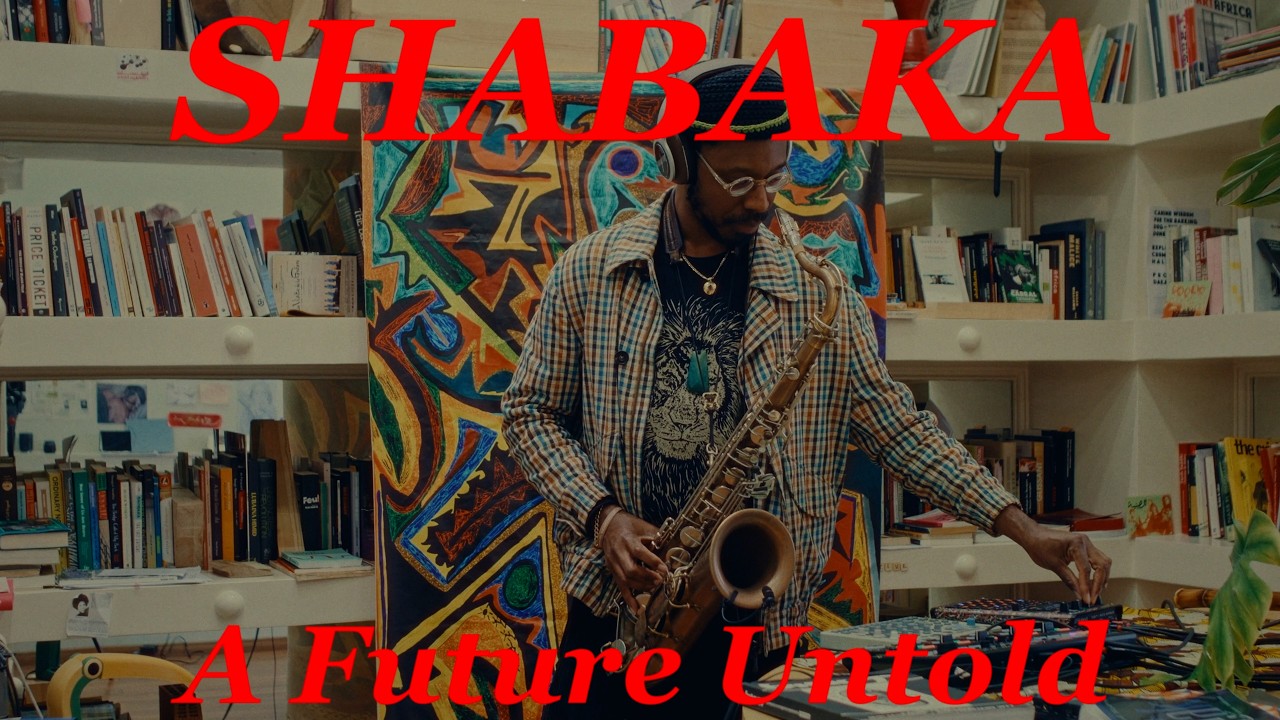
Of The Earth
SHABAKA
Released 6 March 2026
Shabaka Records
*****
A fearless celebration of the breath - instrumental and vocal - as Shabaka extends the spiritual jazz legacy of the Coltanes and the restlessness of Miles Davis with an expansion of his own post-saxophone language.
Shabaka Hutchings has spent the past decade redefining the parameters of contemporary jazz. As leader of Shabaka and the Ancestors, former driving force behind Sons of Kemet (until their 2022 dissolution), and a key member of The Comet Is Coming, where he performed as King Shabaka, he consistently fused spiritual intensity with rhythmic urgency. His collaborators range from the Sun Ra Arkestra to Floating Points and Mulatu Astatke, reflecting a restless, borderless pursuit of invention and enquiry.
His 2024 solo debut, Perceive Its Beauty, Acknowledge Its Grace, marked a striking pivot away from saxophone towards flutes, shakuhachi, svirel and clarinet - a period of deliberate retreat and recalibration. Of The Earth builds out from that silence, widening Hutching's musical palette while reintroducing the horn - and (for the first time) the voice.
Entirely written, produced, performed and recorded by Hutchings, Of The Earth is described as “deeply personal”, and it sounds precisely that: inward, searching, yet resolutely in character with all that has gone before. The ambient surfaces that led some listeners to misread his previous work as drifting towards new age territory are here revealed as structural, informed as much by the textural experimentation and influence of Floating Points and of Flying Lotus as by spiritual jazz lineage.
On its return, the saxophone emerges sparingly, melodically, almost ceremonially. With it and through it, this music's lineage is made clear - from the innovative flair and devotional fire of the Coltranes, Alice and John respectively, to the restless mutability of Miles; never in imitation, always origination.
Most striking is Hutchings’ decision to rap for the first time: “I’ve never rapped before but was actually inspired by André 3000’s courage in exploring new dimensions with fearlessness and sincerity; I decided to find my voice on this album,” says Hutchings. The delivery is measured rather than performative, an extension of a wind instrumentalist's breath-work, rather than merely a stylistic choice.
Read more...

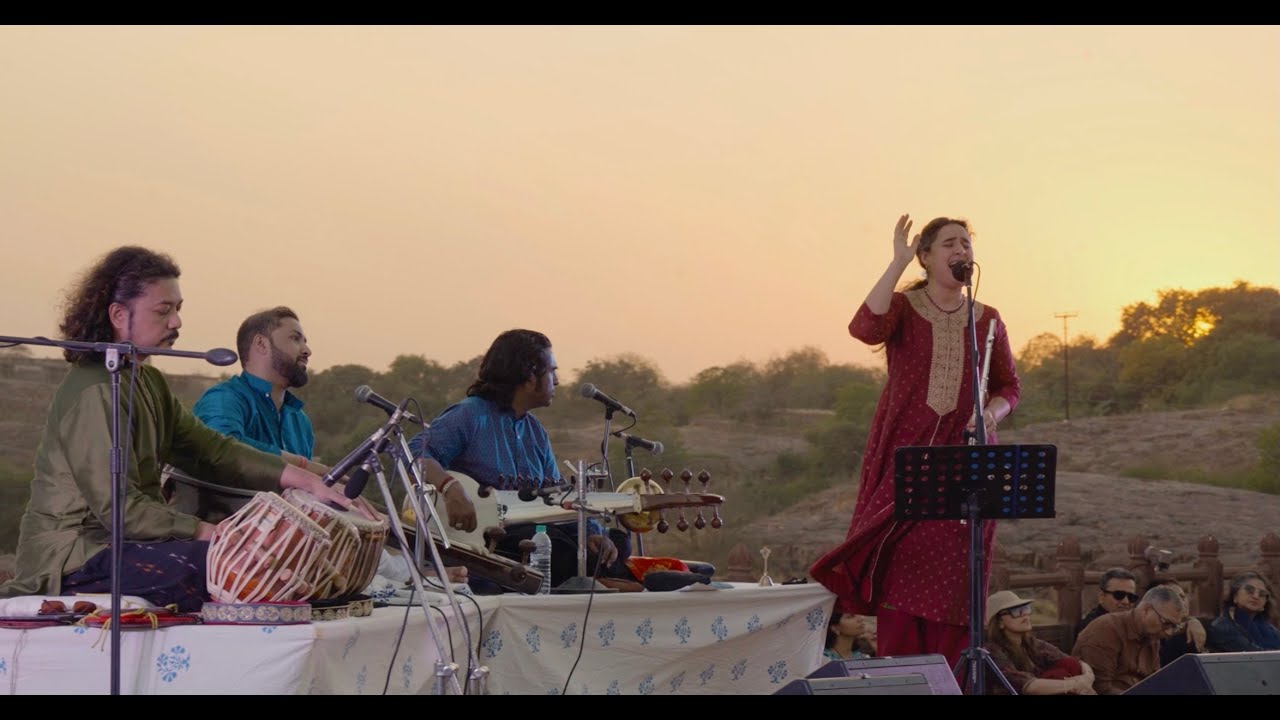
Landscapes of Eternity
NAISSAM JALAL
Released 27 March 2026
Les couleurs du son
*****
Another stunning release that seamlessly blends modern and classical elements in original music that explores the connection between music, nature, and spirituality at the heart of the Hindustani tradition.
The daughter of Syrian-born parents, who were painters, Naïssam Jalal is a Paris-based flautist, composer and bandleader whose work bridges jazz, Middle Eastern traditions and political expression. Raised in France, she initially trained in classical music before turning toward rap, jazz and improvised forms, touring widely in various guises before deepening her studies in Cairo, where she immersed herself in Arabic maqam and traditional flute techniques.
Her career has been marked by a series of conceptually driven projects, often exploring themes of exile, identity and freedom. Albums such as Osloob Hayati (2015) and Quest of the Invisible (2019) established her as a distinctive voice, while later works, including Almot Wala Almazala (“Death Before Humiliation”) (2026) foregrounded her engagement with the Syrian uprising and broader questions of resistance.
Jalal’s ensembles are fluid and collaborative, drawing musicians from across cultures. Her music combines spiritual jazz, modal improvisation and narrative intent, positioning her as one of Europe’s most compelling and innovative contemporary jazz artists.
Although shaped through a contemporary and deeply personal lens, the music of Landscapes of Eternity is rooted in the language of Indian classical music. Traveling alone in North India for several months, Jalal wandered through landscapes and sacred sites, met masters and musicians, absorbed the sounds, smells and sensations of this unique journey and in doing so invites a new way of listening to the world. From this experience emerged an intimate, contemplative, and profound repertoire, where the flute becomes the vehicle for an inner journey rooted in the breath of life.
Landscapes of Eternity also draws on Jalal’s many years of exploring the intricacies of Hindustani music and the sensory and imaginative worlds it evokes. The instrumentation blends modern and classical elements, and she brings together Indian classical musicians Samrat Pandit on vocals, Sougata Roy Chowdhury on sarod and Nabankur Bhattacharya on tablas with Franco-Brazilian pianist Leonardo Montana, Brazilian drummer Zaza Desiderio and Flo Comment on tanpura, to create a sound that is both current yet grounded in tradition.
Read more...
YouTube

Side-Eye III+
PAT METHENY
CHRIS FISHMAN, JOE DYSON
DARYL JOHNS, JERMAINE PAUL, BRANDEE YOUNGER, LUIS CONTE, MARK KIBBLE & VOCAL ENSEMBLE
Released 27 February 2026
Uniquity Music, Green Hill Productions
*****
A brilliant, large-canvas work that reaffirms Metheny's singular blend of virtuosity, generosity and sonic curiosity, producing music that's deeply familiar and joyously renewed.
Few musicians have shaped modern jazz as profoundly, or as accessibly, as Pat Metheny. Since the 1970s, his work has bridged jazz, rock, folk and Brazilian music, most famously through the Pat Metheny Group, whose richly layered sound became a defining aesthetic of contemporary jazz.
Across a stories career Metheny has balanced lyrical expression with technological innovation, from his pioneering use of guitar synthesis to the expansive possibilities of his Orchestrion system (that allows him to control an entire "robotic orchestra" of instruments, including pianos, drums, marimbas, and tuned bottles, using MIDI technology).
In recent years, his Side-Eye project has served as a platform for collaboration with younger musicians, extending his legacy not only through performance but through mentorship and renewal.
From the opening bars of “In On It”, Side-Eye III+ announces itself unmistakably as belonging to Metheny’s musical world: soaring melodic lines, luminous harmonic colour and the ineffable sense of uplift that has long defined his music.
While nominally a trio - with Chris Fishman (keys) and Joe Dyson (drums) - the “plus” of the album's title proves significant, representing the addition of Daryl Johns & Jermaine Paul (bass), Brandee Younger (harp), Luis Conte (percussion) and a vocal ensemble led by Mark Kibble. Together they expand the sonic palette into something closer to a chamber version of the Pat Metheny Group, producing richly textured layers of rhythm, summery atmospheres fueled by melodies constantly in motion.
The album moves fluidly between exuberance and introspection. Tracks such as “Urban and Western” build from laid-back blues into near-gospel exultation, while “Our Old Street” and “So Far So Good” and "Make a New World" offer moments of reflective calm through Metheny’s acoustic playing. Elsewhere, the interplay between electronics, harp textures and wordless vocals creates a shimmering, almost orchestral environment.
If anything, the abundance of resources occasionally feels under-exploited - the presence of the vocal ensemble and harp hint at possibilities only partially realised. Yet this is a minor reservation within a work of remarkable generosity.
Side-Eye III+ ultimately feels like both continuation and renewal: Metheny refining his language while inviting new voices in, and in so doing, reminding us of how expansive and life-affirming his musical vision remains.
Read more...
clicking cover art opens Spotify

Eternal Journey - The Arrangements and Productions of Charles Stepney
CHARLES STEPNEY, VARIOUS ARTISTS
Released 27 February 2026
BGP
*****
A richly illuminating survey of one of soul music’s quiet architects — revealing how Charles Stepney’s orchestral imagination reshaped Chicago soul and left a lasting imprint on Black music.
Few figures in 20th-century Black music were as influential, and as under-recognised, as Charles Stepney. Born in Chicago in 1931, Stepney emerged from the city’s vibrant studio scene as an arranger for Chess Records before becoming the creative force behind the label’s experimental Cadet imprint. His trademark orchestral approach, often described as “baroque soul”, fused gospel harmony, psychedelic rock textures, jazz sophistication and symphonic arrangement.
Stepney’s career bridged multiple worlds: he created the groundbreaking ensemble Rotary Connection, produced the early recordings of Minnie Riperton, and later helped shape the expansive sound of Earth, Wind & Fire. His death in 1976 at just 45 cut short one of soul music’s most visionary careers.
Eternal Journey maps Stepney’s astonishing stylistic range through a series of emblematic recordings. The compilation opens with Ramsey Lewis’s elegant “Dear Prudence,” an arrangement that transforms the Beatles classic into sweeping orchestral soul. Equally striking is "Les Fleurs", performed by Minnie Riperton, a psychedelic-soul masterpiece whose radiant orchestration helped define her landmark debut album.
Stepney’s work with the Chicago vocal group The Dells appears in the dramatic “It’s All Up to You,” while his socially conscious side emerges in Marlena Shaw’s powerful “California Soul.” Meanwhile, the haunting spiritual jazz of Terry Callier’s “What Color Is Love?” reveals Stepney’s ability to frame intimate songwriting within lush, cinematic soundscapes.
Across the compilation, Stepney’s fingerprints are unmistakable: layered orchestration, daring harmonic shifts, and a deep emotional grandeur that elevated soul music into something symphonic. His influence reached its widest audience through collaborations with Earth, Wind & Fire on hits such as "Shining Star" and "That's the Way of the World", both of which bore the hallmarks of his sophisticated arranging style.
More than a compilation, Eternal Journey reminds that Stepney was more than a producer - but a musical alchemist, one whose sonic creations continue to resonate across generations of soul, jazz and hip-hop artists.
Read more...

Filin
MELISSA ALDANA
Released 13 February 2026
Blue Note
*****
A ravishing collection of ballads that brings a Cuban musical form together with a classic jazz album concept - the result: deeply personal, emotional and intimate.
Still only in her thirties, Chilean tenor saxophonist and vocalist Melissa Aldana has already established herself as one of the most compelling voices in modern jazz. Since emerging internationally after winning the Thelonious Monk International Jazz Saxophone Competition in 2013, she has developed a discography of strikingly personal projects that balance rigorous musicianship with narrative depth.
For Filin, Aldana turns toward a long-held ambition: recording a ballads album in the lineage of John Coltrane’s classic 1963 LP Ballads. Yet rather than revisiting familiar standards, she explores the mid-20th-century Cuban song tradition known as "filin", a style whose name derives from “feeling” and which blends bolero, trova and jazz lyricism.
The concept emerged through collaboration with Cuban pianist and arranger Gonzalo Rubalcaba, whose deep connection to the filin repertoire helped shape the album’s aesthetic. Rubalcaba leads a quietly superb quartet with bassist Peter Washington and drummer Kush Abadey, while Blue Note producer Don Was provides the restrained oversight typical of the label’s finest sessions.
The music unfolds with remarkable patience. Aldana’s tenor tone - warm, rounded and emotionally direct - becomes the album’s central narrative voice, tracing melodies with a tenderness that emphasises tone over virtuosity. Her improvisations drift like gossamer around the songs’ core lyricism.
The repertoire itself spans filin classics such as “Dime Si Eres Tú” by Cesar Portillo de la Luz and Frank Domínguez’s “Imágenes”, alongside unexpected inclusions like Hermeto Pascoal’s “Little Church”. Two tracks feature luminous vocals from Cécile McLorin Salvant, whose interpretation of Marta Valdés’ “No Te Empeñes Más” becomes one of the album’s emotional peaks.
What distinguishes Filin is its emotional economy. The arrangements are deceptively simple, allowing melody, language and sound to carry the expressive weight. The result is music that moves slowly yet irresistibly, a modern jazz album that feels timeless and a record to one might comfortably return to at day’s beginning and end alike.
Read more...
.jpg)
HELP(2)
VARIOUS ARTISTS
Released 6 March 2026
War Child Records
*****
A thoughtfully curated charity compilation that balances artistic ambition with humanitarian purpose, reviving the spirit of the original HELP album for a troubled new era.
The organisation War Child UK has long used music as a means to fund its work supporting children affected by armed conflict. The original 1995 compilation The Help Album emerged during the Bosnian war and became one of the most successful charity records of its era, uniting Britpop’s leading artists in an urgent fundraising effort. A string of albums followed: "NME in Association with War Child Presents 1 Love" (2002), "Hope" (2003), "Help!: A Day in the Life" (2005), and "War Child Presents Heroes" (2009). HELP (2) revisits the concept a decade and a half later, responding to a world once again marked by widespread conflict, at the time of release in Ukraine, Gaza and Sudan but now in Iran and the Arabian/Persian/American? Gulf.
Recorded largely at Abbey Road Studios under the production guidance of James Ford (Arctic Monkeys, Blur, Depeche Mode, Foals, Florence and the Machine, Haim, Gorillaz, Klaxons, The Last Dinner Party, Jessie Ware, Kylie Minogue, Declan McKenna, the Pet Shop Boys, Pulp, Geese), the project brings together an unusually diverse roster of contemporary musicians.
Charity records often struggle to balance advocacy with artistic coherence. The infamous question posed by "Do They Know It's Christmas?" the centrepiece of the Band Aid campaign, illustrated the pitfalls: good intentions sometimes accompanied by cultural tone-deafness and oversimplification (few at the time understood the song's titular insensitivity, as the focus of relief was Ethiopia, a country whose population is two-thirds Christian. A more successful model emerged with the ambitious projects of the Red Hot Organization, whose landmark albums such as Red Hot + Blue and Red Hot + Riot paired socially conscious fundraising with adventurous artistic curation. HELP (2) belongs firmly in that latter tradition as it seeks to avoid grandstanding. Its strength lies in allowing artists to contribute serious work rather than slogans. Rather than novelty collaborations, it offers thoughtful contributions from artists across the contemporary alternative spectrum.
The collection opens with brooding intensity from Arctic Monkeys before moving through a sequence of striking collaborations and reinterpretations of classic songs, deep cuts and originals. Highlights include the haunting vocal minimalism of Beth Gibbons on Lou Reed's "Sunday Morning", the quietly luminous duet between Arooj Aftab and Beck on "Lilac Wine" and Ezra Collective and Greentea Peng's powerful "Helicopters"and a closing interpretation of "The Book of Love" by Olivia Rodrigo offers a reflective coda.
The list of artists, in order of appearance is impressive: Arctic Monkeys; Damon Albarn, Grian Chatten and Kae Tempest; Black Country, New Road; The Last Dinner Party; Beth Gibbons; Arooj Aftab and Beck; King Krule; Depeche Mode; Ezra Collective and Greentea Peng; Arlo Parks; English Teacher; Graham Coxon; Beabadoobee; Big Thief; Fontaines D.C.; Cameron Winter; Young Fathers; Pulp; Sampha; Wet Leg; Foals; Bat for Lashes; Anna Calvi, Ellie Rowsell, Nilüfer Yanya and Dove Ellis; Olivia Rodrigo.
Read more...
clicking cover art opens Spotify

Courtney Barnett
CREATURE OF HABIT
Released 27 March 2026
Mom + Pop / Fiction
****-
A reflective, guitar-driven return that revisits Courtney Barnett’s signature blend of dry observation and fuzzed-up release. Less revelatory than her early work, but quietly restorative.
Melbourne singer-songwriter Courtney Barnett came to international attention with her sophomore album "Sometimes I Sit and Think, And Sometimes I Just Sit" (2015) - a quirky, sharply observed collection of world-weary anecdotes, delivered in her unmistakable Australian drawl. Song titles like “Elevator Operator”, “Pedestrian At Best” and “Depreston” captured her tone - and a droll humor that, despite its colloquialism, proved to have universal appeal.
Subsequent releases including "Lotta Sea Lice" (2017) her collaboration with Kurt Vile, the more subdued "Tell Me How You Really Feel" (2018), "MTV Unplugged (Live in Melbourne)" (2019), "Things Take Time, Take Time" and the soundtrack "End of the Day (music from the film Anonymous Club)" consolidated her reputation, even as her songwriting energy appeared to waver.
Following a period of reduced output, relocation from Melbourne to Los Angeles and time spent in the Joshua Tree desert, Courtney Barnett returns with Creature of Habit her first vocal album in over four years, and one that consciously reconnects with the approach of her early work.
At the start of her career, Barnett’s charm lay in turning limited musical and vocal range to advantage (a well-trodden folk, rock and blues pathway), elevating it through droll, sharply observed lyricism. That dynamic is partially restored here. The core of the album sits in a familiar mid-paced, alt-country groove, but Barnett still relishes breaking from it: bursts of fuzzed-up distortion and looser, more energetic passages provide welcome contrast and remind us of her strength as a live performer.
Lyrically, however, the focus has shifted inward. The album deals extensively with personal struggles, leaving less room for the wry social commentary that defined her early writing. The observations are more internal than observational, more confessional than ironic.
On its own terms, Creature of Habit remains a charming and cohesive statement, if one that rarely surprises. Some of its success can be credited to John Congleton, whose production preserves the delicate balance of irony and naïveté that first drew attention to Barnett’s work, even as the songs themselves turn inward.
All said, this feels less like a reinvention than a restorative reset - and hopefully the cathartic recharge that will spur Burnett to proceed with confidence in her "wry observer" persona.
Read more...

Hand of Thought
SANAYA ARDESHIR
Released 27 March 2026
Karigar Records
****-
A deeply personal, piano-centred work tracing matrilineal memory through composition and ensemble - intimate in tone, yet expansive in its sense of history and continuity.
With Hand of Thought, Sanaya Ardeshir presents her first full-length release under her own name, establishing a parallel practice to her work as Sandunes. Where that project foregrounds electronic production, this album is rooted in acoustic piano and traditional composition.
The writing is conceptually anchored in matrilineality, tracing kinship through the female line, specifically within Ardeshir’s Parsi heritage. rthe Referencing Zen teacher Kosho Uchiyama’s "Opening the Hand of Thought - Foundations of Zen Buddhist Practice", the music draws on histories of migration, memory and inheritance - a trans-generational conduit carrying intuition, experience and unresolved histories.
The album unfolds as a sequence of composed piano pieces, with ensemble arrangements that extend its core voice.
From the opening (title) track measured piano phrases form the foundation of the narrative, with horns and subtle rhythm entering gradually, establishing a sense of space, rather than momentum. That balance continues in “Between Dreams”, where the interplay between piano and wind instruments introduces a more fluid, transitional feel.
Movement becomes more explicit on “Trains” and “Deccan Queen”. The latter, named after the historic Indian luxury railway line, incorporates percussion and tabla (from Sarathy Korwar), giving the piece a forward motion that contrasts with the stillness elsewhere. “Barefoot Steps” expands the rhythmic palette further, again drawing on percussion to create a tactile, physical presence, while “Spiral” and “Missing Links” return to a more introspective mode, like fragments or reflections within the larger narrative. By the time “Nora’s House” closes the album, the tone is resolute but quiet. The piano remains central, but now carries the accumulated weight of the preceding pieces, less solitary voice, more part of an ongoing continuum.
Throughout, the ensemble, including Shirish Malhotra (Flute, Alto Flute, Tenor Saxophone), Rhys Sebastian (Soprano Saxophone, Tenor Saxophone, Alto Saxophone), Nathan Thomas (Electric Bass) and Neil Waters (trumpet) is used with restraint. Horn arrangements (by Waters) are precise and supportive, while bass and percussion provide structure without dominating.
Hand of Thought is not expansive in scale, but it is deliberate in construction, an album that treats composition as a means of continuity, linking personal history with shared, inherited experience.
Read more...
Sanaya Ardeshir / Sandunes Home Page
Sanaya Ardeshir / Sandunes Instagram

Honora
FLEA
Released 27 March 2026
Nonesuch Records
****-
A reflective, jazz-led debut that reveals a more introspective Flea - prioritising ensemble interplay, tone and personal expression over rock spectacle.
Best known as the kinetic force behind Red Hot Chili Peppers, Flea steps into a very different space with Honora. After decades of high-energy collaboration, he described the album in an interview with Zane Lowe as “the opportunity to express all these different facets of myself that are purely me.”
That expression is realised not in isolation, but alongside a formidable ensemble: Deantoni Parks (drums), Jeff Parker (guitar), Josh Johnson (sax), Anna Butterss (bass), Mauro Refosco (percussion), alongside additional voices and guests including Thom Yorke and Nick Cave.
Honora begins with an unexpected gesture: “Golden Wingship”, a short, low-volume preamble that replaces fanfare with restraint. It’s a smart move, immediately signalling that this is not the Flea of stadium funk, but something more considered.
That shift is confirmed by “A Plea”, a pulsating jazz-rock fusion piece that sets both sonic and political tone: “Peace and love is the toughest, hardest thing you can do…” - a line delivered with urgency rather than idealism. On “Traffic Lights”, his collaboration with Thom Yorke extends their long association (via The Smile), pairing twitchy funk rhythms with Yorke’s familiar sense of lyrical unease.
It’s around fifteen minutes in that Flea’s individual voice comes into sharper focus. “Frailed” - the album’s trumpet-led centrepiece - builds from a simple pulse into a slow, hypnotic groove, its tension held in check rather than released. By contrast, “Morning Cry” is brisk and agile, a bebop-leaning ensemble piece that foregrounds the dexterity of the band.
A sequence of covers follows. Funkadelic’s “Maggot Brain” is reimagined with trumpet in place of guitar, softening its edge; Jimmy Webb’s “Wichita Lineman” finds Nick Cave delivering a measured, deeply felt vocal; Frank Ocean’s “Thinking Bout You” becomes a melodic vehicle for trumpet; while “Willow Weep for Me” is pared back to a dialogue between brass and low-register synth.
Closing track “Free As I Want To Be” shifts the mood again - an optimistic, groove-led statement that feels autobiographical without stating so directly. It captures something of Flea’s trajectory: from a chaotic upbringing in Los Angeles through decades in explosive bands (including Jane's Addiction and The Mars Volta) to this role as bandleader within a jazz framework.
The title Honora - referencing the strong women in his life and ancestry - adds a final layer of context. Like the album itself, it suggests reflection rather than reinvention: a rebalancing of voice, history and intent.
Read more...
clicking cover art opens Spotify

ELEPHANT
Adam O'Farrill
Released 20 March 2026
Out Of Your Hands Records
****-
A richly detailed, contemporary jazz statement where composition, texture and electronics converge; balancing density and clarity with a composer’s precision and a bandleader’s instinct.
Representing the third generation of a royal musical family, Adam O'Farrill has steadily emerged as one of the most distinctive voices in modern jazz, combining his deep lineage with a forward-looking compositional approach. His work moves fluidly between post-bop improvisation, chamber music sensibility and electronic influence, prioritising structure and atmosphere and facilitating instrumental interplay.
With ELEPHANT, O’Farrill brings these strands into focus. Rather than presenting stylistic shifts as contrast, the album absorbs a wide constellation of influences, from minimalism to contemporary film scoring, producing a unified, ensemble-driven language.
Despite this visibility, O’Farrill waited deliberately before leading a quartet without a second horn, having built his reputation in bands defined by frontline interplay and collective chemistry. That changed through years of touring and recording experience—most notably as the lone horn in Hiromi’s quartet Sonicwonder—and through the discovery of collaborators who could support a broader, more expansive vision. ELEPHANT brings together three rising New York–based musicians: pianist Yvonne Rogers, bassist Walter Stinson, and drummer Russell Holzman.
The defining outcome of the album is in it's balance of musical contrasts, and especially across the ten-minute centrepiece, “The Sea Triptych”, whose first movement “Along the Malecón” opens with surging, layered textures - trumpet cutting through dense harmonic material, evoking motion and instability. This gives way to “The Three of Us, Floating”, where the ensemble pares back to an ambient, suspended state: tones linger, electronics soften the edges, and time feels deliberately stretched. The closing section, “Iris Murdoch”, introduces a more grounded, percussive framework, its groove providing structure without closing off the music’s openness.
Elsewhere, “Herkimer Diamond” highlights O’Farrill’s compositional intent, a careful calibration of complexity and space, where tightly arranged passages give way to moments of clarity.
A wide constellation of influences - post-bop, electronic music, classical minimalism, Radiohead, Jonny Greenwood’s film scores, Ryuichi Sakamoto, and more - absorbed organically rather than as overt crossover gestures.
The quartet’s reinterpretation of Ryuichi Sakamoto’s “Bibo No Aozora” is particularly striking: the original's strings are replaced by trumpet, delay and electronic harmony, yet the piece retains its emotional core.
Elephant ultimately presents an artist fully inhabiting his moment: confident enough to integrate diverse influences, and precise enough to make them cohere.
Read more...

Transmutations
BALTHVS
Released 20 March 2026
Balthvs
****-
A groove-driven album combining mostly instrumental cumbia, funk and psychedelic rock, with occasional vocal tracks, in which repeating patterns evolve through subtle changes in tone, texture and arrangement.
Since forming in around 2020, BALTHVS have quickly established themselves as one of the more distinctive voices in contemporary instrumental music, emerging from Colombia with a sound that pulls from cumbia, surf rock, funk, Turkish psych and beyond. Their identity is rooted in hybridity, but crucially, not in collage - their influences are absorbed into a playing style that prioritises groove, repetition and interaction.
Transmutations feels like a logical step forward. Where earlier releases emphasised vibe and immediacy, this album leans further into process — exploring how patterns shift, loop and evolve over time without losing their physical pull.
Transmutations lives up to its title in the most literal sense: ideas rarely stay fixed for long.
The foundation is rhythmic. Percussion, whether kit or auxiliary, drives this music with a light but insistent touch, frequently locking into circular patterns that are as much indebted to cumbia as to funk. Over this, basslines move with agility, sometimes anchoring, sometimes pushing the groove forward with small syncopated deviations.
But the primary agent of change here is the guitar. Lines begin as simple motifs - clean, lightly effected, often sitting in the mid-range, before gradually accumulating detail: added notes, subtle shifts in phrasing, occasional bursts of distortion, reverb or delay that briefly alter the track’s character before receding.
What’s notable is how these transformations happen in real time. Rather than switching sections, BALTHVS allow patterns to evolve internally, a rhythmic accent moved, a tone adjusted, a layer introduced or removed.
The result is music that feels alive to its own momentum. Styles pass through psychedelia, global funk, hints of Middle Eastern modality, but nothing is fixed long enough to be labelled.
Read more...

Good Intentions
EGO ELLAS MAY
Released 20 March 2026
Ego Ella May, Believe UK
****-
Nuanced, carefully sequenced and emotionally articulate refinement of minimalist neo-soul, but lacking the elevating vibrant edge it deserves.
Ego Ella May’s recorded output has followed a steady though inward-facing evolution. "So Far", her 2019 debut established her signature - a diaristic tone consisting of jazzy, warm, neo-soul built around voice and feeling, supported by slow beats and minimalist instrumental structures. "Honey For Wounds" (2020/2021) deepened that approach, leaning further into vulnerability and sparse arrangement, while "Fieldnotes:Complete" (2024) broadened her palette with spoken word and looser, more fragmentary forms.
Across all three releases, the core has remained consistent: intimacy, restraint and emotional specificity. There has been sufficient variety to satisfy the expectations for an "emerging artist", so Good Intentions, her fourth release, presents an opportunity to step out.
However, the release doesn’t break much from that trajectory - it seems more an album of consolidation, rather than artistic progression.
The album defaults to a dead-calm tempo and mood, increasing only occasionally and ever-so-subtly. This, coupled with the album's confessional intimacy, lyrical subtlety and vocal intricacy, results in insufficient variety to hold attention. Sadly, only the most patient and attentive of listeners will take the time to appreciate its carefully considered content.
There's more to Ego Ella May's talent than is evident on "Good Intentions". She'd do well to immerse herself in albums by fellow travellers in neo-Soul - Cleo Sol, Momoko Gill, Allysha Joy etc. - to see how much more scope is available to her and how accessible their mixed-tempo albums might be for her followers.
Read more...
clicking cover art opens Spotify

Ayô Dele
IREKE
Released 20 March 2026
Underdog Records
****-
Groove-rich, sun-dappled and rhythm-filled - where rhythm carries feeling and voices drift like light through shutters. This music is playful on the surface and quietly profound underneath.
At the core of Ireke (sugar cane in Yoruba) are multi-instrumentalists and beatmakers Julien Gervaix and Damien Tesson, whose shared musical vocabulary draws from Afrobeat, dub, funk, soul, reggae and electronics. Their approach is studio-led but never clinical, producing grooves that feel grown rather than programmed, shaped by touch and filled with space.
Ayô Dele (“joy comes to me” in Yoruba) marks a refinement of their sound. Where earlier work featured rhythm and texture, this album welcomes the intimacy of the voice. Its songs flow like a breeze through a busy room - without forcing attention, but subtly changing the atmosphere as they pass.This is music meant for movement, as bass lines bounce, clavinets snap and the ever-present Rhodes glows warmly. There’s clean air between the elements, but room for quiet reflection too, within the pulse.
Gervaix and Tesson resist density for its own sake; instead, they let each element arrive, settle and drift. At the centre are two complementary female voices. Nayel Hoxo brings a grounded intensity.Her Yoruba lyrics carry themes of healing, resilience and quiet resistance and her delivery feels anchored, as each phrase is placed with emphasis and precision.
Agnès Hélène operates differently - her touch is lighter and more searching. She traces emotional edges, catching doubt, making connections, and playing with reinvention. Their songs alternate across the album, as if orbiting one another, creating a dialogue that gives the set its emotional depth and variety.
Mid-album, "Viv li" ("living it"), features a brief but joyous appearance by Olivya (of theLyon based, Martinique-grounded quartet Dowdelin). This adds another colour, the warmth and lift of Martiniquian Creole - like sunlight breaking through a cloud.
The album doesn’t so much build toward a climax as it circulates, weaving between shadow and light.
In that sense, Ayô Dele lives up to its name: a joyous suite ready to be discovered patiently, rhythm by rhythm.
Read more...
.avif)
Tiraka (Habibi Funk 34)
ALI & CHARID MEGARBANE
Released 20 March 2026
Habibi Funk Records
****-
A record of deeply intuitive collaboration, flow and trust in which Indonesian groove traditions meet Arab melodic sensibilities, revealing how closely and successfully they merge.
Jakarta-based trio Ali have built their sound on a distinctive blend of 1970s Indonesian psychedelic funk, Melayu (Malay) forms and disco-laced rhythms, while Lebanese composer and multi-instrumentalist Charif Megarbane has developed a wide-ranging catalogue rooted in Levantine melody, library music aesthetics and cross-regional experimentation.
Released via Habibi Funk, a label known for promoting musical exchanges across the Arab world and its diasporas, Tirakat (Habibi Funk 35) feels less like a one-off collaboration and more like a continuation of an ongoing conversation. Its premise is deceptively simple: not fusion, but recognition.
From the outset, the grooves settle into place with an unforced clarity. Basslines are elastic and melodic, often carrying equal narrative weight as the lead instruments. In combination with light-sounding drum drums the result is closer to 1970s funk recordings than contemporary production.
The role of the guitars is crucial. They move in repeating, interlocking figures, sometimes percussive, sometimes melodic, drawing equally from Southeast Asian styles and Arabic phrasing. These patterns rarely resolve in a Western sense; instead, they cycle, shift emphasis, and subtly reconfigure as downbeat. Charif Megarbane’s melodic instincts are evident in the horn and synth lines, which favour modal movement and ornamentation, as notes bend, hover, and return. Remarkably, all this knits together seamlessly: Indonesian rhythmic sensibilities and Arab melodic forms circulate freely, embedded deeply in the playing.
Read more...
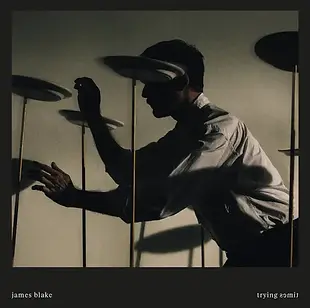
Trying Times
JAMES BLAKE
Released 13 March 2026
James Blake
****-
One of electronic music’s most distinctive voices returns with a mature and finely balanced statement in which his signature spectral production meets increasingly confident songwriting.
When James Blake emerged in the early 2010s, he seemed to signal a new direction for European electronic music. Alongside innovators such as Burial and Four Tet, Blake helped move the dubstep diaspora toward something more introspective: sparse, emotionally charged and harmonically adventurous.
His breakthrough self-titled debut in 2011 established a signature sound built on fractured rhythms, cavernous bass and ghostly vocal manipulation. Collaborations with artists such as Kendrick Lamar, Frank Ocean, Rosalia, Lil Yachty and others further positioned him at the crossroads of experimental electronica and art-pop.
Subsequent albums have gradually expanded his reach, embracing richer songwriting while maintaining the atmospheric production that first defined his appeal.
Trying Times continues Blake’s slow but deliberate evolution from producer-architect to fully realised singer-songwriter. Earlier recordings often felt built from fragments — beats dissolving into silence, vocals stretched into abstract textures. Here, the structures are clearer. Songs unfold with recognisable verse-and-chorus forms, and Blake’s voice occupies the foreground more confidently than before.
Yet the essential sonic DNA remains intact. His production still carries the unmistakable traces of post-dubstep experimentation: submerged sub-bass, skeletal drum programming and the delicate manipulation of vocal timbre that has long been his trademark. Even when the songs become more conventional in form, the sound design remains unmistakably Blake.
The album’s strongest moments arise when those two instincts meet — melodic songwriting framed by vast, atmospheric electronics. The result feels neither like a retreat into pop nor a return to early experimentalism, but a synthesis of both phases.
With Trying Times, Blake demonstrates how an artist shaped by the experimental fringes of dance music can grow into a songwriter of considerable emotional range without abandoning the sonic imagination that first made him unique.
Read more...
clicking cover art opens Spotify


PERSPECTIVE | PURPOSE | PEACE
TERRACE MARTIN
Released 13 February 2026 / 6 March 2026 / 20 March 2026
Sounds of Crenshaw / Empire
****-
A three-part statement of intent that maps out Terrace Martin’s musical worldview, from inward reflection to collective function to outward articulation: fusing jazz, hip-hop and soul into a living, contemporary language.
Terrace Martin has long operated at the intersection of jazz, hip-hop and R&B, not as a crossover artist but as a unifier of forms. His work, from solo releases to key contributions on Kendrick Lamar's essential 2015 release, To Pimp a Butterfly, reflects a philosophy where groove, harmony and narrative are inseparable.
This trilogy - PEACE, PURPOSE and PERSPECTIVE - feels like a deliberate structuring of that philosophy. More than three standalone albums, they function as interlocking parts of a larger suite. Each explores a distinct dimension: interiority, function and expression. Heard together, they offer a more complete picture of Martin’s intent than any single release could.
Taken individually, each album in the trilogy has its own identity. Heard sequentially, they reveal a clear and thoughtful progression.
PEACE is the most inward-facing of the three. The tempos are generally unhurried, the textures open and spacious. Martin’s saxophone often sits within the ensemble rather than on top of it, contributing to a sense of collective calm. The emphasis is on tone and atmosphere: this is music that feels restorative without drifting into passivity.
PURPOSE shifts the centre of gravity. Rhythm becomes more assertive, grooves more defined. There’s a stronger sense of function here: these tracks are built around the interplay between bass, drums and keys, with Martin acting as both participant and organiser. It’s the most “band-oriented” of the three, foregrounding structure and collaboration.
PERSPECTIVE, by contrast, is where these elements are most fully synthesised. The layering is denser, the production more intricate, and the balance between acoustic and electronic elements more finely calibrated. Ideas introduced in the earlier albums feel developed and resolved here.
Across all three, what stands out is the discipline of a curated body of work with internal logic.
Martin avoids nostalgia, instead absorbing elements of G-funk, spiritual jazz and soul into a contemporary framework.
The trilogy ultimately succeeds because it builds, each instalment adding dimension, culminating in a body of work that is expansive without losing focus.
Read more...
Sounds of Crenshaw
clicking cover art opens Spotify

Deface The Currency
THE MESSTHETICS AND JAMES BRANDON LEWIS
Released 13 March 2026
Verve, Impulse! Records
****-
A thrilling collision of punk energy and avant-jazz invention — volatile in appearance, but grounded in deep groove, collective intuition and the hard-earned chemistry of the road.
James Brandon Lewis has emerged as one of the most vital and forward-facing figures in contemporary jazz, a player whose work bridges free improvisation, gospel-rooted expression and politically engaged artistry. His collaborations are often as adventurous as his solo recordings, making him an ideal counterpart to The Messthetics, the post-hardcore trio formed by members of Fugazi.
Their partnership represents a meeting of scenes rather than a compromise between them. Following their first collaborative release, Deface The Currency finds the quartet further refining a shared language forged through extensive touring, where jazz improvisation and punk immediacy coexist without hierarchy.
From its fractured cover art to its confrontational title, Deface The Currency initially signals abrasion. And yet, while moments of intensity certainly arrive, the album’s true strength lies in its balance.
Opening passages bristle with jagged energy - guitars splinter, drums push insistently, and Lewis’s tenor cuts through with urgency. But as the album unfolds, a more nuanced picture emerges. Tracks such as “Gestations” and “30 Years of Knowledge” reveal a multi-part architecture, shifting between frenzied improvisation and passages of surprising groove and restraint.
The quartet’s instrumentation - guitar, bass, saxophone and drums - operates with remarkable cohesion. This is not a case of jazz soloist over rock backing; rather, it is a fully integrated unit. Years of live interplay are evident in the way ideas are exchanged, developed and sometimes deliberately disrupted.
Crucially, the music never feels chaotic for its own sake. Even at its most volatile, there is an underlying logic — a sense of collective listening and response.
The result is an album that challenges expectations while remaining deeply engaging: music that confronts, but also connects.
Read more...
The Messthetics Home Page

Thirteen
SOFT MACHINE
Released 13 March 2026
Dyad Records
****-
A late-career triumph that finds progressive music’s great survivors revitalising jazz-rock fusion with wit, fluency and a deep, hard-earned sense of musical purpose.
Few bands can claim a lineage as foundational as Soft Machine. Emerging from the late-1960s Canterbury scene alongside acts orbiting Pink Floyd and The Jimi Hendrix Experience, the group helped define the intersection of psychedelia, jazz improvisation and progressive rock.
Across six decades, shifting line-ups have carried the band through multiple stylistic phases, from experimental psychedelia to pioneering jazz-rock fusion. While the avant-garde frontier has since moved on, Soft Machine’s importance remains undiminished: theirs is a catalogue that helped establish the very language later artists would expand. Thirteen, remarkably their thirteenth studio album, finds a veteran ensemble not revisiting past glories, but refining and extending them.
If Thirteen lacks the shock-of-the-new that once defined Soft Machine, it compensates with something arguably more valuable: mastery. This is a band entirely at ease within the fusion vocabulary they helped create, now exploring it with clarity, invention and a palpable sense of enjoyment.
Guitarist John Etheridge remains a central voice, his phrasing fluid and expressive, while Theo Travis expands the tonal palette with saxophones, flute and textures that drift between jazz and ambient space. The rhythm section - Fred Thelonious Baker and Asaf Sirkis - anchors the music with supple, responsive groove.
Tracks such as “Open Road” and “The Longest Night” showcase the album’s range: from tightly structured jazz-rock to more exploratory, atmospheric passages. The brief, almost whimsical miniatures interspersed throughout lend the record a sense of pacing and lightness.
There is less abrasion here than in their early work; the edges are smoother, the focus more melodic. Yet this is no retreat. Instead, Thirteen feels like a summation - a confident, richly detailed reaffirmation of fusion as a living, evolving form.
For a band of such history, to sound this engaged, this coherent, and this alive is no small achievement.
Read more...

Only A Drop
LO STEELE, CHARLIE HUNTER, MARCUS FINNIE
Released 13 March 2026
Little Village / Side Hustle
****-
A revitalising blues record that proves tradition is not a limitation but a living language, reshaped here with imagination, groove and unmistakable personality.
Vocalist Lo Steele joins forces with guitarist Charlie Hunter, long celebrated for his hybrid bass-guitar approach, and drummer Marcus Finnie, a player equally at home in jazz, soul and roots music. Individually, each brings deep fluency in American musical traditions; together, they form a trio that treats those traditions as raw material rather than fixed form.
Only A Drop arrives at a moment when genre revivalism is everywhere. But where many projects lean on imitation, this collaboration is grounded in interaction - three musicians listening, reshaping and responding in real time. The result is music that honours lineage without becoming beholden to it.
At its core, Only A Drop is unmistakably a blues record, but it never feels confined by that identity. Instead, it uses the form as a springboard.
Charlie Hunter’s signature approach - simultaneously handling bass lines, harmony and rhythmic drive - creates a remarkably full, elastic foundation. Marcus Finnie responds with playing that is both grounded and exploratory, subtly shifting the feel without ever losing the pocket. Over this, Lo Steele delivers performances that are rich in character: expressive without excess, rooted in the blues but never reduced to cliché.
What makes the album compelling is its sense of forward motion. These are familiar gestures - bent notes, call-and-response phrasing, cyclical grooves - but they are continually reframed, rebalanced and re-energised.
In contrast to projects that merely replicate the past, Only A Drop builds on it. It expands the conversation rather than echoing it, a reminder that creativity thrives not by abandoning tradition, but by engaging it fully and fearlessly.
Read more...
Lo Steele Instagram
Charlie Hunter Home Page
clicking cover art opens Spotify

Hoggar
TINARAWEN
Released 13 March 2026
Wedge
****-
The elder statesmen of desert blues return with a quieter but deeply resonant album, connecting to Tuareg roots and younger collaborators, and emerging with music full of hypnotic rhythm and communal memory.
Few groups have carried the sound and political voice of the Sahara across the world as powerfully as Tinariwen. Formed in the late 1970s among Tuareg musicians displaced by conflict in the desert borderlands of Mali and Algeria, the group’s music emerged from campfires, cassette recordings and the itinerant life of nomadic communities.
Their distinctive “desert blues” sound - electric guitars weaving modal melodies over insistent rhythms - brought international attention to Tuareg culture and political struggles. Over two decades of global touring and award-winning albums have made them ambassadors for this tradition, influencing artists far beyond the Sahara. With Hoggar, the band consciously return to those communal origins while mentoring a younger generation of Tuareg musicians.
Hoggar is not a dramatic reinvention but a recalibration. Earlier Tinariwen albums often emphasised the rock dimension of their sound - guitars driving forward with the swagger of desert-borne blues. Here, the centre of gravity shifts subtly toward something older and deeper.
The grooves feel slower, more circular, closer in spirit to the trance-inducing pulse of North African ritual music. The influence of Gnawa becomes more apparent: rhythms repeat patiently, guitars shimmer rather than blaze, and the music invites immersion rather than propulsion.
Guest appearances add colour without disrupting the atmosphere. José González contributes his characteristically gentle vocal presence, while Sulafa Elyas introduces a subtle melodic contrast.
Yet the album’s true significance lies in its intergenerational spirit. Younger Tuareg musicians weave naturally into the ensemble, reinforcing Tinariwen’s role as cultural custodians rather than simply a touring band.
The result may feel more subdued than some previous releases, but it captures something essential: the hypnotic communal pulse of music born in the desert night.
Read more...

At Your Pace
MODHA
Released 13 March 2026
Sonar Kollektiv
****-
A warm, collaborative and quietly defiant record that rejects digital-era haste in favour of human groove, emotional candour and the imperfect beauty of musicians playing together.
Berlin-based duo Modha - producers and multi-instrumentalists Dhanya Langer and Max Scholl - belong to a generation of musicians seeking alternatives to the frictionless polish of algorithm-era music. Their work draws from jazz, neo-soul, hip-hop and broken-beat traditions, shaped by Berlin’s fertile independent scene and released through the long-respected label Sonar Kollektiv.
Scholl’s musical background began in metal before expanding into jazz and hip-hop, while Langer studied music formally before abandoning academia for a more intuitive, creative path as a drummer and producer. Their early collaboration produced the Getting By EP in 2019, establishing a collaborative ethos that continues to define their work. At Your Pace, their second full-length album, expands that approach into a richly communal studio project.
At Your Pace is built around a deceptively simple idea: slowing down. In an industry increasingly governed by metrics, speed and algorithmic optimisation, Modha consciously resist the pressure to streamline their music. The album instead embraces the feeling of musicians discovering songs together in real time.
Rhythms bend and shift; time signatures wander with relaxed confidence. The opening instrumental “Move At Your Own Pace” announces this ethos immediately, its intricate grooves unfolding organically rather than locking into rigid loops.
The record thrives on collaboration. Australian vocalist Allysha Joy brings warmth and ease to “Good News”, while “Find Me (Underneath the Sun)” gains understated emotional gravity from the poetic phrasing of okcandice. Longtime collaborator James Chatburn returns for the fragile beauty of “The Bee by the Pool”.
Elsewhere, the soulful textures of “River” (featuring Àbáse and flautist Fanni Zahár), and the rhythmically agile “Bullet”, with Baton Rouge rapper Wakai, reveal the project’s stylistic breadth.
Closing with the reflective “Day by Day”, the album ultimately feels less like a producer’s statement and more like a collective conversation. In its warmth, patience and refusal of perfection, At Your Pace offers something that is becoming quietly radical: music that values presence over polish.
Read more...

Be Water
MAURICESAX
Released 12 March 2026
Urban Waves Records / Mauricesax
****-
A sharply focused, sonically curious set where the saxophone becomes both blade and current — moving between mellow flow and angular disruption with purpose and control.
Mauricesax has built a reputation as a player unconfined by idiom, drawing from jazz, hip-hop, ambient and experimental traditions without settling fully into any one of them. His recent work has increasingly emphasised texture and form - not just what is played, but how sound behaves over time.
Be Water feels like a crystallisation of that approach. The title is more than metaphor: it signals an interest in adaptability, shape-shifting and resistance. Rather than presenting a fixed stylistic identity, the album explores contrast - fluidity versus fracture, warmth versus abrasion - with the saxophone as the central, constantly evolving voice.
From the opening moments, Be Water establishes its central tension: lines that drift and dissolve are abruptly interrupted by jagged, asymmetrical figures. It’s a contrast that suits the saxophone perfectly, and Mauricesax exploits it with precision rather than excess.
The “mellow” side of the record isn’t simply laid-back - it’s suspended. Notes hang in space, often supported by minimal harmonic grounding, giving the music a weightless, almost ambient quality. But just as the listener settles, the album pivots: phrases splinter, rhythms skew, and the tone hardens into something more probing and angular.
What’s striking is how intentional these shifts feel. The transitions are not decorative; they articulate structure. Tracks evolve through contrast, not repetition.
There’s no sense of genre-boxing here - no obvious jazz head-solo-head, no predictable groove cycles. Instead, Be Water moves like its title suggests: adjusting, refracting, finding new pathways. It’s a disciplined, detail-oriented record that rewards close listening without ever losing its physical, tactile presence.
Read more...
clicking cover art opens Spotify
clicking cover art opens Spotify

The Guesthouse
SHAI MAESTRO
Released 6 March 2026
naive / sleeping giant music
****-
A captivating, expansive set that turns the "piano trio" form into a collaborative, cinematic platform for richly textured and emotionally open collaboration, guided always by melody.
Shai Maestro has steadily emerged as one of the defining pianists of his generation, combining lyrical fluency with a restless compositional imagination. A former member of Avishai Cohen’s trio, Maestro has developed a voice shaped by classical discipline, jazz improvisation and global influences and refined across a series of acclaimed recordings for ECM.
Recent work has revealed a further widening of his artistic scope. His 2025 solo release Solo: Miniatures & Tales was introspective and spare, whereas The Guesthouse deliberately moves in the opposite direction - outward, collaborative and richly textured.
Inspired by the Rumi poem of the same name, the album embraces the idea of music as a space where multiple voices, emotions and influences coexist. This feels like a decisive expansion of Maestro’s musical language. While the piano remains central, it is no longer the sole narrator. Instead, it becomes part of a larger, fluid ecosystem of sound.
Built around his core quartet, with a second keyboard voice opening new harmonic dialogue, the album is enriched by a wide cast of collaborators. Vocals, electronics, winds and percussion enter and depart like visitors in the album’s titular space, each contributing distinct colour and perspective.
There is a striking breadth of style: folk-influenced melodies sit alongside jazz-rock passages; flamenco rhythms dissolve into ambient textures; intimate vocal duets contrast with rhythmically intricate ensemble writing. Yet throughout, Maestro adheres to what he calls a melodic thread, ensuring that even the most complex passages remain communicative and human.
At its best, in pieces such as “Gloria” or “Strange Magic”, the album achieves a rare balance between compositional ambition and emotional directness.
Ultimately, The Guesthouse delivers on its conceptual promise: an open, generous musical space where experimentation and accessibility are part of the same welcoming design.
Read more...

I Know You're Hurting,
Everyone Is Hurting,
Everyone Is Trying,
You’ve Got To Try
JOSHUA IDEHEN
Released 6 March 2026
Heavenly Recordings, [PIAS]
****-
A set of sincere, spoken-word explorations of everyday matters, that resonates far beyond the concerns of the individual voice delivering them.
Joshua Idehen occupies a singular place in the halls of contemporary music - part poet, part vocalist, part rhythmic storyteller - a product of the UK’s ever-evolving spoken-word and jazz-adjacent scenes. He has collaborated widely with similarly innovative and boundary-pushing artists including Floating Points, Sons of Kemet and The Comet Is Coming, bringing a distinctive cadence and emotional candour to each project.
His work frequently inhabits the space between poetry recital, electronic composition and jazz groove, exploring themes of vulnerability, masculinity, friendship and mental resilience. I Know You Are Hurting, Everyone Is Hurting, Everyone Is Trying, You’ve Got to Try feels like the most distilled expression of that ethos yet.
The album’s extended title reads almost like a mantra — a phrase repeated to oneself in moments of doubt. Idehen’s delivery carries precisely that tone: conversational, reflective and quietly urgent. Rather than declaiming, he confides; the listener feels less like an audience than a companion in thought.
Musically the record moves through restrained electronic landscapes: gently pulsing synth lines, minimalist drum patterns and warm bass textures that leave generous space for the spoken word. The production never competes with Idehen’s voice, instead framing it with subtle rhythmic movement that occasionally hints at club culture while maintaining an introspective atmosphere.
Lyrically, the focus is communal resilience. Idehen acknowledges anxiety, exhaustion and social disconnection but repeatedly returns to the idea that persistence, however fragile, remains possible.
While the startlnig sequence of confessional"Interlude -What You Need To Hear" and "Could Be Forever" is the standout "Mum Does The Washing" humorously and succinctly wraps a simple metaphor around dozens of social movements.
Idehen's work feels both personal and collective: a sequence of spoken reflections that resonate far beyond the individual voice delivering them. In its quiet insistence on empathy, the album becomes something rare commoddity - a record that comforts without sentimentality.
.
Read more...

Zagate
SOUAD MASSI
Released 6 March 2026
Sony / BackingTrack Productions
****-
From one of North Africa’s most eloquent voices, a bolder, more urgent chapter in which folk's intimacy meets rock's energy, as poetry underpins a resolute act of resistance.
Emerging from Algiers in the late 1990s, Souad Massi forged a style that blended Algerian folk traditions, chaâbi and raï with the songwriting ethos of Western folk icons such as Joan Baez and Bob Dylan. Her early albums like Raoui (2001), Deb (2003) established her as one of the Maghreb’s most recognisable voices - a songwriter whose quiet, acoustic intimacy carried themes of exile, identity and resilience that, and more than two decades, placed her in a singular place in Algerian music.
Often described as the “bitter-sweet voice of exile”, Massi has spent much of her career bridging the cultural space between Algeria and Europe, singing in Arabic and French while reconciling Mediterranean musical traditions with contemporary folk and rock.
With Zagate, Massi pushes her sound further outward than on most of her previous records. Produced once again by guitarist Justin Adams, who also helmed her award-winning 2022 album Sequana, the album introduces a more muscular sonic palette while retaining the lyrical sensitivity that has defined her work.
Where earlier albums often centred acoustic guitar and folk restraint, Zagate explores a broader range of textures: the Afrobeat-lite groove of “Samt”, the rock-driven urgency of “Ana Inssan”, Saharan-tinged folk in “D’ici, de là-bas”, and the bluesy Parisian swing of “Chibani”.
The lyrical focus is more confrontational than ever before. The title itself echoes the phrase “ça se gâte”, “things are getting worse”, and the songs grapple with war, racism, migration and the unsettling turbulence of the contemporary world.
Collaborations widen the album’s reach: appearances from rappers Youssoupha and Gaël Faye introduce spoken-word urgency, while players such as John Baggott (keyboards, Massive Attack) and Billy Fuller (drums, Sensational Shape Shifters, Beak) deepen the groove.
The result is perhaps Massi’s most liberated album to date; still tender, still poetic, but newly sharpened by anger, courage and a refusal to look away from the world’s fractures.
Read more...
clicking cover art opens Spotify


Forward Into Light
SARAH KIRKLAND SNIDER
Released 27 February 2026
Nonesuch Records
****-
A sweeping orchestral meditation on perseverance and renewal, where one of contemporary classical music’s most compelling voices turns history, memory and resilience into music of luminous emotional force.
Described by Pitchfork as "one of the decade's more gifted, up-and-coming modern classical composers" Sarah Kirkland Snider writes music of direct expression and vivid narrative that has been hailed as "rapturous" by The New York Times, "groundbreaking" by The Boston Globe, and "poignant, deeply personal" by The New Yorker. Born 1975 and raised in Princeton, New Jersey to non-musical parents, her self-professed musical itch propelled her from a young age to knock on her neighbours’ doors to play their pianos by ear.
Now in her second decade as a professional composer, Snider's musical compositions, particularly her song cycles, frequently borrow from indie rock and popular musical idioms as well as classical chamber music forms and instrumentation. These stylistic choices have led critics to label her music as part of the burgeoning indie-classical movement, where she has been called "perhaps the most sophisticated" of voices within this genre.
Her debut album "Penelope" (2010), inspired by Homer’s epic poem, the Odyssey, drew wide critical acclaim and commercial success. It was described by Pitchfork’s Jayson Greene as "a gorgeous piece of music and hauntingly vivid psychological portrait”. Her succeeding albums have been similarly received: “Unremembered” (2015) - "a meditation on memory, innocence, and the haunted grandeur of the natural world" that features poet Nathaniel Bellows's moving words and images and Snider's vivid, fraught, astonishing score; “Mass for the Endangered” (2020) - written for Trinity Church Wall Street’s Mass Re-Imaginings project and “The Blue Hour” (2022) - a collaborative song cycle written with Rachel Grimes, Angélica Negrón, Shara Nova and Caroline Shaw and performed by vocalist Shara Nova and Boston–based chamber orchestra A Far Cry, based on text by Carolyn Forché.
Snider writes that she chose the four works for “Forward Into Light” "because “they share themes of perseverance, alliance, and evolution through dark and light, concepts that had been at the forefront of my mind in recent years”. These include: the title track - commissioned by the New York Philharmonic and inspired by the American women’s suffrage movement; "Drink the Wild Ayre", a reimagining of her second string quartet, performed by string orchestra and harp; "Eye of Mnemosyne", an eight-part, multimedia orchestral work on memory, innovation, and culture as refracted through the lens of photography, commissioned by the Rochester Philharmonic and "Something for the Dark", a meditation on resilience in two parts, commissioned by the Detroit Symphony Orchestra in 2014.
This is music of and for this uncertain moment, as we are reminded daily of sources of global gloom and doom - economic, environmental, conflict, terror, pandemic... Indeed, as I write, we are receiving news reports of missile exchanges between Middle East countries where I lived and/or worked professionally, only a decade ago. In this context of global uncertainty, the narrative arc of "Forward Into Light" is enduringly positive: from its recollection of womens' suffrage in the opening/title track, to the confidence of the final pieces "Something For The Dark: Part I. The Promise" and Part II. Of Rise and Renewal".
Read more...
Sarah Kirkland Snider's Home Page
YouTube

Vila
FABIANO DO NASCIMENTO, VITTOR SANTOS E ORQUESTRA
Released 27 February 2026
Far Out Recordings
****-
A playful, nostalgic portrait of a neighbourhood, rooted in shared memories, as Nascimento’s warm guitar converses with Santos’ sixteen-piece ensemble in vivid, cinematic detail.
Hidden behind a cast-iron gate in Rio de Janeiro’s Catete neighbourhood lies Bairro Saavedra, a quiet courtyard of Neo-colonial houses where Fabiano do Nascimento spent his childhood. Its tiled floors, wooden shutters and tranquil corners inspire Vila, his collaboration with trombonist and arranger Vittor Santos and a sixteen-piece orchestra. Recorded between Rio and Los Angeles, the album reflects Do Nascimento’s dual worlds: the melodic intricacy of Brazilian acoustic guitar, honed alongside the likes of Arthur Verocai, Airto Moreira and Itibere Zwarg, and the exploratory spirit of LA’s jazz and experimental scenes, working with Sam Gendel and Carlos Niño. Vila captures memory, architecture, and musical eclecticism in harmonious interplay.
From the first notes of the album, Vila is both grand and intimate. Do Nascimento’s guitar occupies the sonic center, delicate yet expressive, while Santos’ orchestral arrangements swirl around it - complementing, questioning, responding, always in dynamic conversation. Despite its size, the sixteen-piece ensemble brings warmth, playfulness and sweeping cinematic gestures, so that the compositions are filled with a sense of the space and narrative essential to capture and mirrors the architectural elegance of the Bairro.
Compared with Do Nascimento’s previous album Aquáticos, released only a month prior, Vila is outward-looking. Where Aquáticos was a quiet, introspective meditation, Vila enlarges the frame: melodic lines expand into lush textures, rhythmic subtleties gain depth through orchestral colour, and harmonic interplay becomes more intricate. Yet the albums share a core sensitivity to phrasing, clarity, and storytelling - the earier one exploring the intimacy of a personal landscape, the latter celebrating a wider, communal soundscape. Together, they reveal a musician equally at home in the microcosm and the grand tableau.
Read more...

Twio Vol. 2
WALTER SMITH III
JOE SANDERS, KENDRICK SCOTT
Released 6 March 2026
Blue Note Records
****-
A Blue Note masterclass in conversational jazz as saxophone and piano meet in an intimate, searching dialogue of rare subtlety and depth.
Tenor saxophonist Walter Smith III has quietly become one of the most respected voices of his generation. A graduate of the Berklee College of Music and later a long-serving faculty member there, Smith has balanced a distinguished academic career with an increasingly impressive recording catalogue.
Over the past decade he has emerged as a defining figure within modern post-bop, collaborating with artists such as Ambrose Akinmusire, Jason Moran and Christian Scott aTunde Adjuah. His signing to Blue Note Records further affirmed his standing among the label’s contemporary vanguard.
The TWIO series strips his music to its essence: the saxophone placed in intimate dialogue with a rotating cast of pianists.
If the first TWIO volume (2018) introduced the concept, TWIO Vol. 2 deepens it. The premise remains deceptively simple - saxophone and piano in close conversation - but the musical terrain it explores is remarkably rich.
Smith’s tenor sound is a thing of striking clarity: warm but focused, lyrical yet intellectually probing. Without the cushion of rhythm section accompaniment, every phrase carries weight. The spaces between notes become part of the music’s architecture.
The piano partners respond with equal sensitivity, shaping each performance into a kind of chamber improvisation. Harmonies shift delicately beneath Smith’s melodic lines, sometimes guiding them gently forward, sometimes resisting them with subtle tension.
What emerges is music that rewards close listening. Themes unfold patiently, improvisations grow organically, and the absence of rhythmic propulsion places emphasis on tone, phrasing and emotional nuance.
In an era when many jazz recordings lean toward elaborate ensemble textures, TWIO Vol. 2 demonstrates the enduring power of restraint. The result is intimate yet expansive, a reminder that great jazz often begins with two musicians simply listening to each other.
Read more...
clicking cover art opens Spotify
clicking cover art opens Spotify

In My Dreams
BILL FRISELL
Released 27 February 2026
Blue Note Records
****-
A joy-filled, playful addition to the guitarist's remarkable catalogue in which his signature warmth and melodic generosity transform every phrase into a small sonic celebration.
Few musicians in contemporary jazz have sustained the sense of joy, curiosity and melodic imagination that Bill Frisell has cultivated over a six-decade career. Known for his uniquely lyrical guitar signature - at once spacious, harmonically adventurous and deeply human - Frisell has moved seamlessly across jazz, Americana, folk, country and avant-garde music, collaborating with icons from Paul Motian to Elvis Costello and beyond.
In My Dreams arrives as another high point in this prolific trajectory. The album continues Frisell’s penchant for blending accessible melodic charm with subtle harmonic sophistication, offering a collection that is at once intimate and expansive, contemplative yet delightfully playful. Its songs invite listeners into Frisell’s gentle, wide-ranging musical universe with effortless warmth.
Frisell’s guitar remains the emotive centre of this generous hour-long set, guiding the listener through fifteen tracks that range from pastoral reflection to whimsical, almost narrative explorations. The album is characterized by its elegant restraint: each note feels deliberate, melodic lines unfurl with space to breathe, and the improvisations always serve the song rather than ego.
Instrumentation is varied yet coherent. Sparse rhythm sections, delicate piano touches, occasional horns and softly brushed percussion interact seamlessly with Frisell’s guitar, creating textures that are lush without ever overwhelming.
Stylistically, the album traverses Americana-inflected folk, soft jazz balladry, and even hints of classical minimalism, each piece retaining the unmistakable Frisell signature: melodic generosity, harmonic inventiveness, and an irrepressible sense of joy.
What makes In My Dreams particularly compelling is its emotional transparency. Even in quieter, more introspective moments, there is warmth and optimism — the sense that Frisell’s music is a gentle companion, celebrating the beauty in everyday moments.
Blue Note's write-up for the album suggests that "one way to see In My Dreams is as a meeting of two core groups. The first is the guitarist’s trio with bassist Thomas Morgan and drummer Rudy Royston, which first appeared on Frisell’s 2016 LP When You Wish Upon a Star. The second is Frisell’s go-to string section, for lack of a better term, featuring violist Eyvind Kang, violinist Jenny Scheinman and cellist Hank Roberts, which debuted as a unit 20 years ago on Richter 858, a series of improvised meditations on the work of the German artist Gerhard Richter.
A more accurate way to describe the lineup is to say that these are some of Bill Frisell’s favorite musicians, who’ve crisscrossed in his performances and recordings for decades".
In My Dreams is yet another high in a career defined by a rare combination of virtuosity, playfulness and humanistic charm.
Read more...

Irreparable Parables
ANDREW WASYLYK
Released 27 February 2026
Clay Pipe Music
****-
A tender cycle of songs carried home as if by migrating birds, as Wasylyk’s contemplative instrumental world opens to admit vocal expressions of human vulnerability and quiet hope.
Scottish composer and multi-instrumentalist Andrew Wasylyk has built a quietly distinctive catalogue rooted in place, memory and atmosphere. Working from his native Dundee, among what he describes as a room of “half-broken” instruments, his recordings blend chamber classical textures, jazz-derived moods and ambient tone-collage.
Irreparable Parables marks a notable shift in Wasylyk's musical trajectory. For the first time, Wasylyk set out deliberately to write songs for the human voice, though not his own. Six guest vocalists recorded their parts remotely, in various locations around the world, their contributions returning to Scotland “like migrating birds.” The album’s sleeve artwork by Frances Castle depicts six songbirds, symbolising the singers who give voice to Wasylyk’s delicate instrumental landscapes.
The opening voice belongs to Stuart Murdoch of Belle and Sebastian, whose performance on “Private Symphony #2” sets the tone for the album’s fragile beauty. Throughout Irreparable Parables, Wasylyk’s music exists in a space somewhere beyond classical, jazz and ambient traditions, difficult to categorise, but immediately felt.
The arrangements are richly textured yet never heavy: brass and woodwinds drift through a six-piece string section arranged by longtime collaborator Pete Harvey, while vibraphone, Mellotron, Rhodes and tape loops create an atmosphere that feels both nostalgic and quietly cinematic.
Among the album’s emotional centres are “Love Is A Life That Lasts Forever”, sung by Molly Linen and inspired by the writings of Derek Jarman, and the haunting “Spectators In The Absence of God”, delivered with aching intensity by Kathryn Joseph. Contributions from Gruff Rhys of Super Furry Animals, Saya Ueno of Tenniscoats and Peter Brewis of Field Music broaden the album’s quietly international character.
The closing instrumental, “Soul Enters The Ocean Sun Climbs Out Of The Sea”, returns to Wasylyk’s familiar piano-and-strings serenity, an ending that feels like it brings resolution after the preceding series of fragile parables about resilience, empathy and the consoling power of song.
Read more...

My World Is The Sun
DOMINIQUE FILS-AIMÉ
Released 20 February 2026
Ensoul Records
****-
A radiant and expansive fourth album where Dominique Fils-Aimé deepens her exploration of Black musical lineage, blending soul, jazz, gospel and folk into a luminous fifteen-song cycle.
Montreal singer-songwriter Dominique Fils-Aimé has steadily built one of the most thoughtful catalogues in contemporary soul and jazz-influenced songwriting. Her earlier trilogy - Nameless (2018), Stay Tuned! (2019) and Three Little Words (2021) - traced a conceptual journey through African-American musical history, from blues roots through the civil-rights era to modern soul expression. Each album broadened her sonic vocabulary while maintaining a commitment to vocal nuance and lyrical reflection.
My World Is The Sun, her fourth studio release, feels both like a continuation and a liberation. No longer framed as part of a strict trilogy, the record opens her palette further, embracing a wider instrumental range and stylistic fluidity while preserving the intimate, human-centred storytelling that defines her work.
Across its generous fifteen tracks, the album unfolds as a tapestry of styles rooted in Black musical tradition, yet remains distinctly contemporary. Fils-Aimé’s voice remains the gravitational centre - supple, expressive and capable of shifting effortlessly from hushed intimacy to gospel-tinged affirmation.
Musically, the album moves through a wide landscape. Several songs lean into warm soul arrangements built around upright bass, piano and brushed drums, recalling classic jazz-club minimalism. Elsewhere, layered vocal harmonies and hand percussion evoke spirituals and gospel traditions, reinforcing the album’s themes of resilience and collective memory.
More atmospheric pieces incorporate subtle electronics, vibraphone and textured guitar, allowing the music to drift toward modern jazz and ambient soul territory. Folk-leaning moments, often carried by acoustic guitar and delicate piano, provide lyrical breathing space between richer ensemble arrangements. And yes - I did hear didgeridoo in the background of the opening track.
What distinguishes the album is its sense of openness. Rather than adhering to a single stylistic thread, Fils-Aimé allows each composition to find its own emotional architecture. The result is a record that feels exploratory yet coherent: fifteen songs that illuminate her continuing artistic development while affirming her place among the most compelling voices in contemporary soul songwriting.
Read more...
clicking cover art opens Spotify

Warta-kiki Come Together
KUTCHA EDWARDS, MELBOURNE YOUTH ORCHESTRA, BRETT KELLY
Released 15 February 2026
Australian Broadcasting Corporation
****-
The iconic Australian First Nations song-man's poignant, mesmeric music has always contained heartfelt storytelling, anthemic lyricism and positive ambition. Now, the grandeur within his songs is fully revealed, as they are illuminated from within by new orchestral arrangements
A landmark collaboration between legendary Australian songman Kutcha Edwards and the Melbourne Youth Orchestra, Warta-Kiki brings together First Nations songlines and symphonic music, performed by MYO’s young musicians under the direction of Music Director Brett Kelly, with new orchestrations by leading Australian composers.
For Kutcha Edwards, the collaboration marked an unexpected and deeply resonant turning point. ‘In my sixty cycles around the sun, I had never attended an orchestral concert, let alone contemplated recording an album with an orchestra – until now,’ Edwards says. ‘This album, Warta-Kiki (a Mutti Mutti word for ‘Come together’), is proof that perceptions can change.’
The seeds of the collaboration were planted in 2022, following a performance by Edwards at Monash University, where he met MYO CEO Dorian Jones and conductor Brett Kelly. In early 2023, more than eighty young orchestral musicians came together with Edwards to create the nine songs that form Warta-Kiki. ‘This was an opportunity for me to share with them the depth of the Songline within each song,’ he said. ‘It’s the passing of knowledge that is important to me – the dropping of the pebble in the imaginary pond where the young ones determine the outcome of the ripple.
The premiere performance later that year was met with an emotional response from audience and performers alike, and in 2025, the artists reunited at ABC Studios in Southbank, Melbourne, to record the work for release.
Read more...

Black Being
FLUTRONIX - NATHALIE JOACHIM & ALLISON LOGGINS-HULL WITH CHICAGO SINFONIETTA, MEI-ANN CHEN
Released 13 February 2026
Cedille Records
****-
Four exceptional pieces of modern classical composition: this is music of human dignity and hope that stares unwaveringly into the abyss of uncertainty and dares to see light where others see none.
Flutronix, the forward-thinking duo of Nathalie Joachim and Allison Loggins-Hull, are the creatives responsible for Black Being, a four-movement song cycle for flutes, electronics, voice, and chamber orchestra that explores and reclaims the Black female experience.
Originally introduced in a small-scale version at the Arts Club of Chicago in 2021, Black Being received its chamber orchestra premiere with the Cincinnati Symphony Orchestra (a co-commissioner with the Chicago Sinfonietta) in April 2022.
Nathalie Joachim who is described as “a fresh and invigorating cross-cultural voice” (The Nation), and a “powerhouse” (The Washington Post) performs alongside fellow flautist Loggins-Hull, and backed by the the Chicago Sinfonietta under the direction of Mei-Ann Chen.
Praised at its premiere as “the most stunning live performance” and named among the Top 10 Classical Music Events of 2021 by the Chicago Tribune, the work incorporates evocative poetry by North Carolina Poet Laureate Jaki Shelton Green, revealing facets of the collaborators’ lives rarely shared within a classical-concert frame.
The opening movement, “Angels,” reflects on the terror and confusion of the American slave trade, its atmosphere shaped by looping flute textures and Joachim’s vocoder recitations. The second movement, “Water Babies,” casts harrowing light on those thrown overboard from slave ships.
A nostalgic shift arrives with “Moon Pies and Stardust,” a meditation on the comfort and memory of shared space with loved ones.
The cycle concludes with “Black Lights,” an iterative finale that rises from the weight of the journey to affirm the breadth and radiance of Black womanhood across eras.
Read more...
YouTube

Nuit parisienne à La Havane
("A Parisian Night In Havana")
VINCENT SEGAL & ROBERTO FONSECA
Released 13 January 2026
Montuno Producionnes
****-
This project should be listened to in the spirit of Keith Jarrett’s Köln Concert. Close the door, take your time, and let yourself be carried away by the cathartic frequencies of this delicate, spontaneous, and insightful dialogue.
Roberto Fonseca and Vincent Segal have both stood out for years due to their ability to transcend genres. Their careers are a journey through various musical styles, ranging from contemporary music to electronic, passing through jazz and world music.
Roberto Fonseca began his career with the Buena Vista Social Club ™ and has never stopped collaborating with artists such as Herbie Hancock, Esperanza Spalding, Ibrahim Maalouf, Fatoumata Diawara, C. Tangana, Damon Albarn, to name just a few.
Vincent Segal, on the other hand, effortlessly plays with artists from all backgrounds, including Cesaria Evora, Vanessa Paradis, Dick Annegarn, Ballaké Cissoko, Matthieu Chedid, Glenn Ferris, among others. Both have been nominated for prestigious awards such as the Victoires de la Musique and the Grammy Awards.
From the sensual and swaying dances of his 2023 project La Gran Diversion, Robert now embarks on a more intimate dialogue: “This project began with the desire to tell stories and share lived experiences," he says, "The classical influence is present, and most of the pieces were worked on in advance, but once in the studio, we allowed ourselves to improvise, to capture the moment. It’s a real pleasure to work with Vincent; his way of creating has neither barriers nor limits.”
Their frantic journeys pause for the time of a meeting, as if they were being asked to breathe, to listen, to turn inward, now. For this, a maieutic approach was needed. Vincent recounts how this dialogue between the two artists began: “The first time I heard Roberto’s piano was almost twenty years ago, in Rome, at the extraordinary Palazzo Farnese, where we were both invited to play solo" says Vincent. "In a room adorned with lush frescoes, Roberto reflected Rome’s own intensity. He was both very relaxed and highly focused, and it was a privilege to listen to him play alone before a very select audience arrived. Years later, Roberto invited me to join him at the Vannes Festival to perform a piece with our friend Mayra Andrade. He was playing in a trio, and I found the same balance between relaxation and deep introspection. Much later, when Roberto invited me to play a duo at the Biarritz Festival, I was thrilled because I knew I would once again experience that elegance and sensitivity. With him, I rediscovered the classical cello of my childhood, but infused with rhythms, improvisation, and space - elements that are rarely present in classical music. Moreover, playing with my cello felt like going even deeper into understanding Roberto’s character. When we finally had our first recording session, I was fascinated by his intimate, noble, sensitive, and generous nature. That evening, I left the studio with the impression that we had recorded something truly precious. It’s hard to explain why, but I just knew it…”
Read more...