


2026 May Best New Albums

Inferno
BOARDS OF CANADA
Released 29 May 2026
Warp Records
*****
Thirteen years after their last album - a chilling masterpiece that transforms forgotten voices, damaged memories and analogue ghosts into a compelling dystopian narrative.
A great influence on twenty-first century electronic music, Scottish brothers Michael Sandison and Marcus Eoin have, since the late 1990s, developed a sonic language built from warped analogue recordings, degraded educational-film samples, elusive melodies and an uncanny sense of temporal dislocation. Their best work has always existed somewhere between nostalgia and foreboding, suggesting that memory itself may be unreliable.
Following the apocalyptic undertones of Tomorrow's Harvest (2013), the duo largely disappeared from public view. Inferno arrives after seventeen years of near silence and finds them returning not simply with new music, but with a fully realised narrative world. What immediately distinguishes Inferno is its treatment of archival sound. Throughout the album, fragments of forgotten broadcasts, educational recordings, public-information announcements and damaged vocal transmissions emerge from the mix like artefacts recovered from a collapsed civilisation. Boards of Canada have used such materials before, but never with this degree of narrative purpose. The opening sequence establishes the album's central tension. Innocent voices and familiar analogue textures initially evoke the comforting nostalgia associated with the duo's classic work.
Yet something is off. Recordings drift in and out of tune. Spoken phrases arrive partially erased. Children's voices appear briefly before being swallowed by mechanical drones and distant static. Memory itself becomes unstable.
Beneath the unease lies a profound meditation on cultural memory and technological decay. The album's most powerful moments occur when beauty and collapse coexist: luminous synthesiser passages interrupted by corrupted tape loops, hopeful melodic figures shadowed by ominous voices from another era. The prayerful voice-over of "Age of Capricorn", the fragmented and disorienting vocal collages of "Father and Son", the Hindu chanting woven through "Naraka", and the pregnancy advice samples that animate the surprisingly funky, almost Laurie Anderson-like "The Word Becomes Flesh" all contribute to a world where archival recordings become narrative devices rather than atmospheric decoration.
As the album progresses, these found voices evolve from texture into storytelling. Seemingly benign recordings acquire increasingly sinister implications through repetition and context. Broadcast voices become less human, melodies more fragmented and rhythms more uncertain. The effect is not unlike listening to a civilisation attempting to remember itself through damaged recordings and fading signals.
Unlike the civilisation-scale anxiety of Tomorrow's Harvest, Inferno feels more personal, spiritually inclined and psychological. It is less concerned with the end of the world than with the gradual erosion of our ability to remember it accurately.
By the closing passages of this enthralling hour-long journey, listeners are left navigating a landscape where memory, history and imagination have become inseparable.
It is a remarkable achievement. After seventeen years away, Boards of Canada have returned not merely with another album, but with one of the most immersive, thought-provoking and unsettling works of their career.
Read more...
Bandcamp
Spotify

Ranjha
SHYE BEN TZUR, JONNY GREENWOOD AND THE RAJHASTAN EXPRESS
Released 8 May 2026
Junun / World Circuit
****-
A rich, devotional cross-cultural work that combines qawwali, brass band and cinematic arrangement - expansive, spiritual and shaped by remarkable collective generosity.
The collaboration between Shye Ben Tzur, Jonny Greenwood and The Rajasthan Express has always felt less like a side project than a distinct musical world. First introduced through 2015’s Junun, recorded at Mehrangarh Fort in Jodhpur and later documented by Paul Thomas Anderson, the project brought together Ben Tzur’s Hebrew- and Urdu-language devotional compositions, Greenwood’s textural sensitivity and the extraordinary brass, percussion and vocal traditions of Rajasthan’s local musicians.
Rather than presenting East-West fusion as a spectacle, the music thrived on shared purpose and spiritual openness. Ranjha, their second full-length statement, deepens that language, less ecstatic in surface energy perhaps, but even richer in emotional and compositional depth.
Ranjha succeeds on slightly shifted grounds, as there is no longer any sense of separate traditions being carefully stitched together for effect; instead, the album moves with the confidence of a language already shared. Brass fanfares, hand percussion, harmonium drones, devotional vocals and Greenwood’s subtle harmonic architecture all exist inside the same emotional frame, each element serving the song rather than the concept.
Where Junun gravitated around axes of communal celebration and rhythmic immediacy, Ranjha leans into deeper territory. The title track is emblematic of this shift - spacious, patient and emotionally suspended, allowing Ben Tzur’s vocal lines to carry a sense of spiritual longing without forcing resolution.
The Rajasthan Express remains extraordinary throughout, especially in the brass arrangements, where exuberance and precision coexist without stiffness. Their playing gives the music its physical joy, even in quieter moments.
Greenwood’s role is characteristically understated, but essential to the contemporaneous whole. Rather than dominating arrangements, he shapes atmosphere: guitar textures, harmonic framing and the instinct to leave space for others to fill. This restraint makes the album work. This is not a Jonny Greenwood project featuring world music; it is an ensemble record, built on attentiveness within the ensemble.
However, alongside the musical expression, it is the devotional dimension that gives Ranjha its true centre. These songs are not performed as aesthetic exercises, but as acts of belief and shared attention. The result is music that feels intimate and communal - expansive without becoming grandiose: a rare record where beauty arrives through humility.
Read more...

Matthew Stevens
MATTHEW STEVENS
Released 8 May 2026
Candid Records
*****
A mellow, sophisticated solo debut that reveals a guitarist fully comfortable in his craft - letting restraint carry the emotion, showcasing touch, rather than speed.
Matthew Stevens has spent the last two decades becoming one of modern jazz’s most respected guitarists by making complexity feel effortless. Long admired for his work alongside artists like Esperanza Spalding, Christian Scott aTunde Adjuah and Walter Smith III, Stevens built his reputation as both an improviser and a producer whose instinct for texture is as strong as his technical command. His self-titled debut for Candid Records arrives as what he has called a “mid-career mission statement”, less a reinvention than a summation. Co-produced with Josh Johnson and Eric Doob, the album gathers a wide musical community around him, including Terri Lyne Carrington, Jeff Parker and Joel Ross.
There is a particular confidence in naming a record after yourself, especially at this stage of a career. Matthew Stevens works because it is a clear declaration of artistic identity: the work of a player who no longer needs to prove virtuosity and instead focuses on something far harder - clarity.
The album moves seamlessly between acoustic intimacy and electric atmosphere, but its defining quality is touch. Stevens plays with the kind of calm authority that makes even the smallest phrase feel deliberate. “Take Heart” opens with that balance immediately, its rhythmic interplay with Joel Ross setting a tone of warmth rather than display. “Hazy” and its brief introductory sketch lean further into uncertainty and suspended feeling, shaped by soft harmonic drift and the subtle emotional residue of personal upheaval.
Elsewhere, “Who Does She Hope To Be?” - a reinterpretation of Sonny Sharrock - is particularly striking, not because it attempts to outplay the original, but because Stevens understands reinterpretation as conversation rather than homage. Jeff Parker and Terri Lyne Carrington bring exactly the right sense of spacious tension, allowing the melody to breathe. The glacially-slow, acoustic version of the classic folk standard "Alberta", with Anna B Savage contributing vocals, restores the song's traditional folk heritage - a treatment that compares favourably with any of the much-covered song's previous versions.
Across the record, nothing feels overplayed. Even the guest appearances function less as features than as extensions of Stevens’ own sensibility. This is mellow music, but never passive; sophisticated, but never distant.
Read more...

Conversation
JAN HARBECK QUARTET
Released 13 March 2026
Stunt Records
*****
A beautifully restrained modern jazz record from an established ensemble, satisfied to be lyrical, intimate, subtle and serene.
A central figure in Copenhagen’s jazz scene, Danish tenor saxophonist Jan Harbeck has built his reputation less through reinvention and innovation than by craftsmanship and refinement. And, although his playing draws on the warm lyricism of predecessors including Ben Webster, Dexter Gordon - and especially Stan Getz, he avoids the temptation for simple revivalism. Across a long relationship with Stunt Records, Harbeck’s quartet - with pianist Henrik Gunde, bassist Eske Nørrelykke and drummer Anders Holm - has become defined by patience, balance and deep ensemble interaction, rather than for individual showmanship or "statement".
Conversation, their aptly-titled latest release, feels like the purest expression of their artistic philosophy: with it, they present seven original compositions recorded live in one room, without cuts or overdubs, allowing the group’s nearly twenty years of shared language to speak for itself. Recorded live at The Village Recording Studio, the result is defined by warmth, trust and clarity rather than technical display.
The album’s silky, unforced tone invites comparisons to the kind of cool-jazz elegance associated with figures like Getz and Henry Mancini - music that values melodic shape, atmosphere and emotional precision over overt virtuosity. If Harbeck lacks Mancini’s gift for the unforgettable “killer riff” - that rare melodic hook capable of lifting a composition into the permanence of a "standard" - he shares the same instinct for restraint and tonal grace.
Without relying on dramatic climaxes, pretentious themes or experimentation, these pieces unfold through phrasing, patience and quiet structural confidence. “Passing Clouds” and “Out of the Blue” establish the album’s central mood immediately: lyrical, poised and understated, with Harbeck’s tenor saxophone moving through the arrangements with soft authority. “Airwaves” and “Interaction” highlight the ensemble’s strongest quality - the sense that listening itself is the main event - while “Arena” closes the record with a soulful, saxophone-led emotion, without disturbing its serenity.
This is a serene, mature and deeply enjoyable record, from a settled group of experienced artists well content to let subtlety lift and elevate the musical load.
Read more...

Ghosts Between Streams
TOM AVGENICOS
DELAY 45, ENSEMBLE APEX
Released 28 February 2025
Earshift Music
*****
A vivid multi-artform mix of chamber jazz, electronics and environmental storytelling - cinematic, emotionally precise and shaped by a deep sensitivity to place.
Sydney trumpeter, composer and producer Tom Avgenicos has steadily become one of the most distinctive voices in Australian contemporary jazz through work that moves fluidly between improvisation, chamber composition and interdisciplinary performance. His practice often extends beyond the bandstand into dance, multimedia and site-responsive collaboration, shaped by environmental awareness and a strong sense of place.
A recipient of the Freedman Jazz Fellowship and recognised at the 2024 Sydney Fringe Festival for both music and dance,
Some readers may recall "For Judy", Avgenicos' 2025 collaboration with Lauren Tsamouras, a tribute to their teacher, the late Judy Bailey, one of Australian jazz’s most influential pianist composers and educators.
Avgenicos approaches composition as architecture for conversation rather than display. Ghosts Between Streams, his fifth album, expands that vision into a full multi-artform statement, performed by his long-standing quartet Delay 45 with Ensemble Apex, a collective of young orchestral musicians from Eora/Sydney.
Ghosts Between Streams is less an album than a mapped experience, a live soundtrack to a wider audiovisual work inspired by daily walks through Stringybark Creek on Cammeraygal Country, where dense urban life meets a small, persistent pocket of natural space. Across eleven movements, Avgenicos constructs a narrative arc that feels both ecological and deeply personal: tension, disruption, reflection, panic, memory and, finally, coexistence.
The opening two-part “Underpass” establishes the terrain immediately. Field recordings of traffic, rain and cicadas sit against bass drones and haunted trumpet lines, creating an atmosphere of unease where nature and urbanisation are already entangled rather than opposed. “Interlude I” and “Epione” soften that darkness, the latter written after the bushfire summer of 2019-20 and inspired by the first signs of regrowth - lush harmonies and free improvisation becoming symbols of healing rather than abstraction.
From there, the album moves outward through lived ritual: “Magic Rock” and “Rise” capture observation and movement, with the latter becoming the record’s most overtly jazz-driven moment, its rhythmic propulsion suggesting early morning energy and renewal. “Interlude II” and “Stroll” intensify that momentum, building toward the chaotic centrepiece “Running Through The Night” where jagged strings, shifting metres and virtuosic trumpet lines reflect genuine panic and disorientation. It is the album’s emotional breaking point.
But Avgenicos understands that narrative requires release. “Interlude III” offers dawn and relief, while “Ghosts” turns memory into atmosphere - children playing in water, stories of a creek that once was, and the unsettling recognition that the place survives as both reality and echo. The closing “Before We Part” resolves the work beautifully, moving toward peace rather than triumph: cello, guitar and trumpet building slowly into an earned sense of coexistence between human life and the natural world.
Read more...
.jpg)
Do The Impossible:
Original Soundtrack To The Documentary
SUN RA | VARIOUS ARTISTS
Released 22 May 2026
Modern Harmonic
*****
This expansive soundtrack reframes Sun Ra not merely as jazz visionary but as cosmic philosopher, political radical and enduring cultural force across generations of experimental music.
Across decades of recordings, performances and writings, Sun Ra constructed an artistic universe in which jazz, Afrofuturism, mythology, spirituality and political imagination existed as inseparable components of a larger cosmology. With the Arkestra, Sun Ra transformed improvisation into ritual and performance into philosophy - proposing alternative futures for Black identity through sound, costume, language and collective creation.
Do The Impossible, accompanying a new documentary of the same name, approaches his legacy as a work-in-progress. Alongside essential Sun Ra recordings, the soundtrack incorporates interpretations, responses and contextual selections from various artists who have been shaped by his influence. Rather than presenting Ra as an isolated, eccentric genius, the compilation emphasises how deeply his ideas continue to resonate across jazz, experimental music, electronic composition and contemporary Black cultural thought.
As a soundtrack, Do The Impossible succeeds because the sequencing creates an evolving portrait of Sun Ra’s artistic and philosophical universe, moving fluidly between ecstatic free jazz eruptions, meditative cosmic chants, big-band swing mutations and spiritually charged improvisation.
The archival material remains astonishing in its elasticity. Even decades later, the recordings still feel untethered from conventional chronology: synthesizers shimmer beside roaring horns, percussion fractures pulse into ritualistic propulsion, and moments of apparent chaos repeatedly reorganise into collective coherence. Importantly, the soundtrack highlights not only Ra’s avant-garde extremity but also his grounding in jazz history, blues phrasing and swing architecture.
The inclusion of contemporary artists and reinterpretations broadens the album’s significance. Rather than treating Sun Ra as untouchable canon, these contributions demonstrate how his ideas continue to evolve through new generations of musicians exploring improvisation, futurism and sonic spirituality. Some tracks inevitably carry more weight than others, but the compilation’s cumulative effect is remarkably immersive.
What emerges most clearly throughout Do The Impossible is Sun Ra’s insistence that music could function as a tool for liberation - imaginative, communal and cosmic at once. The soundtrack captures that expansiveness beautifully, presenting his work as continuing transmission
Read more...
.jpg)
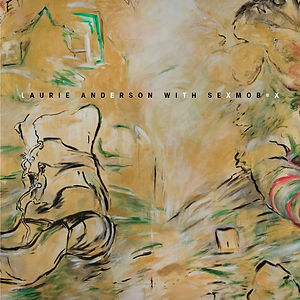
Let X=X (Live)
LAURIE ANDERSON WITH SEXMOB
Released 24 April 2026
Nonesuch Records
*****
A vivid live reimagining of the artist's many art-pop landmarks, rebuilt through jazz and improvisation; retaining the songs' playful and unsettling qualities and proving their .
Few artists have treated language, technology and performance as fluidly as Laurie Anderson. Since the breakthrough of Big Science and the unlikely chart success of “O Superman” in 1982, she has occupied a singular space between avant-garde composition, spoken-word theatre, visual art, science advocate and pop experiment. Her work has consistently resisted preservation as museum piece; even her most iconic songs feel designed for reinvention. Let X=X (Live), recorded during a 2023 tour with the jazz ensemble Sexmob, captures exactly that instinct. Rather than a retrospective set, it becomes a living conversation between Anderson’s catalogue and the loose, brass-heavy, groove-driven vocabulary of improvising musicians. The album spans 23 songs, including a striking interpretation of (her late husband) Lou Reed and metal icons Metallica’s “Junior Dad”, (from their 2011 collaboration "Lulu")
What makes the album so surprisingly compelling is it's avoidance of nostalgia. Yes, these are familiar songs, but they are treated less as repertoire than as raw material - structures to be bent, interrupted and reassembled in real time.
Sexmob’s presence is crucial: Steven Bernstein’s brass arrangements, Kenny Wollesen’s percussion, Douglas Wieselman’s shifting textures, Briggan Krauss’s restless saxophone lines and Tony Scherr’s bass give the music a physicality far heavier than the original studio recordings.
The title track, drawn from Big Science, immediately shows the method: the skeletal electronic unease of the original becomes warmer, stranger and somehow more volatile. “O Superman”, still one of the most singular songs in modern music, is transformed not through spectacle but through tension. The repetition feels even more hypnotic when surrounded by live breath and improvisational drift. “From the Air”, “Gravity’s Angel” and “Only an Expert” all benefit from this approach, their spoken narratives gaining new urgency when the band pushes against their edges rather than simply accompanying them.
The inclusion of “Junior Dad” is especially moving, not simply because of Anderson’s personal connection to Reed, but because it fits so naturally within the emotional architecture of the set: grief, distance and tenderness delivered without sentimentality.
This is not a historical recreation. It is proof that Laurie Anderson’s work remains alive precisely because it can be re-spoken, re-heard and re-imagined. Let X=X (Live) is less a live album than a reminder that the future tense has always been her native language - and it's a prototype for established artists wishing to recapture their own currency and creativity, without necessarily having to create entirely new works to do so.
Read more...
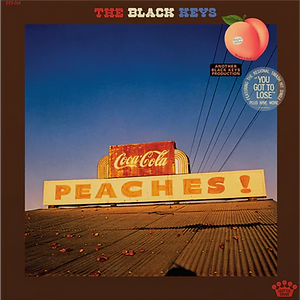
Peaches!
THE BLACK KEYS
Released 1 May 2026
Easy Eye Sound / Warner Records
*****
A confident return to first principles, that proves how familiarity can still feel vital: classic blues-rock built, but on conviction, craft and enduring instinct, without the need for reinvention
Few contemporary rock bands have built longevity from such deliberate consistency as The Black Keys. Since emerging from Akron, Ohio in the early 2000s, Dan Auerbach and Patrick Carney have remained fundamentally committed to the stripped-back blues-rock language established on their earliest records: fuzzed guitar, heavy drums, garage-soul grit and deep reverence for the American South’s electric blues lineage. Influences including Junior Kimbrough, R. L. Burnside, Howlin' Wolf and Robert Johnson remain audible across the band's fifteen studio albums, even as Auerbach’s parallel career as a solo artist and producer has refined the duo’s studio polish.
The central question Peaches! raises is one that follows any long-running artist: how much does originality matter when the voice itself remains compelling? In criticism, there is often an assumption that evolution must mean visible stylistic change, that artists should be measured by how far they move from where they began. But some musicians work differently. Their achievement lies not in abandoning form, but in deepening it. The Black Keys have always belonged to this second category.
Peaches! is unmistakably a Black Keys album. Across its tight, riff-driven songs, Auerbach and Carney stay close to the architecture they established a quarter century ago: blues-rooted guitar hooks, muscular drumming, a slightly greasy sense of groove, and arrangements built around tension rather than ornament. Production is cleaner now, more spacious and confident, but the core language remains the same. That is not creative laziness; it is aesthetic commitment. Like the Delta and hill-country blues artists who shaped them, repetition is part of the point, style becomes identity through persistence.
The question then, is simple: does it still work? The answer is yes, yes, YES! That it eclipses two other of the bands defining late-career releases - 2021's "Delta Kream" Peaches! and last year's "No Rain, No Showers" - will not surprise long term followers of the band and, like all the band's work, it entertains with total assurance. Auerbach’s producer’s ear keeps everything sharp without sanding off the rough edges that matter. The riffs land, the rhythm section drives, the songs are excellent and the musical choices are inspired - including the choice to cover Ike Turner's, by way of George Thoroughood's, "You Got To Lose": this is the work of an elite band that understands exactly how much they need no more, no less.
Read more...
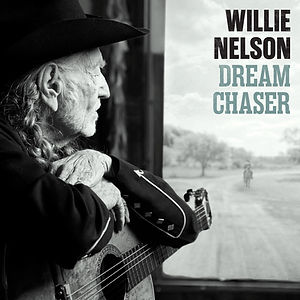
Dream Chaser
WILLIE NELSON
Released 29 May 2026
Sony Music
*****
A masterclass in traditional country songwriting from an artist who continues to make timeless music sound effortlessly alive, pairing wisdom, wit and melody with remarkable ease.
Few recording artists can claim a legacy comparable to Willie Nelson's. Across seven decades, he has remained one of country music's defining songwriters, performers and interpreters, helping shape the modern American songbook while remaining deeply rooted in the traditions that produced it. Yet unlike many legacy artists, Nelson's continued productivity feels neither nostalgic nor obligatory. His recent recordings demonstrate a songwriter still fully engaged with his craft, still finding fresh angles within familiar forms.
Dream Chaser arrives on the same day as Paul McCartney's The Boys of Dungeon Lane, inviting an intriguing comparison between two giants whose careers collectively span well over a century of recorded music - and reveals a fascinating distinction between two great songwriting traditions. Pop music, by its nature, often demands novelty - especially the baroque form perfected by The Beatles. Each new McCartney composition is measured partly by its ability to surprise, reinvent or expand upon what has come before. Country music operates quite differently. Its strength lies not in constant reinvention but in the enduring power of familiar forms, timeless stories, emotional directness and surrender to them.
Willie Nelson understands this better than almost anyone.
The songs on Dream Chaser would be instantly recognisable to the pioneers who established country music's foundations. One can hear echoes of Bob Wills, Ernest Tubb, Hank Williams and Jimmie Rodgers throughout the album, not through imitation, but through a shared commitment to craft. The title track is a perfect opener, reflecting on songwriting itself with the wisdom and economy that have always distinguished Nelson's best work. "I Can't Read Your Mind," co-written with Bob Dylan, stands comfortably alongside it, while the remaining songs maintain an impressively consistent standard.
Equally impressive is the sequencing. Tempos rise and fall naturally, giving each song its own identity and emotional space. Behind Nelson stands a formidable band: producer and co-writer Buddy Cannon, harmonica master Mickey Raphael, drummers Billy and Paul English, bassist Kevin Smith and pianist Bobbie Nelson. Together they provide accompaniment that is simultaneously relaxed, precise and deeply musical.
Many artists attempt to preserve traditional country music. Willie Nelson simply continues to embody it. They may not make records quite like this anymore—but Willie still does.
Read more...
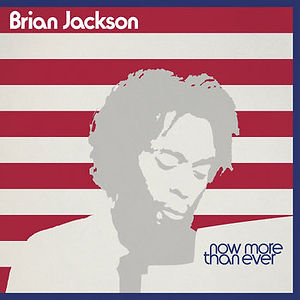
Now More Than Ever
BRIAN JACKSON, MASTERS AT WORK,
KENNY DOPE, LOUIS VEGA
Released 29 May 2026
BBE Music
****-
A joyous, politically resonant reinvention of a landmark catalogue, uniting generations of artists to prove that great songs — and the struggles they address — remain timeless.
Brian Jackson occupies a unique place in modern music history. As the principal musical collaborator of Gil Scott-Heron, he helped create some of the most influential recordings of the 1970s, fusing jazz, soul, funk and poetry into a body of work that shaped hip-hop, neo-soul and politically conscious music for decades to come. Songs such as The Revolution Will Not Be Televised, Winter In America, The Bottle and Home Is Where The Hatred Is became cultural landmarks.
For Now More Than Ever, the legendary production duo Masters At Work - Louie Vega and Kenny Dope Gonzalez - and an impressive cast of contemporary collaborators, revisit this catalogue through a modern lens, while preserving its original spirit.
The central challenge facing any project like Now More Than Ever is obvious: how do you revisit songs that have already entered the cultural canon without reducing them to heritage pieces? The answer, it turns out, is collaboration.
As Brian Jackson says, "Collaboration is stimulating, it's in my blood," and that philosophy animates every moment of this ambitious nineteen-track collection. Rather than treating these songs as sacred museum artefacts, Jackson and Masters At Work allow them to breathe within contemporary musical contexts. House rhythms, soul grooves, jazz textures and spoken-word interventions transform familiar material without diminishing its power.
The genius of the project lies in recognising that these songs were never intended to be static. When Jackson and Scott-Heron wrote them in the 1970s, they were responding directly to the social realities around them. The uncomfortable truth is that many of those realities remain unresolved. Consequently, songs such as The Revolution Will Not Be Televised, Home Is Where The Hatred Is and Winter In America feel less like historical documents than continuing conversations.
The guest list is formidable. Contributions from Black Thought, Rahsaan Patterson, Josh Milan, Moodymann, Omar and J. Ivy never feel tokenistic; each artist finds a personal way into the material. Meanwhile, the production of Vega and Gonzalez achieves a delicate balance between reverence and reinvention, often nudging these classics toward the dancefloor while retaining their emotional and political weight.
Perhaps the album's greatest achievement is that it avoids nostalgia altogether. Instead, it demonstrates how living songs evolve across generations. These recordings once soundtracked a movement of Black consciousness and resistance; here they continue that lineage, speaking to a new era without losing their original urgency.
Now More Than Ever is more than a tribute album, remix project or retrospective. It is an affirmation that truly great music remains unfinished — continually renewed by the people who discover, reinterpret and carry it forward.
Read more...
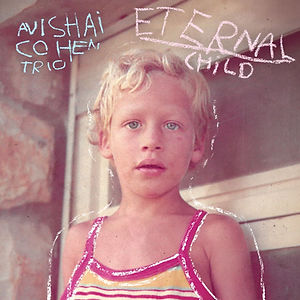
Eternal Child
AVISHAI COHEN
Released 29 May 2026
naive
****-
A deeply lyrical and rhythmically fluid jazz statement that balances virtuosity with emotional directness, where melodic clarity and improvisational freedom coexist in striking equilibrium.
Avishai Cohen has established himself as one of contemporary jazz’s most distinctive voices, first emerging as a prodigiously gifted bassist before developing into a composer and bandleader of considerable scope. His work sits at the intersection of modern jazz, Middle Eastern melodic traditions and global rhythmic influences, often prioritising lyricism and emotional accessibility without sacrificing harmonic sophistication or improvisational depth. Across a discography that spans trio formats, large ensemble writing and cross-cultural collaborations, Cohen has consistently explored the idea that jazz can be both technically advanced and immediately communicative. Eternal Child continues that trajectory, reflecting an artist still engaged with questions of melody, identity and musical storytelling.
Eternal Child is a trio record with pianist Itay Simhovich and drummer Eviatar Slivnik, (with drummer Jeff Ballard appearing on several tracks). It is built around a central paradox that Avishai Cohen has long navigated - the tension between compositional maturity and a persistent sense of play. The title suggests a duality - between experience held in balance and instinct - and much of the album’s power comes from this ongoing negotiation. Musically, the album's focus is upon two ideas Cohen has always returned to: melody you can feel, and rhythm that moves.
Across the record, Cohen’s bass work remains foundational but never purely supportive. Lines are melodic, often singing in counterpoint to piano and horns rather than simply anchoring harmonic movement. The ensemble writing is fluid, allowing themes to unfold gradually before dissolving into open improvisation. Even in its most structured passages, there is a sense of looseness, as if the music is always one step away from changing direction. The emotional palette is broad but carefully controlled. Ballads unfold with patient restraint, built from harmonic spaces that feel open-ended rather than resolved. Up-tempo sections, by contrast, carry a propulsive energy that never tips into excess, instead favouring rhythmic elasticity and conversational interplay. While the technical command on display is undeniable, it is consistently placed in service of expression rather than display. This gives the album its warmth: a sense that every note has been chosen not to impress, but to communicate.
In the broader context of Cohen’s work, this album feels more like consolidation than reinvention - an artist refining his core language to its most direct and human form.
Read more...
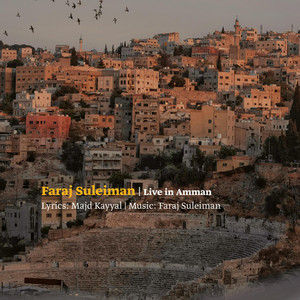
Live In Amman
FARAJ SULEIMAN, MAJID KAYYAL
Released 29 May 2026
Faraj Suleiman
****-
A vividly expressive live recording that transforms poetic lyricism and improvisational piano writing into cinematic, emotionally charged performances rooted in place, memory and melodic Arabic-jazz fusion.
Faraj Suleiman has developed a distinctive voice at the intersection of Arabic musical traditions, contemporary jazz and European classical influence. Born in Rameh (an Arab town in the upper Galilee of northern Israel) and based across Haifa (a northern port city of Israel), Paris and international touring circuits, his work often blends tightly structured composition with improvisational freedom and a strong melodic identity shaped by Arabic modal language. Across albums such as Maryam (2025), Upright Biano (2023) and As Much As It Takes (2023), he has frequently collaborated with lyricists and poets, including Majd Kayyal, whose lyrics he presents here, and whose texts bring narrative and emotional depth to Suleiman’s music.
Live in Amman captures this collaboration in its most immediate form: performance as dialogue between piano, voice, poetry and audience. The album captures the acoustic energy, intimacy and immediacy of the outdoor arena setting. Unlike studio recordings where Suleiman’s compositions are carefully layered and sculpted, this live document foregrounds tension, spontaneity and the evolving relationship between piano and spoken word.
Majd Kayyal’s lyrics are central, acting as structural anchors, shaping the emotional arc of each piece.
Across the set, Suleiman’s piano language is fluid and rhythmically assertive, often shifting between percussive repetition and lyrical, almost vocal phrasing. In the live setting, these contrasts become more pronounced. Extended passages feel deliberately unhurried, allowing harmonic ideas to resonate in the space, while sudden bursts of energy break the surface with striking clarity.
The ensemble dynamics are equally important. Supporting musicians respond in real time to Suleiman’s phrasing, creating an interplay that feels conversational rather than hierarchical. This reinforces the sense that the performance is being collectively authored in the moment, rather than simply reproduced.
What emerges is not just a live album, but a document of artistic presence. The songs feel unfinished in the best possible way - open, responsive, and shaped as much by the audience and acoustics of Amman as by the written material itself. It is a reminder that Suleiman’s music is at its most powerful when it is allowed to breathe in real time.
Read more...

New Architecture
EUSTACE JAHARI, BODDHI SATVA, BRIA 83 ORCHESTRA
Released 29 May 2026
Offering Recordings
****-
A spiritually charged convergence of roots reggae, sound system science and meditative repetition into a stark, immersive architecture of dub, bass, space and consciousness.
New Architecture emerges from a collaborative framework rooted in contemporary Afro-diasporic electronic music. Producer Boddhi Satva brings his signature approach to spiritualised rhythm and deep house-inflected minimalism, while vocalist Eustace Jahari delivers grounded, sermon-like chants shaped by roots reggae and dub traditions. Bria 83 Orchestra provide the textural and instrumental backbone, expanding the sound into a more organic, ensemble-driven space.
Rather than functioning as a conventional debut album, the project positions itself within a lineage of sound system culture, 1990s Kingston aesthetics, and contemporary global bass music. It frames dub not as nostalgia, but as a living structural language, concerned with discipline, space, and the psychological weight of repetition.
New Architecture is built on restraint as much as it is on weight. From its opening moments, the album establishes a slow, deliberate sense of motion: basslines roll with seismic patience, drums sit deep in the pocket, and echo is used not as decoration but as structural space. As the album title describes, this is dub conceived as architecture - every delay tail and reverb wash functioning like load-bearing material.
Eustace Jahari’s vocal presence is central to this construction. Rather than traditional song delivery, his voice operates as invocation: half chant, half commentary, carrying themes of survival, identity and spiritual discipline. His phrasing is often minimal, but that minimalism becomes a form of emphasis, allowing silence and repetition to do much of the expressive work.
Boddhi Satva’s production is meticulous and immersive, drawing on the sonic grammar of roots reggae and 1990s Kingston sound system culture without slipping into pastiche. Instead, these elements are abstracted into something more architectural: kick, bass and echo arranged as spatial design rather than genre reference.
Bria 83 Orchestra add another dimension, introducing organic instrumental layers that occasionally surface through the mix like human traces inside a machine-built environment. These moments prevent the record from becoming purely mechanical, reminding the listener that this is music built by people, not systems.
The thing that ultimately defines New Architecture is its philosophical consistency. Every track feels like part of a larger internal structure - less a collection of songs than a single extended construction in which rhythm, space and voice are continuously being rebuilt from within.
Read more...

The Boys of Dungeon Lane
PAUL MCCARTNEY
Released 29 May 2026
Capitol Records
****-
A sentimental reminiscence of childhood and experience, with flashes of late-career brilliance, but hampered by the familiar solo-Macca curse of trite lyricism.
That Sir Paul McCartney has sustained such a successful solo career away from The Beatles for over 50 years is astonishing and practically unrivalled. However, despite his share of smash hits, successful tours and forays into orchestral music, his albums have always (and for good reason) highlighted the massive chasm left by the absence of his former bandmates.
McCartney's pop sensibility is drawn from pre-war jazz, Tin Pan Alley, married to the grit of Hamburg clubs - qualities that contributed uniquely to the fab four's baroque-pop edge. His solo material has lacked the focused classical architecture of producer George Martin and the sharp, avant-provocateur friction of John Lennon. McCartney often overcomes loss of the former, but rarely replicates the latter.
On The Boys of Dungeon Lane, the 83-year-old icon delivers a highly reflective, acoustic-leaning set centered on community, memory, and family. It is a record written from the high peak of cultural immortality, yet - his vocal fragility aside - it feels structurally adjacent to any era of his sprawling solo discography.
The set is a frustratingly uneven mix, but it's highlights remind us of the exceedingly high musical bar McCartney continues to clear often enough to forgive the pleasantly-strummed near misses between.
The album starts with "As You Lie There," a Wings-esque blend of sentimentality and rock fuzz that flirts with greatness but lacks the feral intensity of a "Come Together" or "Helter Skelter." From there, the record frequently stumbles into mediocrity - "Lost Horizon", "Days We Left Behind", "Ripples In A Pond," feature familiar McCartney-isms but are sabotaged by painfully banal lyrics. "Mountain Top" takes us on a trippy acid-fueled festival outing, but lacks the element of delight that elevated "For The Benefit Of Mr Kite" and "Lucy In The Sky With Diamonds". Next, Paul reveals his fragile older voice in the Johnny Cash-style "Down South", however the gravitas that carried Cashes late-in-life recordings falls flat without a substantive narrative to support his aging vocal delivery.
However, the album begins to find its footing in the final stretch: "Come Inside" is a good-enough rocker, with raging vocal delivery and muscular backing, and a Ringo Star duet provides the albums "Octopus's Garden" moment and"Never Know" presents a beautifully complex reflection on a romantic relationship,
McCartney then presents a pair of his signature delicate falsetto-and-strings songs, the bouncy "Life Can Be Hard" and the gorgeous "First Star Of The Night".
As the album draws to its conclusion, "Salesman Saint" showcases Paul's - and co-producer Andrew Watts (Elton John, Justin Bieber, Ozzy Osbourne) - technical brilliance with a highly creative mix of mariachi brass and 1950s jazz.
The pensive closing track, "Momma Gets By"- a heartfelt eulogy to his mother - encapsulates the enduring McCartney dilemma. Where Lennon's raw processing on his "Mother" and his lyrical tenderness in "Julia"are each unforgettable upon first listen, McCartney writes in the voice of observer rather than participant, leaving us with an album that is delightful in part, but often difficult to remember.
Read more...
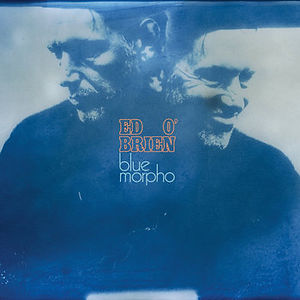
Blue Morpho
ED O'BRIEN
Released 22 May 2026
Transgressive Records
*****
Transforming personal collapse, spiritual search and sonic experimentation into an immersive second solo album where psych-folk, ambient jazz and devotional songwriting quietly intertwine.
For more than three decades, Ed O’Brien has occupied a distinctive role within Radiohead — less a conventional lead guitarist than a master of atmosphere, texture and emotional architecture. His playing has often shaped the band’s sense of spatial depth and harmonic movement, even when operating away from the foreground. Yet Blue Morpho arrives from a markedly more personal and vulnerable place than anything previously associated with his work.
Following the release of his 2020 solo debut Earth, O’Brien entered a period of profound depression during the isolation of the pandemic years. Retreating between London and the Welsh countryside, he began using music less as formal composition than as emotional navigation — recording fragments, improvisations and meditative guitar explorations while processing decades of accumulated psychological weight. Over time, those sketches evolved into Blue Morpho, a record shaped equally by recovery, spirituality, nature and openness to serendipity.
Collaborators including Paul Epworth, Shabaka Hutchings, Dave Okumu and Estonia’s Tallinn Chamber Orchestra help expand that inward journey into something richly communal and cinematic.
O’Brien approaches songwriting less through traditional rock structures than through accumulation of texture, rhythm and atmosphere, allowing songs to emerge gradually, almost ecologically, from layered sound environments.
The opening “Incantations” immediately establishes the album’s spiritual and sonic language. Guitars shimmer and dissolve into hypnotic rhythmic cycles while O’Brien’s vocal delivery remains understated, almost conversational, resisting dramatic centre-stage gestures. Next, the title track brings the pastoral sweep of a nature documentary, making way for "Sweet Spot" a pretty but uninspired, mid-tempo ballad. Across the record, that restraint becomes essential to its emotional credibility. “Teachers” introduces darker tension through warped trip-hop textures and anxious rhythmic movement. “Solfeggio” and "Thin Places" favour ambient drone and tonal suspension, blurring the line between composition and meditation.
It is not until the final track "Obrigado" that the album shows the sustained energy and invention that one might associate with Radiohead. Here O'Brien puts to work the impressive players he has assembled, behind distinctive music and a vocal of some conviction.
It is easy to overlook O’Brien's essential role in Radiohead, behind its two frontmen Thom Yorke and Jonny Greenway, but his work in Blue Morpho (and its 2020 predecessor) helps decode the interstitial qualities he brings to that band, working there as here, between genres, emotional states and creative identities.
At its core, as O'Brien has expressed in interviews, Blue Morpho is about learning to recognise and surrender to one's fragility and making corrections without fear. O’Brien does not present himself here as the veteran rock icon, but more as an emerging musician, beginning again emotionally, creatively and spiritually. Approached in the spirit of this humility, Blue Morpho is quietly compelling
Read more...
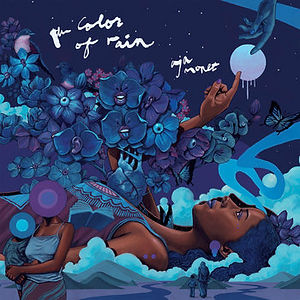
the color of rain
AJA MONET
Released 22 May 2026
drink sum wtr
****-
Aja Monet transforms poetry into radical musical praxis - dissolving boundaries between jazz, protest, surrealism and spiritual introspection through one of the year’s most fearless interdisciplinary works.
Aja Monet has steadily emerged as one of the most vital literary and musical voices operating between poetry, jazz and Black radical artistic tradition. Rooted in spoken word yet resistant to categorisation, her work draws equally from the Black Arts Movement, community organising, surrealism, spiritual jazz and contemporary political consciousness. Her Grammy-nominated debut when the poems do what they do introduced a deeply intimate performance language - one shaped by her interplay with a live ensemble, vulnerable cadences and the album's emotional immediacy.
the color of rain treats poetry not as text placed over music, but as its compositional framing. Across collaborations with Meshell Ndegeocello, Justin Brown, Ambrose Akinmusire, Brandee Younger, Georgia Anne Muldrow, Mereba and others, Monet constructs a fluid sonic environment in which jazz, soul, hip-hop, Afro-punk, experimental production and spoken invocation coexist without hierarchy. The result feels less like genre fusion than genre dissolution - a record committed to emotional, political and spiritual permeability.
the color of rain is remarkable not simply for its thematic ambition, but for how completely it reimagines the relationship between poetry and sound. Monet does not “perform over” music; rather, her tone, breath, cadence and phrasing become structural components within constantly shifting sonic environments. The album moves through jazz abstraction, warped soul textures, Afro-punk propulsion, meditative ambience and polyrhythmic spoken invocation with startling fluidity, often within the same composition.
Importantly, the record’s political force never arrives as sloganism. Songs like “for the congo”, “hollyweird” and “every media minute” confront violence, fascism, ecological collapse and media exhaustion directly, yet the album continually returns to intimacy, tenderness and inner life as forms of resistance themselves. Monet understands that political consciousness without emotional depth risks becoming performative rhetoric; here, vulnerability becomes part of the protest language.
The musical ensemble is extraordinary throughout. Meshell Ndegeocello’s curatorial presence provides cohesion amid stylistic volatility, while Justin Brown’s rhythmic discipline anchors the album’s movement between stillness and eruption. Contributions from Ambrose Akinmusire, Brandee Younger, Georgia Anne Muldrow, Ganavya and Mereba deepen the album’s communal spirit without diluting Monet’s singular vision.
The album is surreal, searching, politically urgent, emotionally porous and formally adventurous all at once; an album less interested in genre than in expanding the possibilities of contemporary poetic music itself.
Read more...
%20-%20nen.jpg)
nen
KIRI RA!
Released 22 May 2026
We Jazz
****-
An exquisitely fragile, slow-burning ambient jazz tapestry that operates as a masterclass in quietude, balancing sparse organic textures and synthesisers with rare, unhurried collaborative restraint.
Comprising Finnish psych-folk auteur Lau Nau (Laura Naukkarinen), celebrated jazz saxophonist Linda Fredriksson, and Swedish ambient/film composer Matti Bye, Kiri Ra! is a Nordic super-trio built on patient intuition. A decade in the making, nen marks their entry into Helsinki’s forward-thinking We Jazz Records.
Eschewing structural blueprints or verbal communication during studio sessions, the trio favors an eco-somatic approach where organic and synthetic elements melt together. By blending Fredriksson’s breath-heavy woodwind lines with Bye’s cinematic keys and Lau Nau’s modular, tactile electronics, Kiri Ra! captures an ultra-minimalist space where silence is treated with the same weight as sound.
bklyn music
nen is an exercise in profound decompression. The title track, "nen," embodies this philosophy perfectly, anchoring its drifting arrangement with a sub-surface warmth as Fredriksson’s saxophone floats gracefully above Bye’s delicate, spaced-out piano notes. Throughout the record, the trio displays a commendable refusal to rush. Tracks like "niin-så" open like slow-blooming flora, where synthetic whispers and natural wooden click-clacks merge so seamlessly that the boundary between the organic and electronic completely dissolves.
bklyn music
For a record born of unstructured improvisation, it is remarkably coherent, avoiding the aimless, self-indulgent pitfalls that often plague free-form collaborations. If there is a critique, it is that nen operates at such a uniform level of quietude that it risks receding entirely into background wallpaper during its mid-album stretches, notably on "Oem." Yet, just as the inertia threatens to stall the record, the album's brilliant, penultimate track "Eroplane" introduces sharp, tactile micro-textures that gently snap the listener back to attention. It is a sublime, deeply meditative listen - demanding a quiet environment to be fully appreciated, but delivering a masterfully calm, atmospheric reward.
Read more...
rain music
DUVAL TIMOTHY, CARLOS NINO
Released 22 May 2026
Carrying Colour
****-
A profoundly meditative, wet-weather collaboration where sparse prepared piano loops and fluid, ambient percussion merge seamlessly, capturing the quietude of isolation with remarkable emotional clarity.
The intersection of South London multi-disciplinary artist Duval Timothy and Los Angeles new-age/jazz sage Carlos Niño feels entirely organic. Timothy’s trajectory is defined by a sparse, post-minimalist piano style, built on heavy loops, silence, and field recordings, that has graced avant-garde solo LPs and high-profile tracks for Kendrick Lamar. Niño operates as a cosmic connector, utilizing ambient "space collage" percussion to anchor spiritual jazz and experimental works, most recently co-steering André 3000’s New Blue Sun.
On rain music, their paths complement beautifully: Timothy’s architectural, repetitive piano keys provide structural earth to Niño’s floating, free-form percussive sky, birthing a tranquil transatlantic dialogue.
Conceived during literal rainstorms in London and Topanga Canyon, rain music thrives on an intentional, delicate lack of urgency. The album unfolds as an eight-track suite where the boundary between instrumentation and environment completely dissolves. On the album's brief but energetic second track "loopy," Timothy's cyclical, melancholic chords form a hypnotic bed over which Niño weaves a subtle canopy of gongs and chimes, capturing a distinctly comforting domestic solitude.
Guests are integrated with careful restraint; "ideations on rain" benefits immensely from Nate Mercereau’s shifting guitar synth, while "beautiful, tender, colours" finds rapper Navy Blue delivering spoken-word poetry that anchors the duo’s drift in human intimacy.
However, the album's hyper-subdued temperament means it occasionally risks evaporating. Sketches like "bumpy" function more as transient textures than fully realized songs, leaning heavily on the premise that vibe alone can sustain a piece. Yet, whenever the momentum threatens to stall entirely, the closing masterclass "birds, shells, rivets, keys" gently snaps the focus back, layering found sounds into an incredibly rich acoustic ecosystem.
rain music is an exquisitely polite, beautifully mixed record that rewards patient, close listening.
Read more...
Prologue
ATAMONE
Released 22 May 2026
Nikamo Productions
***--
A floral, aromatic instrumental journey that merges analog dust with digital crispness, offering smooth, sun-drenched textures that occasionally lean too heavily into safe, pleasant background luxury.
Montreal-born Inuk producer, multi-instrumentalist, and multimedia artist Atamone (Tam Kadjulik) has quietly carved out a distinctive niche in the global underground beat scene since 2011. Blessed with an expansive academic background spanning 3D animation, sound design, and video game programming, his sonic aesthetic is intensely cinematic and deeply tactile. Following his 2025 release Epilogue, his latest offering, Prologue, acts as the dawn of a fresh chapter under the Indigenous-led label Nikamo Productions. Arriving after a significant relocation and shift in environment, the record strips back his usual collaborative framework (previously featuring hip-hop royalty like Illa J) to deliver a highly personal, self-contained suite inspired by changing seasons and rural simplicity.
Prologue is undeniably smooth, operating like a warm tonic for the modern listener's sensory overload. Atamone is a master of combining organic instrument sequencing with dusty hardware samplers. The stellar track "Amaruq" shines brightly here, layering airy melodies over a resilient, swaying hip-hop pulse that feels both grounded and weightless. Similarly, "Waterfalls" relies on lush synthesizer swells and delicate micro-textures that mimic natural elements, establishing a deeply immersive, aromatic atmosphere.
However, the album's overwhelming pleasantness acts as a double-edged sword. By designing Prologue around the themes of natural simplicity and flow, Atamone occasionally sacrifices friction for pure comfort. Over its runtime, the beats float by with such effortless, low-stakes ease that individual tracks begin to blur together, threatening to relegate his intricate sound design into high-end lo-fi study music.
While his technical execution and mixing remain flawless, a bit more rhythmic unpredictability or harmonic grit could have transformed this highly consistent, soothing soundtrack into a truly gripping narrative. It remains an incredibly polished, peaceful record, but one that is content to soothe rather than challenge.
Read more...
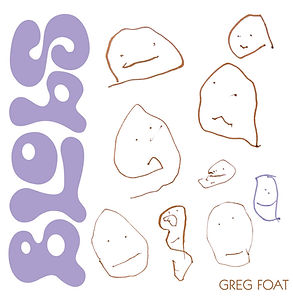
Blobs
GREG FOAT
Released 22 May 2026
Blue Crystal Records
****-
A childlike visual prompt is transformed into an enchanting ambient-library soundscape, as woodwinds, synthesisers and melodic minimalism evoke a warm and gently surreal atmosphere.
Greg Foat has established an expansive catalogue of music that explores the intersection of jazz, ambient composition and library music with his own recognisable sonic language built from analogue keyboards, cinematic textures and an affection for the understated emotional resonance of vintage soundtrack composition.
While much of his recent work has drawn from spiritual jazz and European library traditions, Foat has increasingly embraced ambient minimalism and mood-based composition as central elements of his practice.
Inspired by a birthday card created by his four-year-old son Leo, Blobs feels like a particularly personal extension of that trajectory. The album approaches imagination itself as compositional material. Rather than imposing adult conceptual seriousness onto childhood imagery, Foat leans fully into openness, colour and playful abstraction. The result is a set of instrumental miniatures that evoke both Japanese environmental music and the quietly whimsical atmosphere of 1980s educational television soundtracks.
Blobs succeeds because it resists irony entirely. Foat approaches the album’s child-inspired premise with genuine sincerity, allowing simplicity, repetition and tonal softness to guide the music rather than treating them as novelty gestures. Across its nine tracks, woodwinds drift through softly pulsing synthesiser textures, while melodic fragments appear and dissolve with dreamlike fluidity.
The album’s strongest quality is its sense of scale. Even at its most minimal, the music feels spacious and tactile, less concerned with harmonic complexity than with creating environments the listener can quietly inhabit.
Foat avoids mere pastiche through careful pacing and tonal cohesion and importantly, Blobs never becomes emotionally weightless. Beneath its playful textures lies a subtle meditation on perception and wonder, the ability to experience shape, colour and sound without analytical distance. Tracks unfold like small acts of observation, guided by curiosity rather than narrative destination. Foat's Bandcamp describes the album as "...an aural delight of unusual sounds. Kind of like a mix of Satoshi & Makoto, Hiroshi Yoshimura, Hiroki Kikuta and the Karl Jenkins and Mike Ratledge soundtrack to 80's children's Television show 'Button Moon'."
In a musical landscape often driven by conceptual overstatement, Blobs feels refreshingly modest in ambition yet remarkably immersive in execution. Foat reminds us that atmosphere, tenderness and imagination can themselves constitute artistic depth.
Read more...

Canto de olho
LUISE VOLKMANN, KIKO DINUCCI
Released 22 May 2026
Luise Volkmann, Koko Dinucci
****-
An arresting, fiercely intimate cross-cultural dialogue where avant-garde European jazz improvisation collides with the sacred, raw urgency of Afro-Brazilian guitar traditions and devotion.
German saxophonist Luise Volkmann and Brazilian guitarist/vocalist Kiko Dinucci (famed for his work with Afro-punk-jazz powerhouse Metá Metá) have cultivated a rare, friction-based kinship. Following their blistering 2024 debut Enxame, which documented their initial meeting during a São Paulo residency, the duo returns with Canto de olho.
Recorded in Cologne, this sophomore effort deepens their idiosyncratic language. Dinucci binds the visceral energy of São Paulo’s punk scene with the rhythmic weight of Baden Powell's Afro-Sambas, while Volkmann delivers a soaring, microtonal response rooted in European free-improvisation. Together, they filter West African Yoruba melodies and Candomblé praise songs - from the Afro-Brazilian religion developed in the 19th century, born from the resilience of enslaved West Africans, and blending traditional Yoruba, Fon, and Bantu beliefs with elements of Catholicism) into a stark, minimalist framework.
Canto de olho operates on the edge of tension, thriving as an unfiltered live-in-studio conversation. On the opening track "Olhar de Canto de Olho (Ire Baba)," Dinucci’s acoustic guitar snaps with percussive, sharp-edged intent, providing a rhythmic bedrock that initially feels at odds with Volkmann's freewheeling saxophone. Yet, as the track unfurls, her alto line snakes seamlessly into his syncopation. The emotional centerpiece, "Sinto falta desse sentimento (Esu lonan)," showcases their devotional focus, where Dinucci’s strained, haunting vocals invoke the Orixás over minimalist chord cycles, punctuated by Volkmann’s fragile, crying woodwind textures.
Crucially, the album avoids the polite, clinical trappings of global "fusion" projects. There are moments where the abrasive clatter of Dinucci's heavy strumming threatens to overwhelm the sparse arrangements, particularly on "Acho bonito," where the performance borders on chaotic discordance. However, this refusal to smooth over the rough edges gives the record its credibility. Canto de olho is a demanding but deeply rewarding listen - a masterclass in cross-cultural empathy that favors raw vulnerability over safe virtuosity.
Read more...
.jpg)
DAUGHTER WATER (EP)
ELLE SHIMADA
Released 22 May 2026
Elle Shimada
****-
An exquisitely tender, oceanic chamber-jazz EP that trades dancefloor aggression for a soothing, violin-led sanctuary of sisterhood, capturing a profound sense of emotional freedom and interpersonal warmth.
Following the intense, politically charged multi-genre chaos of her January 2026 sophomore LP Lullaby For the River In My Body, Tokyo-born, Melbourne-based multi-instrumentalist and producer Elle Shimada pivots sharply inward. DAUGHTER WATER is a deliberate antidote to digital overstimulation and personal isolation. Conceptualized by the shoreline "oceans away from home", where the ocean serves as a metaphor for global, feminine interdependence, this 5-track "lover girl jazz" EP is an intimate monument to the women in her life. She writes:"Each song on this EP is named after the women who became my family: Ren, Kim, Aakanksha, Fazah, Reem and I. The limitless wonder I felt holding baby Ren. Kim’s unconditional and generous love. Aakanksha’s courageous determination. Reem’s quiet, ocean deep thoughtfulness. Fazah’s loud and infectious joy. Warmth they share. And a freedom and joy that I am learning to cherish more in myself."
If her previous work weaponized rhythm as resistance, DAUGHTER WATER treats melody as a sanctuary. Shimada completely fulfills her ambition to create a "warm sisterhood" in sound, heavily incorporating field recordings of ocean waves that tie the tracklist together. On "Fazah & Reem," her violin does not fight the production; instead, it sings with a fluid, audacious joy that perfectly mirrors her stated intent. The sparse, ambient framing of "Kim" and "Ren" relies on gentle jazz-tinged keys and sweeping, cinematic string layers that evoke a sun-drenched calmness, trading clinical electronic complexity for pure emotional reassurance.
Admittedly, listeners seeking the fierce, fractured breakbeats of her debut LP might find this softer, meditative palette almost too polite. Tracks like "Aakanksha" lean so heavily into soothing, low-stakes comfort that they occasionally flirt with luxury hotel lobby music. Yet, judging the EP against Shimada’s specific goal - to offer a comforting, offline respite that honors the divine strength of her peers - the project is a resounding success. It is a beautifully mixed, deeply human recording that prioritizes healing and connection over avant-garde friction, proving her range as a composer.
Read more...

LULLABY FOR THE RIVER IN MY BODY
ELLE SHIMADA
Self-Released
Released 30 January 2026
****-
A monumental, 14-track avant-garde journey that uses classical instrumentation and explosive club electronics to map a raw, deeply political trajectory through personal grief and collective decolonial liberation.
Tokyo-born, Melbourne-based multi-instrumentalist, producer, and DJ Elle Shimada has long rejected the neat categorizations of the electronic underground. Since her striking 2022 debut Home ≠ Location, her practice has treated live orchestration and club culture as twin vessels for political resistance.
On Lullaby For the River In My Body, Shimada charts an ambitious, 14-track conceptual map divided into distinct chapters of grief and awakening. Enlisting heavyweights like London jazz pianist Joe Armon-Jones, global groove merchant Jitwam, and fierce lyricists Pookie and Legzdina, she transforms deeply personal trauma into a collective, genre-blurring manifesto centered on matriarchy and decolonial rage.
Lullaby For the River In My Body is a beautiful, unapologetically messy triumph. The record begins in fragile territory with the elegant piano chords of "Tender" alongside Joe Armon-Jones, before violently shifting gears. Shimada's technical brilliance shines where she lets disparate genres clash. "Red River" serves as the album's emotional turning point, weaponizing disorienting, punk-fueled electronic beats to deliver a blistering critique of state and colonial violence. This abrasive edge balances beautifully against the meditative, shimmering synths of "Answered Prayers," where her breathy vocals act as a cathartic release.
If there is a flaw, it is the sheer weight of the album's conceptual ambitions; with 14 tracks moving from spoken word to jazz and chaotic breakbeats, the narrative thread occasionally strains under its own complexity. However, Shimada maintains absolute command over the energy. The backend features the anthemic "Pussy Power Politics" with rapper Pookie, which ignites an infectious, matriarchal club groove, while closer "Girl Sized Dreams" featuring Legzdina finishes on a thrilling, high-speed drum 'n' bass peak. It is a ruthless, vital record that values raw emotional truth over clinical perfection.
Read more...

Home ≠ Location
ELLE SHIMADA
Released 29 July 2022
The Jazz Diaries
****-
A dizzying, hyper-tactile debut that deconstructs the migrant diaspora experience through a brilliant tangle of skittish broken beats, soaring classical violin, and intimate, phone-recorded vocal diaries.
Long before expanding her canvas on her sophomore record, Tokyo-born, Melbourne-based auteur Elle Shimada spent years anchoring Naarm’s underground live music scene as a session player and curator. Her 2022 debut, Home ≠ Location, was born out of the isolated claustrophobia of pandemic lockdowns. Using voice memos recorded on her phone as a raw emotional archive, Shimada set out to explore the complex, borderless nature of identity. The resulting 8-track project served as her formal introduction as an executive producer, deliberately pairing her classical violin roots with club culture to craft an early blueprint for her signature "dancefloor activism."
Home ≠ Location is remarkable for how unrefined and deeply intimate it feels. The opening track, "Home is _______," immediately sets the thematic tone, featuring Shimada’s fragile falsetto floating over lean, skeletal syncopations. Her ability to synthesize local and global talent is clear early on; "Why Fight l 故郷" leans into high-speed jungle rhythms as Japanese rapper Nagan Server trades verses with Quartz Pistol over cascading violin phrases. Elsewhere, the standout "MONONOKE" features Melbourne lyricist Jamahl Yami delivering fierce bars across sliding 808 basslines and swelling string arrangements, proving that club music can carry heavy geopolitical weight.
Because the album was built from fragmented audio diaries and years of sonic tinkering, certain brief tracks like "Departure l 出発" function more as transient sketches than fully fleshed-out songs. This slight structural unevenness leaves the record feeling somewhat episodic. However, the emotional payoff on "Remember l 記憶," featuring Rara Zulu’s gorgeous, neo-soul vocals, entirely grounds the project's experimental drift. It stands as a vital, highly creative debut - unafraid to leave its seams showing in pursuit of genuine cultural catharsis.
Read more...
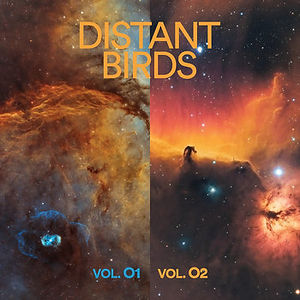
Vol. 01 & 02
DISTANT BIRDS
Released 15 May 2026
Distant Birds
****-
A hypnotic, groove-driven collaboration where Afrobeat pulse, dub atmosphere and long-form improvisation converge - immersive, patient and powered by the chemistry of deep musical trust.
Distant Birds brings together two musicians whose careers suggest very different musical worlds, yet whose instincts meet naturally in rhythm and space. Chris Abrahams, founding pianist of The Necks, has spent decades redefining improvisation through minimalism, ambient tension and slowly unfolding forms. Dave Symes, best known as bassist for Boy & Bear, comes from a background spanning indie rock, soul, jazz and production, shaped in part by mentorship from the late Jackie Orszaczky. With drummer Evan Mannell and the horn voices of Ellen Kirkwood and Matt Ottignon completing the ensemble, VOL. 01 & 02 feels less like a side project than the discovery of a shared musical language - a project that thrives on the kind of patience that only experienced players trust.
Recorded live and in single takes, the album is built around long-form movement rather than conventional song structures: grooves emerge, deepen, mutate and recede without feeling forced. The result sits somewhere between headphone immersion and dancefloor: hypnotic enough for contemplation, funky enough to invite movement.
The album’s pulse comes from the relationship between bassist Symes and drummer Evan Mannell - their rhythm section is not simply supportive; it is the lifeblood of the entire project. Drawing from 70s Afrobeat, dub-reggae and soul, the basslines carry both warmth and insistence, while Mannell’s drumming understands that restraint can generate more momentum than constant attack. Together, they create a breathing foundation that allows Abrahams’ Fender Rhodes, Hammond and Moog textures to drift, stab and shimmer. For listeners familiar with Abrahams through The Necks, the surprise here is how groove-forward the music feels without sacrificing his signature melodic edge.
Ellen Kirkwood’s trumpet and Matt Ottignon’s baritone sax contribute the fourth and fifth cylinders to this well balanced machine — threading through the arrangements, doubling lines, interrupting and answering..
Refreshingly, this music develops its own signature, never sounding like genre fusion for its own sake. Afrobeat, dub, jazz and ambient minimalism are absorbed as spontaneity and structure are held in perfect balance.
Read more...

Terra Ignota
KRAKATAU
Released 15 May 2026
Elation Recordings
****-
A rich, exploratory fusion record shaped by “Fourth World” vision - atmospheric, rhythmically alive and committed to discovering new musical territory.
For more than a decade, Melbourne’s Krakatau have long occupied a singular place in Australian instrumental music, drawing together jazz improvisation, spiritual fusion, progressive composition and global rhythmic traditions without settling comfortably into any one category.
Since their 2016 release Tharsis Montes / Apogean Tide, the trio - James Tom ( Piano, Electric Piano, Synthesizers, Programming, Percussion & Voice), Danny Smith (Fretless Bass & Contrabass), and Dylan Lieberman (Drums & Percussion), have moved further away from cosmic jazz-funk toward something deeper and more exploratory, shaped increasingly by what by what improvisational trumpeter Jon Hassell dubbed as “Fourth World” music - where ambient electronics, ritual percussion, jazz improvisation and imagined geographies merge into one immersive sonic environment.
Terra Ignota represents Krakatau's fullest realisation of that philosophy so far - one of the most sophisticated Australian instrumental releases of the year. The title itself - Latin for “unknown land” - signals the trio's artistic intent. Across five long-form pieces, they map emotional and sonic terrain in a process of musical exploration.
The title track opens with minimalist digital pulses, layered percussion and suspended harmonic movement, evoking a Hassell-like sense of humid, nocturnal space. Reuben Lewis’ trumpet and Rob Vincs’ saxophone do not behave like weather systems moving through the arrangement.
“Birds of Passage” shifts into a more percussion-heavy Latin fusion language, while still retaining that dreamlike spaciousness.
“In Memory” provides the album’s emotional still point - a melancholic dialogue between saxophone and synthesiser that feels almost outside of linear time.
The centrepiece, the three-part suite “Cosmetic Surgery,” is where Krakatau’s ambition fully reveals itself:” a long, complex post-minimalist arrangement that journeys through latin fusion and contemporary jazz,.
In closing, “Trial in Absentia” lands in contemplative ECM-like territory: acoustic, spacious and unresolved.
Like Hassell at his best, Krakatau create music that feels newly discovered - jazz that escapes genre, like a map to somewhere unknown.
Read more...

Happy Today
JEFF PARKER, ETA IVTET
Released 15 May 2026
International Anthem
****-
A joyful live document of deep listening and communal trust - long-form improvisation stretched into hypnotic clarity, in which groove, patience and presence become the real composition.
Few contemporary guitarists (or artists of any kind, for that matter) combine subtlety and complexity as convincingly as does Jeff Parker. Emerging first through Chicago’s experimental jazz scene and as a member of Tortoise, Parker has spent decades dissolving the boundaries between jazz improvisation, hip-hop production, ambient music and post-rock minimalism. His work, whether with the ETA IVtet, The New Breed or in countless collaborations, is defined less by virtuososity than by his feel, patience and groove. is long-running ETA IVtet - alongside drummer Jay Bellerose, bassist Anna Butterss and saxophonist Josh Johnson - became almost mythical through a seven-year Monday night residency at the now-closed Los Angeles micro-club ETA, producing the acclaimed Mondays at The Enfield Tennis Academy and The Way Out of Easy. Happy Today captures that language expanding into a larger room without losing the intimacy that made it special.
Recorded at Lodge Room in Los Angeles after the closure of ETA, the album captures the transferral of that intimacy into a larger communal space without losing its essential chemistry. It is also, as Parker himself describes it, “a statement of joy,” arriving after a year marked by displacement from the Eaton fires, family instability and wider political exhaustion. That context matters: this record feels like relief made audible.
Across two sidelong improvisations, the quartet demonstrates why their music has attracted such devotion despite existing in direct opposition to the speed of contemporary listening culture. These are long-form, minimalist pieces built on patience. The opening “Like Swimwear” begins almost imperceptibly, tension gathering not through harmonic drama but through rhythmic negotiation. Parker, Butterss, Johnson and Bellerose circle an idea until it becomes trance-like, each player stepping forward and back, allowing repetition itself to generate suspense. Even when Parker’s guitar or Johnson’s effected alto sax momentarily suggest soloistic release, the collective pulse remains the real centre.
The defining characteristic of the IVtet is their willingness to “stay on one idea for a while. Really, for a long time,” as Parker puts it. That commitment gives the music its hypnotic force. Bellerose’s auxiliary percussion and Butterss’ bass lines create tiny shifts that feel tectonic; when the groove finally opens into a deeper downbeat, the release feels earned rather than arranged.
What makes Happy Today remarkable is its respect for audience. You can hear the room listening. This is social music - shared attention. In an era built around seconds-long grabs and constant distraction, Parker offers something rare: the joy of surrendering to time.
Read more...

Slow To Mid Jam "Nite One"
GROOVEMAN SPOT
Released 20 May 2026
Scotoma Music
****-
A sleek, loop-heavy excursion into late-night electronic soul that masterfully captures atmospheric mood, though its hyper-minimal arrangements occasionally drift from comfortably hypnotic into repetitive formula.
A staple of Japan’s influential Jazzy Sport collective and a formidable force in the global underground beat scene, grooveman Spot (Kou-G) has spent over two decades dissolving the boundaries between hip-hop, deep house, funk, and modern city pop. Renowned for his surgical sampling instincts and collaborative flexibility, his solo instrumental output has long epitomized the sub-surface cool of Tokyo’s nightlife. With Slow To Mid Jam "Nite One", he pivots toward a leaner, more insular sonic aesthetic. Stripping away guest vocalists, he relies strictly on his MPC architecture to construct a seamless, groove-centric soundtrack tailored for late-night isolation.
Slow To Mid Jam "Nite One" functions exactly as advertised: a 7-track suite designed to hover within a mid-tempo pocket. Grooveman Spot excels at texture, and cuts like "Promise That" display his signature warmth, leaning on smooth synthesizer pads and crisp snare cracks that evoke an immediate, late-night nostalgia. Similarly, "Come Back" introduces a subterranean bassline that grounds the record's lighter melodic accents.However, the album's hyper-focus is also its limitation. By prioritizing a continuous vibe over compositional evolution, tracks like "Belong" and "Say U Wanna" rely on short loop cycles that lock into a hypnotic groove but offer very little structural payoff. Without vocalists or shifting dynamic arcs to disrupt the pattern, the minimalism sometimes flattens into predictable beat-making rather than dynamic storytelling. The closing track, "Closer," attempts to expand the stereo field with broader ambient layers, but it arrives a bit late to save the record from feeling more like an excellent toolkit for DJs rather than a fully realized standalone statement. It’s an impeccably mixed, atmospheric mood piece, but one that occasionally mistakes consistency for inertia.
Read more...

or, The Whale
CAROLINE SHAW, ANDREW YEE
Released 15 May 2026
PLATOON
****-
An evocative, enchanting song cycle that illuminates literary imagination with the intimacy of chamber music, folk music and spoken word.
Caroline Shaw has become one of the defining contemporary composers of her generation by bringing intimacy and nuance to progressive musical works of considerable complexity. Equally at home in Pulitzer Prize-winning chamber works, vocal writing and collaborations across indie and classical worlds, her music resists the old boundaries between “serious” composition and song. Andrew Yee, best known as cellist of the Attacca Quartet and a longtime creative partner of Shaw’s, brings a similarly fluid sensibility - equally invested in technical precision and emotional directness. Their collaborations have consistently found a rare balance between formal invention and warmth.
or, The Whale continues the pair's artistic conversation, drawing on literary imagination and chamber-song intimacy to create something that feels, all at once, traditional, out-of-time and newly invented - unfolding like a private myth.
The title gestures toward the epic 1851 Herman Melville novel Moby-Dick; or, The Whale, but the album is less adaptation than meditation: a set of songs and instrumental reflections that use the whale less as narrative subject than as emotional and symbolic gravity. What emerges is not a concept album in the conventional sense, but a work concerned with scale itself - enormity, solitude, devotion and the strange intimacy of confronting something beyond language.
Shaw’s writing remains remarkable for how effortlessly it moves between registers. A phrase can feel like folk song one moment, contemporary chamber music the next, without ever sounding like deliberate fusion. Her voice - clear, conversational and unforced - keeps the emotional centre close, while Yee’s cello provides both grounding and shadow, capable of shifting from harmonic support to dramatic presence in a single gesture. Their interplay feels less like accompaniment than a shared interior monologue.
The arrangements are spare but never slight. Silence is used structurally; repetition becomes incantation. There are echoes of sacred music, Appalachian song forms and minimalist composition, but none of these function as references to be admired. Instead, they create an atmosphere of suspended time, where listening itself becomes the narrative.
Compellingly, or, The Whale allows intimacy to imply scale, and this restraint gives the album its power. Like Shaw's best work, it draws the listener slowly, and rewards that attention with something quietly profound.
Read more...

Hiriketiya
ALEX ALBRECHT
Released 15 May 2026
Analogue Attic Recordings
****-
A beautifully immersive, ambient-electronic record shaped by place, memory and collaboration: fluid, textural and quietly transportive, the environment becomes part of the composition itself.
Alex Albrecht has steadily become one of Australia’s most distinctive electronic composers by approaching ambient music less as genre than as spatial practice, creating music that captures atmosphere, texture and emotional geography.
His work often sits between deep listening electronics, jazz-informed improvisation and environmental sound design, prioritising mood and place over traditional song structure. Hiriketiya extends this sensibility through direct collaboration and physical location. Recorded partly during a 2025 residency at MOND in southern Sri Lanka, the album absorbs contributions from local musicians and the sounds of the landscape itself, transforming field recordings, improvised sessions and fleeting accidents into a continuous, place-shaped listening experience.
Hiriketiya is an album that understands atmosphere as composition. Named after the small enclosed bay on Sri Lanka’s southern coast where much of it was conceived, the record does not simply reference place - allows place to determine rhythm, pacing and emotional logic. Jungle, ocean, heat and night air are not background details here. The music feels less written than gathered.
Albrecht’s strength has always been restraint, and this album benefits enormously from that instinct. Rather than imposing a rigid electronic framework onto the material, he allows fragments to breathe: field recordings of waves and insects, half-caught instrumental gestures, soft synthetic textures and collaborative improvisations all move through the record with remarkable patience. The contributions of Dhyan Basho (sitar), Dinelka Liyanage (electronics), Uvindu Perera (double bass) and Pasindu Herath (saxophone) complete the album’s ecosystem, developing a melodic language essential to the whole, rather than being featured separately.
There are echoes here of ambient jazz, "fourth world" music and minimalist field recording traditions, but Hiriketiya avoids becoming an aesthetic exercise.
Arguably, the record’s greatest achievement is its sense of temporary belonging, reflecting the way certain places hold us briefly, change us quietly, and remain present long after we leave.
Read more...
REDSTAR WU & THE WORLDWIDE SCOURGE
GENESIS OWUSU
Released 15 May 2026
OURNESS
****-
A fierce, genre-warping statement that deploys punk energy, hip-hop urgency and theatrical funk - confrontational, inventive and driven by restless political imagination.
Few Australian artists of the past decade have moved across genres as unpredictably, or as convincingly, as Genesis Owusu. Born in Canberra and shaped by Ghanaian heritage he emerged as one of the country’s most singular voices deploying punk, hip-hop and funk influences, through the explosive ambition of Smiling with No Teeth (2021) and its equally daring follow-up STRUGGLER (2023). His work thrives on a potent mix of politics, theatricality and conceptual framing, always presented for maxed-out visceral impact: rhythm, confrontation and character always come first.
With REDSTAR WU & THE WORLDWIDE SCOURGE, Owusu expands his sonic universe yet again, pushing further into allegory, satire and social critique without losing the body-moving force of the music itself. The result is Genesis Owusu at his most fully realised: chaotic, shape-shifting, and now in the embrace of disorder. Like much of his best work, the album is driven by persona (the title alone suggesting some kind of a comic-book antihero or dystopian prophet) but beneath the theatrical framing sits something much more serious: a study of power, contamination and the absurd violence of modern systems.
Musically, the album is restless. Punk guitars crash into funky basslines; industrial textures give way to rap cadences. Moods range from furious rage of opener "Pirate Radio" to the uber-smooth soulfulness crooning in "Blessed are the Meek". Yet none of it feels random - songs lurch because the world they describe is unstable. The listener is not meant to settle comfortably.
Vocally, Owusu remains one of the most compelling performers working in Australia: snarling, melodic, ironic and emotionally direct, often within the same verse. There are echoes of Prince in the theatrical funk instinct, of Outkast in the willingness to let absurdity sharpen political commentary, and of post-punk’s best agitators in the refusal to separate danceability from confrontation.
Underpinning the songs is an understanding that protest music does not need solemnity.- it can be (and perhaps is entitled to be) grotesque, funny, seductive and loud.
Read more...

Passed Me By
SUBMOTION ORCHESTRA
Released 8 May 2026
SMO Recordings
****-
A long-awaited return from UK downtempo innovators blending soul, dub, jazz and cinematic electronics - atmospheric, emotionally resonant and steeped in nocturnal melancholy.
Submotion Orchestra emerged from the fertile UK scene that also produced artists like Portishead, Massive Attack and Goldfrapp — a lineage often described as trip-hop, though that term only partially captures its breadth.
More accurately, they belong to a broader tradition of UK downtempo and cinematic soul: music shaped by dub sensibilities, jazz-inflected harmony, and electronic production that privileges atmosphere over aggression.
Across their career, Submotion Orchestra have refined a sound built on restraint and emotional shading — where vocals drift through reverb-heavy space, basslines carry quiet weight, and jazz instrumentation dissolves into ambient electronics. Passed Me By marks their long-awaited return to that aesthetic world, reasserting their place within one of the UK’s most influential modern musical lineages.
Passed Me By feels like a record that arrives slowly even before you press play, as though it has already been drifting at the edges of perception for years. Submotion Orchestra have always specialised in music that resists urgency, and their return deepens that approach rather than altering it. This is not reinvention, but refinement: a continuation of their signature language of nocturnal downtempo, jazz-tinted harmony and dub-informed spatial production.
The album’s emotional core lies in its sense of suspended time. Tracks unfold with deliberate softness, built from bass-led foundations, fragmented piano motifs, muted brass textures and vocals that feel less like performance than memory. Everything is placed slightly behind the beat, as if the music is remembering itself in real time.
Where Portishead often leans into noir tension and Massive Attack into political weight and structural density, Submotion Orchestra occupy a more introspective space, closer to interior reflection than external commentary. The mood is melancholic but never heavy; immersive but never overwhelming.
In an era where electronic music often competes for attention through intensity, this record does the opposite: it excels in its restraint, as it withdraws, creating space for the listener to inhabit. The result is deeply cinematic, but understated - precisely the emotional subtlety that defines Submotion Orchestra’s place within the UK’s downtempo tradition.
Read more...

The Other Side
SEU JORGE
Released 8 May 2026
Black Service / Amor In Sound
****-
Warm, intimate and sophisticated, this groove-rich collection brings samba, soul and Brazilian MPB together, with a lived-in vocal charisma
Few contemporary Brazilian artists have balanced international visibility and deep musical authenticity as naturally as Seu Jorge. Emerging from Rio de Janeiro’s samba and soul traditions, he became globally recognised through both his solo recordings and his unforgettable Portuguese-language David Bowie interpretations (Starman, Rebel Rebel, Rock N' Roll Suicide, Life On Mars?), for the Wes Anderson film The Life Aquatic with Steve Zissou.
Yet beyond the cult appeal lies a serious songwriter and cultural figure whose work has consistently drawn from samba, MPB, funk and classic soul without reducing any of them to nostalgia. His voice - warm, conversational and humane - has always been his greatest instrument. The Other Side continues that tradition, sounding less like reinvention than a deepening of the elegance and rhythmic ease that define his best work.
The album succeeds because it understands that sophistication does not require distance. There is no need for dramatic reinvention here; instead, he leans further into the qualities that made him singular in the first place: melodic patience, understated charisma and an instinctive command of rhythm that makes even the smallest phrase feel like part of the percussion.
Across the record, samba remains the spiritual centre. The arrangements are rich without becoming ornate: guitars, percussion, bass and soft brass lines move with the kind of confidence that comes from musicians who understand groove as conversation rather than decoration.
This is music built on feel, with Seu Jorge’s vocal performance the true anchor. He sings with the same quality that defines the greatest samba interpreters - an ability to sound emotionally direct without theatrical excess. There is warmth in the phrasing, but also a reflective maturity that gives the album its title real weight.
Like the finest Brazilian records, The Other Side trusts rhythm, space and emotional understatement to do the work.
Read more...

Dear Children Of Our Children, I Knew: Epilogue
ALABASTER DE PLUME
Released 5 May 2026
International Anthem
****-
Intimate, politically charged and emotionally precise, this supplementary release transforms concert stage chemistry into music that speaks when words fail.
Alabaster DePlume has emerged over recent years as one of the most singular voices in contemporary jazz by treating music as message first and medium second.
The Manchester-born, London-based saxophonist, composer and spoken-word artist free-wheels between jazz, folk, spiritual and political testimony with unusual directness, while deploying a beguilingly expressive tenderness.
Following the acclaim of 2025’s A Blade Because A Blade Is Whole, this five-track EP arrives as its deliberate epilogue, and as a companion bookend to 2024’s single, Cremisan: Prologue to A Blade. Recorded during the middle of his March 2025 US tour with bassist Shahzad Ismaily and drummer Tcheser Holmes, the release was shaped by performance, improvisation and a profound political urgency surrounding Palestine and the response DePlume encountered from audiences across the US.
DePlume has described the record as a response to audiences who felt “voiceless” in confronting genocide carried out by allies abroad and the moral realities that also echo through present-day immigration violence and state power at home. His sense of responsibility to his audience -“It’s my job to deliver your voice” - gives the EP its emotional centre, but the remarkable thing is how fully that urgency is carried through instrumental music alone.
Recorded on an off day in Brooklyn after weeks of touring, the trio’s chemistry is immediate: nothing feels over-composed, yet everything feels necessary.
“Bringing Up The Nakba*” opens with slow, searching gravity, its title alone framing the record’s moral landscape. “It’s Only Now Once (Elbit Systems Windowpane)” and “Glass” move with a tense, suspended beauty - saxophone lines circling rather than resolving, bass and drums holding space rather than driving toward climax. Field recordings of children playing and ordinary life in the West Bank deepen that intimacy,
The closing “What Did The Child Say / Facing Reality” is devastating in its restraint.
This is protest music without slogan, spiritual jazz without abstraction, a record that demonstrated how playing and listening coalesce to become forms of action.
*The Nakba (Arabic for "catastrophe" or "disaster") refers to the 1948 forced displacement, dispossession, and ethnic cleansing of over 750,000 Palestinians during the Arab-Israeli war. It marks the destruction of Palestinian society, with 531 villages destroyed and over half the population turned into refugees.
Read more...

elemene
CEM YILDIZ
Released 1 May 2026
Cem Yeldiz
****-
A deeply immersive Anatolian-electronic record that merges folk tradition, ritual rhythms and psychedelic influences: balancing spiritual intensity with modern production and hypnotic melodic restraint.
Cem Yıldız has spent years refining a singular musical language that fuses Anatolian folk traditions with contemporary electronic production. Described as a “modern-day aşık” (a traditional lute-playing trubadour) his work centres on the electrified saz (a long-necked seven-string lute), devotional vocal delivery and trance-like rhythmic repetition, drawing equally from Alevi spiritual music, psychedelic folk and club-oriented electronics. His collaborations with Acid Arab and projects such as Insanlar helped establish him as a key figure in this cross-cultural space. With Alemane, Yıldız strips the form back to its essentials: voice, pulse and atmosphere. Rather than expanding outward stylistically, the album deepens his core aesthetic into something intimate, ceremonial and emotionally direct.
Alemane feels less like a conventional album than an unfolding ritual. Across its eight tracks, Yıldız builds a world where repetition is not simplicity, but transformation — each return to a phrase or melodic figure carrying slightly altered emotional weight. The opening “Meclis-i Cem” immediately establishes this atmosphere: sparse instrumentation, reverberant space and a sense of deliberate suspension, as though the listener is being invited into the album rather than simply played to.
“İnsan (CeC)” and “Meskenim Ayrılık” highlight Yıldız’s strongest instinct: using minimal arrangement to intensify emotional focus. His voice never dominates the mix; instead, it moves within the texture, carried by percussion and the subtle tension of the saz. “Dem Sürelim” pushes further into hypnotic repetition, its groove functioning almost like a meditative loop, while “Dâr-ı Dünya” introduces a darker, heavier emotional register without breaking the album’s cohesion. The inclusion of a remix version of “Dem Sürelim” reinforces how central rhythm is to the record’s architecture. Track listings confirm this carefully sequenced arc rather than a collection of disconnected singles.
With Alemane, Yıldız trusts the durability of tradition and the power of atmosphere. It sounds fully inhabited - confident in its own language, and unconcerned with translation. This is folk music living in the present tense, not preserved as heritage.
Read more...

Diavola
GABRIELLE CAVASSA
Released 1 May 2026
Blue Note Records
****-
A timeless vocal jazz record built around intimacy, theatricality and fearless emotion carried by a voice that refuses neutrality.
Gabrielle Cavassa has quickly emerged as one of the most compelling younger voices in contemporary jazz by refusing the usual boundaries placed around vocalists. Equally informed by classic jazz phrasing, art song drama and modern songwriting sensibility, she approaches repertoire as emotional scaffolding rather than relying upon interpretation alone. Her acclaimed collaborations with saxophonist Joshua Redman having already drawn attention to the scale of her expressive range, revealing a singer capable of precision without polish becoming sterility. Now, with her debut for Blue Note, Cavassa steps fully into authorship - delivering a record that embraces vulnerability, risk-taking and contradiction with the confidence of an artist already certain of her own language.
It is a record of beautifully controlled instability. Its title - an Italian word for hot, spicy, or "deviled", suggesting both danger and seduction - proves accurate from the opening moments: this is music that never settles for simple elegance, even when the arrangements are lush enough to invite it. Cavassa understands that great vocal jazz is not about prettiness, but about the emotional tension between what is said, what is withheld and what the voice reveals.
Her singing is extraordinary precisely because it resists smoothness as a default. There is warmth, certainly, but also abrasion: phrases stretch unexpectedly, consonants land with dramatic intent, silences feel chosen rather than empty. She uses vulnerability as structure. That theatrical instinct recalls artists like Diana Krall, Cassandra Wilson or even Joni Mitchell at their most emotionally exposed - singers for whom interpretation becomes autobiography.
The arrangements, balance modern harmonic spaciousness with enough melodic clarity to keep the emotional centre visible. The instrumentation - piano, rhythm section and subtle orchestral textures - never crowds the performance; instead, it frames Cavassa’s voice so that it is intimate and cinematic, the voice of an artist able to meet the demands of the songs.
Read more...
Basic
TEX PERKINS, MATT WALKER
Released 1 May 2026
@texperkins
****-
Tex Perkins and Matt Walker craft a stark, slow-burning Australian swamp-blues meditation where existential country-funk dissolves into ambient drift, ritual atmosphere and elemental sonic space.
Across projects ranging from Beasts of Bourbon and The Cruel Sea to countless collaborations in between, iconic Australian guitarist, vocalist and front-man Tex Perkins carries a mythic gravitas. Perkins has long embodied a distinctly Australian form of gothic blues storytelling - world-weary, sardonic, physical and deeply attuned to landscape. With longtime collaborator Matt Walker, however, Basic strips that sensibility down to something far more spacious and elemental.
Inspired initially by the raw electricity and country-funk minimalism of Link Wray, Perkins and Walker use their regular group, The Fat Rubber Band not to revive rockabilly energy, but to excavate its ghostly residue. Recorded in Walker’s studio in Melbourne's Dandenong Ranges, the album absorbs the surrounding environment into its sonic architecture: open air, slow decay, creaking resonance and the feeling of weather moving through abandoned spaces. Rather than functioning as conventional blues-rock, Basic occupies unusual territory between ambient composition, ritualistic Americana, Australian experimentalism and cinematic slowcore.
What makes Basic so striking is its refusal of momentum. The album opens with the glacial pacing of “It Begins” and “Just Love”, with silence, resonance and tonal weight used as compositional elements equal to melody or rhythm. Perkins’ voice emerges less as frontman performance than as weathered narration, his gravelled baritone suspended inside vast instrumental spaces shaped by Walker’s close-miked guitars, distortion haze and low-frequency rumble.
As the album progresses through “Unsong” and “More 4 You”, the sonic palette subtly expands: percussion becomes more tactile, guitar lines begin intertwining conversationally, and emotional tension accumulates without ever fully erupting. The later sequence - “Dawn Is Broken”, “Hollow Moon” and “Hard 4 U” - mirrors that same slow ascent before dissolving into the album’s final dreamlike drift.
The comparisons that emerge are revealing. Like compatriots The Dirty Three or The Necks, the music privileges duration, atmosphere and incremental transformation over traditional songcraft. There are also echoes of Peter Sculthorpe and William Barton’s landscape-oriented minimalism, particularly in the low droning textures that at times resemble distant didgeridoo resonance — though these are more likely generated through heavily sustained electric bass and processed guitar harmonics than explicit Indigenous instrumentation. Ry Cooder’s Paris, Texas is another spiritual reference point: music where emptiness itself becomes emotionally charged terrain.
Yet Basic ultimately feels stranger than any single comparison suggests. It inhabits a liminal zone between Eno-like ambient spaciousness, post-industrial folk-blues, Dead Can Dance-style ritualism and the tectonic slowness associated with certain doom or death-metal-adjacent atmospheres. Perkins and Walker understand that heaviness does not require volume or aggression; here, heaviness emerges through patience, repetition and the unsettling beauty of unresolved space.
Read more...
Tex Perkins & The Fat Rubber Band Official

Kehlani
KEHLANI
Released 24 April 2026
Atlantic
****-
Kehlani’s self-titled album reframes vulnerability as self-possession, pairing intimate songwriting with fluid, understated production that prioritises emotional clarity over dramatic reinvention.
Since emerging from the alternative R&B wave of the mid-2010s, Kehlani has built a catalogue defined by emotional directness, melodic fluidity and an unusually conversational approach to songwriting. Across projects like SweetSexySavage, It Was Good Until It Wasn’t and Blue Water Road, she steadily expanded her sound while maintaining a focus on intimacy and emotional transparency. Her self-titled album arrives framed explicitly as a statement of renewal. The spoken-word “Intro” positions the record around themes of growth, healing and self-definition, promising “no fear, no filter and no apologies.” Rather than signalling a radical stylistic shift, however, the album explores how maturity alters perspective — emotionally, lyrically and musically — without abandoning the warmth and openness that have long anchored Kehlani’s work.
ALBUM REVIEW (≈180 words):
The spoken-word introduction initially suggests a dramatic rebirth narrative, but Kehlani succeeds less through transformation than through consolidation. The album’s “growth” is not expressed through stylistic shock or reinvention; instead, it emerges in the calm assurance with which Kehlani approaches subjects that once felt more emotionally turbulent.
Lyrically, the record is noticeably more measured and self-aware. Relationship songs that might previously have centred emotional volatility now lean toward reflection, boundary-setting and accountability. Even moments of hurt are articulated with unusual composure, giving the album a sense of emotional steadiness that becomes one of its defining characteristics. Musically, the production mirrors that restraint. The arrangements favour soft percussion, fluid basslines and spacious R&B textures that rarely overpower the voice, allowing Kehlani’s phrasing and tonal subtlety to carry much of the album’s emotional weight.
Whether the album fully embodies its promise of “no fear, no filter and no apologies” is more complicated. Kehlani is certainly emotionally open, but it is also highly controlled - polished more than confrontational, reflective rather than raw. Yet that control ultimately feels intentional. The album’s central statement is not fearless chaos or confession without restraint, but the confidence to speak plainly, calmly and without defensiveness. In that sense, the growth the introduction promises is convincingly realised across every level of the record.
Read more...
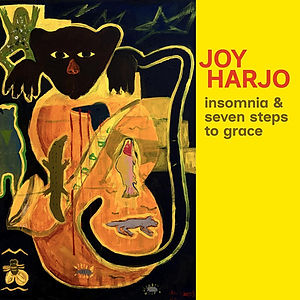
Insomnia and Seven Steps to Grace
JOY HARJO
Released 24 April 2026
Smithsonian Folkways Recordings
****-
An enticing fusion of poetry, jazz and Indigenous spiritual storytelling in which language and improvisation move as one — intimate, searching and carried by a profound sense of purpose.
As a member of the Mvskoke Nation and the 23rd Poet Laureate of the United States (2019-2022), Joy Harjo has spent decades dissolving boundaries between poetry and music. Long before wider recognition of spoken-word jazz hybrids, she was performing her poems with her band Joy Harjo and Poetic Justice, shaping a language that drew equally from reggae, jazz, rock and Native ceremonial traditions. Across eleven poetry collections, memoirs, plays, children’s books, her six previous audio recordings, her work has consistently focused upon memory, sovereignty and spiritual continuity. Insomnia and Seven Steps to Grace, her debut for Smithsonian Folkways, brings these strands into especially vivid focus, not as a side project from literature, but as a fully realised musical statement that is built on what Harjo calls a “vibration of love” - music as connection rather than performance, a force capable of countering despair, violence and historical erasure.
That philosophy shapes every part of the album. Rather than separating poem from song, Harjo allows spoken word, flute, saxophone and ensemble improvisation to move with the same breath, making the record feel less like a sequence of tracks than an unfolding ceremony.
Produced and arranged by Esperanza Spalding, whose bass playing and intuitive musical framing are central throughout, the album balances intimacy with openness. Harjo’s voice is bold and direct, never over-performed, carrying both lyric beauty and conversational clarity. Originals reflecting contemporary political realities sit naturally beside a jazz standard (Charles Mingus' "Goodbye Pork Pier Hat") and the moving inclusion of "My Guy" a song written by her mother - uncovered by her sister - which gives the record an added sense of lineage and return.
The improvisational core is crucial: rhythms feel discovered rather than imposed, and the ensemble leaves room for silence, breath and reflection. Harjo’s Indigenous spirituality brings personal intimacy and collective resonance.
Read more...
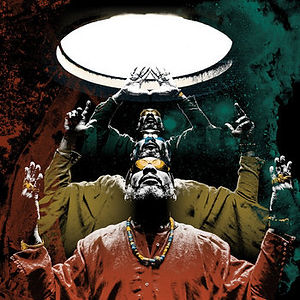
The Ark
ANTHONY JOSEPH
Released 24 April 2026
Heavenly Sweetness
****-
Merging spoken word, spiritual jazz and Afro-Caribbean rhythm into a searching, politically charged work where poetry and groove move together with ritualistic intensity.
Few contemporary artists move as fluidly between literature and music as Anthony Joseph. Born in Trinidad and long based in the UK, Joseph has spent decades developing a body of work that dissolves the boundaries between spoken-word poetry, jazz, funk, calypso and Afro-diasporic spiritual traditions. Whether through his novels, poetry collections or recordings with ensembles such as The Spasm Band, his work consistently explores memory, colonial history, migration and Black identity through rhythm as much as language.
Across recent albums, Joseph has increasingly embraced expansive jazz arrangements and ceremonial textures, allowing improvisation and repetition to function as extensions of the poetry itself. The Ark continues that trajectory while sharpening its spiritual and political focus. The title suggests both refuge and transmission — a vessel carrying history, resistance and collective memory across unstable terrain.
The Ark unfolds less like a conventional album than a sequence of invocations. Joseph’s spoken delivery remains central throughout — deep, deliberate and rhythmically precise — but the surrounding ensemble consistently transforms the poetry into something communal rather than purely literary. Basslines pulse with dub-informed weight, percussion layers accumulate gradually, and horns drift between spiritual jazz abstraction and tightly coiled groove.
What distinguishes the album is its sense of movement. Joseph rarely treats poetry as static recital; instead, words interact dynamically with rhythm, often becoming percussive elements themselves. Themes of displacement, ancestral continuity, political violence and spiritual survival recur throughout the record, yet the music resists heaviness through constant rhythmic vitality. Even its densest passages retain momentum and warmth.
The ensemble playing is particularly effective in the album’s more extended pieces, where repetition becomes hypnotic rather than merely structural. Influences from Sun Ra, Gil Scott-Heron and Afro-Caribbean ceremonial music surface organically, absorbed into Joseph’s own language rather than referenced overtly.
At times, The Ark prioritises atmosphere and thematic immersion over melodic immediacy, which may make it less instantly accessible than some of Joseph’s earlier work. Yet that openness is also its strength. The album invites listening as participation - not simply hearing songs, but entering a shared rhythmic and historical space.
Read more...

Triumvirate
BILLY CHILDS
Released 24 April 2026
Mac Avenue Records
****-
A richly conversational trio recording in which harmonic sophistication, rhythmic elasticity and lyrical restraint combine into one of his most intimate contemporary jazz statements.
Across more than four decades, Billy Childs has occupied a fortunate position within modern jazz, equally respected as pianist, composer, arranger and orchestrator, yet never fully confined to any one role. His work has consistently bridged post-bop improvisation, classical composition and contemporary chamber jazz, balancing technical sophistication with emotional clarity.
Childs is often celebrated for large-scale ensemble writing and orchestral ambition, yet the trio format has long revealed another side of his artistry: direct, responsive and deeply conversational.Triumvirate returns him to that setting with renewed focus.
Rather than using the trio merely as a vehicle for virtuosity, Childs approaches the trio format as opportunity - a platform to allow harmonic movement, rhythmic tension and melodic development emerge collaboratively.
The title itself suggests shared authority and empowerment, rather than hierarchy - an ethos that shapes the entire recording.
What immediately stands out on Triumvirate is the album’s balance between complexity and openness. Childs’ harmonic language remains characteristically advanced - dense voicings, shifting tonal centres and subtle classical inflections appear throughout - yet the performances never feel academically constructed. Instead, the trio continually prioritises flow, interaction and emotional pacing.
Childs’ pianism is remarkably controlled. Even during technically intricate passages, he avoids excess display, favouring clarity of line and dynamic nuance over sheer velocity. His improvisations often unfold architecturally, developing motifs gradually while leaving deliberate space for rhythmic and harmonic response from the ensemble. That responsiveness becomes central to the album’s success: bass and drums function not as accompaniment but as equal partners in shaping momentum, tension and release.
Several pieces evolve almost imperceptibly from lyrical introspection into rhythmic propulsion, demonstrating Childs’ ability to sustain narrative coherence across extended forms. Balladic passages are especially striking, revealing how effectively the trio handles silence, resonance and harmonic suspension.
What makes Triumvirate particularly compelling within Childs’ catalogue is its intimacy. Even at its most sophisticated, the album never loses its human scale. Rather than presenting virtuosity as spectacle, Childs frames it as communication, three musicians thinking, reacting and breathing together in real time.
Read more...

Perspectives
SIMONE BASILE, JOHN PATITUCCI, ANTONIO CERFEDA
Released 24 April 2026
Encore Music
****-
A finely balanced intergenerational trio session where Basile’s leadership, Patitucci’s harmonic authority and Cerfeda’s responsive drumming converge into fluid, conversational modern jazz interplay.
Perspectives is formally credited to guitarist Simone Basile, but its significance lies in the triangulated dynamic between three distinct artistic voices.
Patitucci brings decades of experience as one of modern jazz’s most authoritative bassists, a musician whose harmonic depth, rhythmic elasticity and compositional intelligence have shaped countless ensembles across acoustic and electric settings.
At the other end of the generational spectrum, drummer Antonio Cerfeda represents a more emerging voice, marked by alertness, colouristic sensitivity and a contemporary approach to rhythmic dialogue rather than sheer propulsion.
Basile occupies the connective position. As guitarist and conceptual leader, he frames the trio not as a hierarchy but as a responsive system, where material is shaped in real time through interaction rather than predetermined roles. The result is less a “leader-plus-accompaniment” format than a genuinely collaborative chamber-jazz environment.
What distinguishes Perspectives is its refusal to foreground any single instrumental voice for extended periods. Instead, the album thrives on continual redistribution of focus: lines migrate from guitar to bass to drums, harmonic responsibility shifts fluidly, and rhythmic authority is constantly renegotiated.
Basile’s guitar work is the album’s structural anchor - precise, harmonically literate and quietly expressive - but he resists dominance. His phrasing often leaves space that Patitucci readily fills with contrapuntal bass movement, melodic counter-lines or harmonic grounding that feels almost pianistic in its density. Patitucci, in turn, brings a commanding yet restrained presence: his tone is warm, his time feel elastic, and his choices consistently elevate the music beyond accompaniment into co-authorship.
Cerfeda is perhaps the album’s most quietly revealing voice. Rather than asserting constant rhythmic density, he shapes texture and momentum with a painterly sensibility, using cymbal colour, dynamic shading and subtle metric suggestion to guide transitions rather than dictate them.
Across the record, the trio achieves something rare: a sense of spontaneous composition that still feels structurally coherent. The music breathes rather than resolves, unfolding as dialogue rather than declaration.
Perspectives ultimately earns its title, not so much as a collection of viewpoints, but as a shared space where generational difference becomes creative alignment.
Read more...

Moving Images
MASTON & GREG FOAT
Released 17 April 2026
Magic Hollow / Sonoton
****-
Maston and Greg Foat revive the elegance of European library music through a richly atmospheric set of instrumental miniatures, that balance analogue warmth, melodic restraint and cinematic precision.
Both Paris-based, US born musician, composer and producer Maston and UK musician Greg Foat have built their reputations through deep engagement with the aesthetics of vintage recording culture, though from distinct angles. Both have consistently explored jazz, ambient composition and library-inspired instrumental music: Foat’s prolific catalogue explores analogue textures and meticulous arrangement, while Maston brings a producer’s sensitivity to mood, pacing and sonic detail.
Moving Images, released as the inaugural title on Daniel O’Sullivan’s Magic Hollow imprint, brings those sensibilities together in unusually focused form. Recorded in the Swiss Alps at Ritmo Studios, the album draws explicitly from the golden era of European library music. Crucially, however, the record avoids simple retro fetishism. Rather than recreating period style superficially, Maston and Foat absorb its structural discipline and understated emotional intelligence into something fully contemporary.
Moving Images is effective due to its commitment to restraint. Like the finest classic library recordings, the album understands that atmosphere often emerges through suggestion rather than accumulation. The compositions are concise, carefully sequenced and remarkably economical, yet each cue feels fully realised within its compact form.
Foat’s keyboards and analogue synthesisers establish much of the album’s tonal character, warm electric pianos, soft-focus string textures and subtly pulsing electronic motifs creating a sense of perpetual motion without urgency. Maston complements this with precise arrangement choices and an acute understanding of spatial balance, allowing the music to breathe naturally. Across the record, Elie Ghersinu’s bass playing provides a quietly essential centre of gravity: fluid, melodic and consistently grounding amid the shifting harmonic colours.
Importantly, Moving Images captures not only the sound of classic library music, but its philosophy. The album prioritises utility without sacrificing beauty - this is music designed to evoke landscapes, transitions, moods and imagined narratives through clarity rather than spectacle. Maston and Foat approach library music as a living compositional language, one capable of subtle reinvention through patience, craftsmanship and tone. The result is immersive, elegant and quietly transportive.
Read more...

Superbloom
JESSIE WARE
Released 17 April 2026
Universal Music
****-
A sleek, radiant continuation of her late-career reinvention - turning disco, soul and dance-pop into something timeless - confident, sensual and seemingly effortless.
Jessie Ware’s career has been defined as much by reinvention as consistency. After establishing herself in the 2010s with elegantly restrained pop and R&B records, her commercial and artistic trajectory shifted dramatically with 2020’s What’s Your Pleasure? and its spiritual successor That! Feels Good! (2023) - a pair of albums that not only re-started her career, but repositioned her as one of contemporary pop’s most sophisticated interpreters of disco, house and vintage soul.
Rather than chasing nostalgia, Ware used those records to build a distinct modern identity: glamorous but emotionally grounded, playful yet precise. Superbloom arrives as the strongest confirmation yet that this was more than a revival phase - it has revealed the centre of her artistic voice. Every detail here - the basslines, the orchestration, the vocal phrasing, the careful tension between polish and release - feels revelatory and inevitable. From its mood-setting opening track, an interlude of less than a minute, the album operates with the same confidence that made That! Feels Good! a career-defining statement. However, where That! thrived on exuberance, this works through elegance. The grooves are still immediate - strings shimmer, percussion snaps, choruses arrive with nightclub precision - but the mood is warmer and more assured. Ware sounds completely at ease inside these songs, allowing her voice to lead through restraint rather than force. "I Could Get Used To This", she sings on the first vocal track. And although multiple tracks are built upon the bones of vintage disco, they avoid pastiche; instead, they carry the easy sophistication that results from a balance of rhythm, mood and motion.
Throughout Superbloom, Ware echoes Donna Summer, Sade and late-night studio-era soul, but she avoids imitation by trusting her own instincts for emotional precision. It is glamorous music, but never hollow. Even its brightest moments carry emotional intelligence beneath the surface.
If That! Feels Good! was the triumphant career reset, Superbloom is a work of consolidation for artist who has fully arrived at the version of herself she was always moving toward.
Read more...
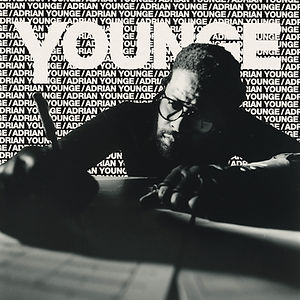
Younge
ADRIAN YOUNGE
Released 17 April 2026
Linear Labs
****-
A cinematic, meticulously arranged orchestral statement that balances the sensibility of hip-hop with the emotional weight and immediacy of soul music.
Adrian Younge has built one of the most distinctive careers in contemporary independent music by treating analogue recording as a philosophy, not as retro aesthetic. Based in Los Angeles, he first emerged through film scoring and psych-soul productions before becoming widely recognised for collaborations with Ali Shaheed Muhammad, particularly through their expansive Jazz Is Dead series, which has connected them with legends across jazz, soul and Brazilian music.
The brainchild of producer Adrian Younge, Linear Labs Records is a Los Angeles-based label born out of vinyl culture and the dizzying array of music released during the format’s peak years. “The label will focus on creating new progressive music with a cultivated compositional perspective and a higher quality sonic palette,” Younge attests..
Moving beyond the curatorial and production-centric work that makes up almost all of his prolific discography Younge (the album) positions itself as his most ambitious personal statement - a full compositional manifesto. Rather than centring songs around hooks or guest performances, Adrian Younge has written and assembled the album with the patience of a film composer but the instincts of a hip-hop producer. The cinematic sweep recalls classic European film scores and the emotional grandeur of 1970s soul arrangements, yet the pacing belongs to beat culture: tension, repetition and release are handled like sample-based production, where the smallest detail carries structural weight.
The analogue recording process and the natural imperfections of live arrangement give the music warmth that digital precision would flatten.
This feels like a summation of everything Adrian Younge has been building toward. It is not simply a producer’s showcase, but a composer’s declaration of intent.
Read more...

Outsider
TIWAYO
Released 10 April 2026
Record Kicks
****-
Tiwayo channels transatlantic soul tradition through a raw, weathered baritone and road-worn storytelling, bridging Memphis gospel intensity with Parisian bohemian grit under Adrian Quesada’s understated, organic production.
Tiwayo is one of those rare contemporary soul voices whose biography feels inseparable from his sound. Born in Paris but shaped by a life spent busking, travelling and absorbing musical languages at their source, he carries the kind of vocal grain and emotional weight more commonly associated with deep Southern soul traditions than European R&B scenes. Often described as “The Young Old,” his voice evokes comparisons to Solomon Burke — not as imitation, but as lineage: a shared sense of lived-in authority, spiritual ache and unforced expressivity.
His earlier recordings, including Desert Dreams and The Gypsy Soul of Tiwayo (released via Blue Note Records), established him as a cult figure within modern roots-soul circles, while high-profile admirers such as Norah Jones, Marcus Miller, Tony Visconti and Don Was signalled quiet industry respect. After a period of near-withdrawal from the spotlight, Outsider marks a return shaped by producer Adrian Quesada, whose work with Black Pumas has helped define a contemporary language for retro-soul that remains textural, cinematic and emotionally direct.
Outsider succeeds because it resists the temptation toward polished revivalism. Under Adrian Quesada’s production, the record leans into analogue warmth, live-band immediacy and subtle imperfections that allow Tiwayo’s voice to remain the central force. This is soul music built on friction as much as finesse — grooves that breathe, crack and stretch rather than sit in rigid retro symmetry.
Tiwayo’s vocal performance is the album’s gravitational centre. There is an unmistakable Solomon Burke-like quality in his phrasing: declarative yet vulnerable, theatrical yet grounded, with a timbre that feels weathered rather than constructed. On tracks like “I’ve Got to Travel Alone”, that voice carries autobiographical weight without tipping into melodrama, while more groove-oriented moments such as “Up for Soul” lean into rhythmic ease and understated swagger.
The album’s emotional range is strengthened by its collaborators. Doyle Bramhall II’s guitar work adds blues-soaked tension, while Kendra Morris brings a complementary softness to the duet “Unchained Lovers”. Jay Mumford’s drumming is consistently tasteful and grounded, never overplaying, always serving the pocket. Meanwhile, the writing and compositional framework from Rémi Renaud and Lucien Sztern keeps the material structurally focused without diluting its emotional immediacy.
What ultimately defines Outsider is its conviction. Rather than chasing genre authenticity, Tiwayo embodies it through experience, restraint and presence. In doing so, he turns the idea of “outsider” from positioning into identity — and from identity into strength.
Read more...

LIMERENCE
JACOB BANKS
Released 10 April 2026
Nobody Records
****-
Jacob Banks trades the expansive, gospel-driven ambition of his recent Yonder cycle for a more intimate and classic soul approach anchored by restraint, warmth and vocal authority.
Across the Yonder trilogy of EPs released between 2024 and 2025, Jacob Banks expanded his sound into increasingly cinematic territory, blending gospel, spoken word, electronic textures and orchestral arrangements into large-scale meditations on identity, faith and emotional survival. Yet Banks’ defining strength has always been his voice: a deep, grain-rich baritone capable of conveying vulnerability without sacrificing presence. On Limerence, he pivots away from the layered conceptual and spiritual elements that defined the Yonder releases. Placing emphasis on songcraft, groove and vocal performance, Banks draws openly from classic soul traditions while retaining the understated emotional weight that has long distinguished his work.
The production leans heavily into vintage soul textures - warm basslines, understated percussion, electric piano and slow-burning guitar arrangements - but avoids slipping into mere revivalism.
Banks’ baritone remains the album’s defining instrument. Throughout the record, he sings with remarkable control, resisting the temptation to oversell material that gains strength from patience and subtlety. Tracks built around heartbreak and emotional uncertainty feel especially effective because of that restraint: pauses linger, harmonies soften the edges, and the arrangements consistently leave space for the voice to carry emotional momentum.
The album’s quieter pacing occasionally risks uniformity, particularly in its middle stretch, but Limerence ultimately succeeds because of its coherence. Rather than chasing stylistic breadth, Banks commits fully to mood, tone and intimacy. In doing so, he delivers perhaps his most emotionally direct release to date — one that exchanges the spiritual vastness of Yonder for something far more human-scaled and quietly affecting.
Read more...

Steve Reich: The Sextets
STEVE REICH, COLIN CURRIE, COLIN CURRIE GROUP
Released 10 April 2026
Colin Currie
****-
A vivid and deeply assured survey of Steve Reich’s sextet works, balancing rhythmic exactitude with warmth, clarity and an unexpectedly human sense of motion and space.
Few living composers have shaped contemporary classical music as profoundly as Steve Reich, whose exploration of repetition, pulse and gradual transformation helped define musical minimalism from the late 20th century onward. Across decades, Reich’s work has retained a rare duality: rigorous in structure yet immediately physical and immersive in effect.
Led by percussionist Colin Currie, the Colin Currie Group has become one of the composer’s foremost interpreters, with Reich himself describing the ensemble’s performances as among the finest of his music.
The Sextets arrives as both a celebration of Reich’s 90th birthday and the ensemble’s 20th anniversary, bringing together four works that collectively trace the evolution of Reich’s chamber language across more than three decades.
The Sextets succeeds not simply because of technical precision (though the performances are extraordinarily controlled) but because the Colin Currie Group consistently reveals the physicality and emotional contour inside Reich’s systems. The opening Sextet immediately establishes this balance. Interlocking marimbas, pianos and vibraphones move with mechanical accuracy, yet the ensemble allows subtle shifts in texture and resonance to emerge naturally, preventing the music from hardening into abstraction. The five-part structure of Sextet is shaped by Reich’s characteristic use of proportional tempo relationships, the movements unfolding in a symmetrical arc of crotchet markings (192–96–64–96–192), where shifting pulse subtly transforms repetition from urgent propulsion into something increasingly spacious and hypnotic.
That sensitivity becomes even more striking on Double Sextet, the three-part suite that is arguably the album’s centrepiece. Here, Reich’s layered rhythmic architecture feels unusually alive: strings bite into repeated figures, percussion accents land with muscular force, and the dynamic ebb between the two sextets creates a genuine dramatic arc rather than mere process.
Six Marimbas transforms repetition into something almost architectural, its patterns expanding and contracting with hypnotic inevitability, while closing track Dance Patterns provides a lighter, more agile counterweight, emphasising movement and momentum over density.
What distinguishes this recording from many earlier Reich interpretations is its spaciousness. Rather than foregrounding relentless precision alone, the Colin Currie Group allows air, resonance and warmth into the music. The result is a recording that highlights not just Reich’s structural brilliance, but the surprising humanity within it.
Read more...
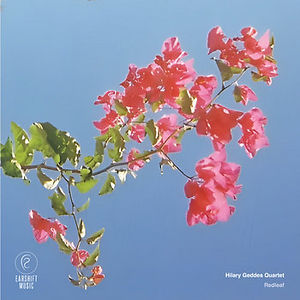
Redleaf
HILARY GEDDES QUARTET
Released 3 April 2026
Hilary Geddes
****-
A beautifully balanced ensemble jazz record built upon lyricism, trust and quiet adventurousness, shaped by four musicians listening at the highest level.
Redleaf brings together four of Australia's most compelling younger jazz voices, each already recognised for a distinct musical identity. Guitarist and composer Hilary Geddes has become one of the country’s most admired modern jazz writers, known for balancing melody with sophisticated harmonics. Saxophonist Matthew Harris brings a fluid, expressive voice shaped by straight-ahead jazz and exploratory improvisation; pianist Alex Inman-Hislop contributes harmonic sensitivity and structural patience and bassist Max Alduca provides the grounding pulse - subtle, alert and responsive. Not simply a leader-plus-accompanists project, Redleaf is a genuine collective, making chamber jazz around trust, restraint and shared authorship.The result is a record that is intimate in scale, but rich in emotional and compositional depth, with Hilary Geddes’ writing at the centre of gravity. Her compositional voice has always understood that sophistication works best when it remains transparent, and these pieces move with that same elegant logic: harmonically detailed, but never crowded; lyrical without sentimentality.
There are echoes here of ECM’s chamber-jazz elegance and the lyrical modernism of players like Bill Frisell or Kurt Rosenwinkel, but Redleaf never feels derivative. Its strength lies in its local specificity: Australian contemporary jazz at its best, unhurried and deeply attentive.
Read more...

sounds for someone
ELMIENE
Re-released 27 March 2026
Polydor
****-
Transforms modern soul confession into something intimate, literary and weightless — pairing understated production with a voice that carries remarkable emotional maturity.
Born Abdala Elamin and raised in Oxford by his Sudanese mother, Elmiene arrives with one of the more compelling artistic backstories in contemporary soul music. The grandson of both a poet and a musician, and himself a former poetry student, his work has consistently reflected an unusual sensitivity to language, pacing and emotional understatement. His breakthrough came unexpectedly in 2021, when a casually filmed D’Angelo cover circulated online and quickly drew the attention of figures including Missy Elliott, Pharrell Williams and Questlove. Soon after, his unreleased track “Golden” was selected by Louis Vuitton music director Benji B for Virgil Abloh’s final runway presentation — a moment that suddenly attached public symbolism to an artist still developing privately.
The years that followed were marked by steady, deliberate growth through a run of EPs and collaborations with artists including Sampha, Syd, BADBADNOTGOOD and D’Mile.
While not technically his first long-form release (it follows 2025’s Heat The Streets mixtape), sounds for someone arrives as Elmiene’s most fully formed and cohesive studio statement to date, immediately distinguished by its restraint.
Elmiene treats songs as spaces for emotional detail and careful observation. The album’s production mirrors that philosophy - sparse drums, softened keyboards, lightly textured guitar and ambient room around the vocals create an atmosphere that feels intimate without becoming fragile.
Elmiene’s voice remains central throughout: light yet deeply expressive, capable of carrying ache without overstating it. Comparisons to D’Angelo, Sampha or Frank Ocean are understandable, but the album gradually reveals a more singular quality rooted in his poetic instincts. His phrasing often prioritises emotional cadence over technical flourish, allowing lines to unfold conversationally, almost tentatively, as though thoughts are still being processed while sung.
Lyrically, the album succeeds precisely because it avoids grand declarations. Themes of distance, uncertainty, longing and emotional self-preservation recur throughout, but they are framed with unusual subtlety and patience. Even at its most melancholic, the record resists self-mythologising.
The title proves revealing: sounds for someone feels intentionally directed toward an individual listener rather than an imagined audience. That privacy becomes the album’s greatest strength. Rather than trying to announce himself as a major new voice, Elmiene simply inhabits his songs completely — and in doing so, quietly confirms that he already is one.
Read more...
Rock and Roll Doctor:
Lowell George Tribute Album
LOWELL GEORGE
ALLEN TOUSSAINT, BONNIE RAITT, CHRIS HILLMAN, DAVID LINDLEY, EDDIE MONEY, EMMYLOU HARRIS, INARA GEORGE, JACKSON BROWNE, JD SOUTHER, JENNIFER WARNES, KEISUKE KUWATA, LEO NOCENTELLI, LITTLE FEAT, LOWELL GEORGE, RANDY NEWMAN, TAJ MAHAL, THE BOTTLE ROCKETS, VALERIE CARTER, WILLIE NELSON
Released Japan, 1997
Re-released 24 April 2026
Omnivore Recordings
****-
A lovingly assembled tribute that honours Lowell George’s songwriting, preserving the looseness, wit and emotional depth of his catalogue.
Lowell George remains one of American rock’s most quietly influential figures, a songwriter, guitarist and singer whose work with Little Feat fused roots rock, rhythm and blues, country, funk and jazz into something unmistakably singular.
Emerging first through Frank Zappa’s The Mothers of Invention before founding Little Feat in 1969, George became revered less for chart dominance than for the deep loyalty of musicians and listeners who recognised the precision beneath the looseness. Songs like “Willin’”, “Sailin’ Shoes” and “Dixie Chicken” became part of the American songwriting canon. Originally released in Japan in 1997, Rock And Roll Doctor returns through Omnivore Recordings as both celebration and reappraisal.
Tribute albums often struggle between reverence and reinvention, but Rock And Roll Doctor succeeds because it understands that Lowell George’s songs were never about polish, they were about feel. These performances work best when they preserve that elasticity: the sense that groove, humour and melancholy are all occupying the same room.
Bonnie Raitt and Little Feat’s version of “Cold, Cold, Cold” opens the collection with exactly that spirit, bluesy and lived-in rather than overly restored. Taj Mahal brings a natural looseness to “Feets Don’t Fail Me Now”, while Randy Newman and Valerie Carter’s “Sailin’ Shoes” leans into the song’s bittersweet weariness without losing its melodic warmth.
The newly included “Willin’” performed by Willie Nelson and Emmylou Harris featuring Inara George, gives the reissue its emotional centre. It feels less like a bonus track than a closing statement, understated, unforced and full of inherited affection. Even the spoken “Rock And Roll Heaven” excerpt reminds listeners how much of George’s appeal came from personality as much as composition.
Rather than presenting Lowell George as a lost genius requiring correction, this collection simply lets the songs continue doing their work. That may be the most fitting tribute possible.
Read more...

Strange Hands
EIVIND AARSET
Re-released 17 April 2026
Jazzland Recordings
****-
A rousing cinematic blurring of guitar, electronics and chamber textures that is atmospheric, restless and shaped by the quiet drama of space itself.
Few guitarists in European jazz have developed a sonic identity as immediately recognisable as Eivind Aarset. Emerging from Norway’s fertile experimental scene through collaborations with the likes of Nils Petter Molvær and Bugge Wesseltoft, Aarset has spent decades dissolving the boundaries between jazz improvisation, ambient electronics, post-rock and contemporary composition. His landmark 1998 debut Electronique Noire remains a touchstone for atmospheric jazz guitar, but his later work has only deepened that language.
Since his last solo album, the acclaimed Phantasmagoria, or A Different Kind of Journey, (2021), Aarset has released no less than six separate collaboration albums. For "Strange Hands" he returns to his long-running quartet. Joined by violinist Sara Övinge and Mira Thiruchelvam on pullankulal (a traditional South Indian bamboo flute with eight finger holes, primarily used in Carnatic music), Aarset (guitar and electronics), Audun Erlien (bass), Wetle Holte (drums/percussion) and Erland Dahlen (drums/percussion) expand their shared vocabulary into something at once leaner and more unpredictable. The music feels closer to the bone: fewer obvious adornments, more direct impact, yet still bathed in the shifting light and shadow that have made Aarset’s records so uncannily cinematic.
Strange Hands feels like a record built from atmosphere before melody, yet it never disappears into abstraction.
The opening “Snow Crash” and title track establish the album’s terrain immediately: suspended tension, luminous guitar tones and rhythm sections that seem to move more like weather than pulse. “Slumberjack” and “Deep Green” are among the strongest moments, balancing intimacy with scale — violin and bansuri not functioning as ornamental colour, but as structural voices bending harmony and reshaping the emotional centre of the music. On “Deep Green,” the sense of nocturnal stillness opening into something wider and more luminous is especially striking.
“Space Bob” and “What Drifts Below” push further into that hallucinatory edge, where acoustic strings, wood and skin remain tangible even as the music seems to hover just outside physical form.
This is neither fusion or ambient jazz, nor post-rock for that matter, it is a genre of Aarset’s own making - one that values atmosphere without sacrificing immediacy, and Aarset sounds like an artist who no longer needs to prove invention — only to inhabit it fully.
Read more...
The Lost Score
HAIKU SALUT, MEG MORLEY
Re-released 27 March 2026
Lo Recordings
****-
A collaborative suite in which post-classical writing, electroacoustic texture and cinematic imagination converge lyrical, exploratory and shaped by two distinct but deeply compatible compositional voices.
The Lost Score brings together two distinct but converging strands of contemporary instrumental music. Haiku Salut, the Derbyshire trio of multi-instrumentalists Sophie Barkerwood, Louise Croft and Gemma Barkerwood, have long operated at the intersection of post-classical composition, folktronica and cinematic instrumental storytelling, building richly layered music that feels both meticulous and emotionally immediate. Meg Morley, an Australian-born composer and pianist based in Los Angeles, comes from a more explicitly contemporary classical and film scoring background, with work that emphasises harmonic clarity, structural restraint and emotional understatement. Her writing often inhabits the space between ambient minimalism and narrative score composition.
Together, they form a collaboration grounded in shared sensitivity to texture and pacing, but shaped by different instincts: Haiku Salut’s playful structural unpredictability meeting Morley’s disciplined lyricism.
The Lost Score succeeds by embracing the distance between its two creative worlds, and using this as its expressive core: on the one hand, Haiku Salut’s instinct for collage-like invention, (accordion, piano, electronics and found sounds interlocking in a kind of joyful instability), and on the other, Meg Morley’s more linear, harmonically-centred writing, (piano-led clarity and cinematic emotional pacing). Remarkably, the result is less like compromise than meaningful conversation.
Within contemporary classical music, The Lost Score belongs to a growing body of hybrid works that blur distinctions between composition for concert hall and cinema - closer in spirit to post-Minimalist film composers and experimental ensemble writing than to traditional chamber music. But even at its most abstract, the music remains inviting, built around emotional accessibility rather than intellectual distance, and retaining a consistent warmth.
This is collaborative music in the truest sense: not two voices alternating, but two sensibilities continuously reframing each other in real time.
Read more...

Station Model Violence
STATION MODEL VIOLENCE
Released 27 February 2025
Anti Fade Records, Static Shock Records
****-
An urgent, beautifully abrasive debut where post-punk tension, krautrock hypnosis and avant-jazz instinct collide — restless, melodic and driven by a fierce sense of forward motion.
Station Model Violence emerges from the fertile overlap of Australia’s post-punk underground: a Sydney project built around DX (best known from Total Control and Straightjacket Nation) and Buz Clatworthy of R.M.F.C., alongside a shifting cast connected to Den, G2g, Gaud and The Lewers. Born partly from post-lockdown restlessness and partly from the collapse and absorption of another project, KX Aminal, the band carries the density of several musical lives colliding at once. Their guiding aesthetic, memorably described through Bandcamp mythology as “pastoral psychedelicism” and the smell of “Kwisis” — a reference to Crisis and that brittle UK punk lineage — frames the album perfectly. This is music built from motion, friction and instinct rather than scene nostalgia.
Station Model Violence sounds like a band arriving already in full argument with itself — and that tension is exactly what makes it so alive. The record draws obvious lines to the cool austerity of Joy Division, the melodic shadows of The Church and the taut propulsion of early INXS, but it never feels like revivalism. Beneath the recognisable post-punk frame sits something far stranger: krautrock repetition, drone atmospherics and an avant-jazz looseness that refuses easy resolution.
“Learn To Hate” the album’s engaging entry point, captures that balance immediately. Its driving repetition and abrasive guitar architecture feel hypnotic rather than rigid, the kind of groove that tightens by refusing release. You can hear why the band return so often to that image of Iggy Pop describing Neu! and “pastoral psychedelicism”: these songs move like landscapes under pressure, simultaneously expansive and claustrophobic.
Later, "Heat", the album's defining moment, pushes harder into the pop instinct hidden underneath the abrasion. That is the album’s real strength: however dense or noisy the arrangements become, melody is never sacrificed. Like recent records by Geese or Black Country, New Road, the chaos is structured around songs, not just texture.
The production matters too. Mikey Young’s patient mixing gives the album its scale, allowing what the band call an “incredibly dense beast” to remain coherent rather than collapsing under the weight of its own ambition. Every layer - guitars, rhythm section, tense vocals - is essential, nothing is excessive or gratuitous.
Nearly half a century since punk music shook new energy into rock music, Station Model Violence returns to the source and manages to sound current and compelling in its shadow, because their songs feel grounded in necessity, bringing what Leonard Cohen poetically described as "new skin for the old ceremony,"
Read more...

Antahkarana
THE THREE SEAS
Released 20 February 2026
The Three Seas
****-
A deeply immersive cross-cultural work where Baul mysticism, jazz improvisation and dub atmospherics converge, balancing spiritual weight with rhythmic freedom.
The Three Seas are a Bengali-Australian ensemble formed in Santiniketan, West Bengal, bringing together Baul musicians Raju Das Baul, Deo Ashis Mothey and Gaurab “Gaboo” Chatterjee with Australian saxophonist Matt Keegan and bassist Brendan Clark.
Over more than fifteen years, the group has developed a distinctive language built from Bengali devotional music, Himalayan folk traditions, jazz improvisation and contemporary groove-based forms. Recorded at Real World Studios and produced by Sarathy Korwar, Antahkarana represents their most expansive statement yet, an album where spiritual practice and ensemble experimentation feel inseparable.
Antahkarana's strength lies in how naturally it allows traditions to coexist as a shared musical language shaped by patience and deep listening. The title itself, referring to the Sanskrit idea of the “inner instrument,” frames the record as something inward-facing: memory, intuition and identity translated into rhythm and sound.
Opening pieces like “Lasha” and “The Doctrine” establish the album’s hypnotic logic, where percussion cycles, baritone sax and harmonium create a slow gravitational pull rather than conventional momentum. “Khyentse” is one of the record’s most striking moments, allowing devotional phrasing and dub-influenced spaciousness to sit side by side without tension. Elsewhere, “Rongmohole” and “Chhau” lean further into rhythmic propulsion, yet even at their most groove-driven, the performances remain spacious rather than crowded. The music consistently feels lived-in rather than arranged.
Baul poetry, folk melody, jazz phrasing and ambient texture are treated as equal participants, and the result is immersive without becoming abstract.
Read more...

Open Your Heart or Die Trying
ARCADE FIRE
Released 20 February 2026
Arcade Fire
***--
A stark, atmospheric, all-instrumental companion to its predecessor, Pink Elephant, that trades hooks for tension: immersive, unsettling, but more evocative than fully resolved.
Few 21st-century bands shaped indie rock’s mainstream ascent as decisively as Arcade Fire. Emerging from Montreal in the mid-2000s, the group built its reputation on grand emotional scale, combining art-rock theatricality, communal performance and anthemic songwriting across landmark records like Funeral (2004), Neon Bible (200) and The Suburbs (2010). In recent years, however, the band’s public standing shifted dramatically following allegations of sexual misconduct against front-man Win Butler, which he denied, casting a long shadow over the reception of 2025’s Pink Elephant.
Open Your Heart or Die Trying arrives less as a conventional follow-up than as a companion piece, foregrounding the ambient architecture that has often sat beneath the band’s more immediate songs.
The album signals its intentions from the opening (title) track, as melody and driven beats are displaced by atmospheres, and cathartic release replaced with sustained unease. Sounding like an orchestrated air raid siren unfolding in slow motion, it kicks off an album built on dread rather than momentum.
Where Pink Elephant still relied on rhythmic propulsion and vocal hooks, this record strips everything back to texture, drones and long-form instrumental tension.
There are clear echoes of Tangerine Dream and Jean-Michel Jarre in its synthesiser-heavy expansiveness, and at moments even the severe emotional weight of Henryk Górecki comes to mind. Yet this is not ambient music as comfort; it feels cinematic, ominous and unresolved, like a score to a film the listener has not been shown.
That ambiguity is both the album’s strength and limitation. The mood is consistent - perhaps too consistent. Individual tracks bleed into one another, and while the sustained intensity is impressive, there is little variation to create a strong narrative arc.
As a companion record, it is fascinating: it reveals the shadow-world beneath Arcade Fire’s songs, the interstitial spaces where tension has always lived. As a standalone album, it is compelling but incomplete, less a destination than a corridor leading somewhere only Butler seems to know.
Read more...